Panchayat's Blind Spot? Are Creators Ignoring India's Caste Reality?

Panchayat's Blind Spot? Are Creators Ignoring India's Caste Reality?
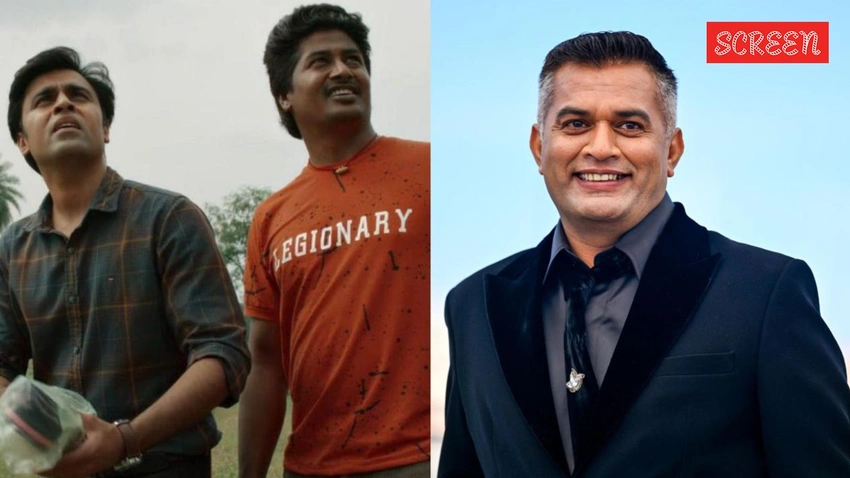
Filmmaker Neeraj Ghaywan sparks a crucial debate: Do popular shows like TVF's Panchayat, celebrated for authenticity, fail to reflect India's true social diversity by omitting lower-caste and Muslim representation?
It’s time we had a frank conversation about what we see on our screens and what’s conspicuously absent. We often celebrate shows for their authenticity, but what if that ‘authenticity’ is selectively curated, sidestepping huge swathes of our social fabric?
This isn't about being ‘woke’ for the sake of it; it's about fundamental representation. Filmmaker Neeraj Ghaywan, a consistent voice pushing for caste consciousness in Hindi cinema, recently highlighted a critical blind spot in contemporary Indian content. He pointed out how even widely praised shows, often spearheaded by creators from elite backgrounds, can inadvertently — or perhaps deliberately — overlook certain communities.
Take TVF, for instance. Ghaywan acknowledged their quality, stating, “Take TVF, and they have been doing very good. And they have shows are genuinely very good.” However, his critique wasn't about their production value, but their consistent casting patterns. He noted, “It’s made by IIT-ians, who are supposed to be the most educated lot in this country. And every single show of theirs, since inception, has always had upper-caste characters. Not a single lower-caste person, not a single Muslim.”
This isn’t a small oversight; it’s a systemic issue. If creators, especially those from privileged educational backgrounds, aren’t taking this responsibility, who will? Ghaywan didn’t mince words: “Now, you, as this educated person, cannot take that responsibility. And, like, you know, if some old-timer makes a film, I get it. But, like, come on, try to understand this, you’re educated, right? You cleared IIT, didn’t you? You studied engineering for four years. So you should be able to understand that maybe it is not right to show it that way.”
His most poignant example targeted one of India’s streaming darlings: Panchayat. A show lauded for its rural setting and perceived realism, yet Ghaywan challenges this perception directly: “That you call this celebrated TV show of yours, Panchayat, which everybody thinks is the most authentic representation of villages. No, it isn’t. You cannot create an entire village where only upper-caste names exist.”
Panchayat, starring Jitendra Kumar and Neena Gupta, has indeed been a massive success in the Indian streaming space. But success shouldn't come at the cost of genuine representation. When a narrative purports to represent an entire rural landscape, yet omits significant demographic realities, it’s not just a creative choice; it’s a commentary on whose stories are deemed worthy of telling, and whose existences are rendered invisible.
This isn't about tokenism; it's about reflecting the India we live in. Our content creators, particularly those shaping popular culture, have a profound responsibility. They aren't just telling stories; they’re building perceptions, influencing understanding, and, consciously or unconsciously, defining what 'normal' looks like. The question isn't whether shows should reflect social realities, but how we, as an audience and industry, demand that they must.
