The Best and Worst of the 2026 Emmys
The Best and Worst of the 2026 Emmys
The Best and Worst of the 2026 Emmys
A chaotic, emotional and unexpectedly funny night at the 2026 Emmys, packed with historic wins, Taylor Swift surprises and moments that truly stole the show.
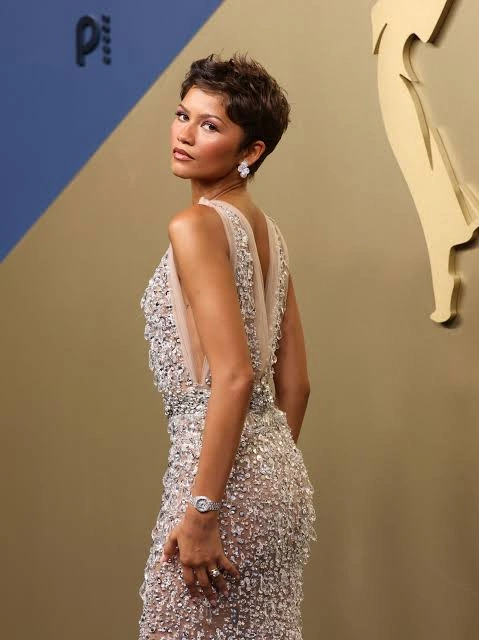
The 2026 Emmys had the slightly chaotic feeling of a television show trying very hard to remind us that it is, in fact, television. There were historic wins, genuinely moving speeches and enough bits to make you wonder whether anyone had remembered that people were also supposed to receive awards. Mariska Hargitay hosted the ceremony, the Television Academy had moved several awards out of the main broadcast to make room for more entertainment, and the result was a night that swung rather dramatically between moments worth remembering and moments that probably should have stayed in the writers’ room.
For me, that is what made this year's ceremony fun to watch. The best moments were often the ones where television history, genuine emotion or a good joke managed to break through the machinery of the awards show. The worst were the moments where the machinery became painfully visible.
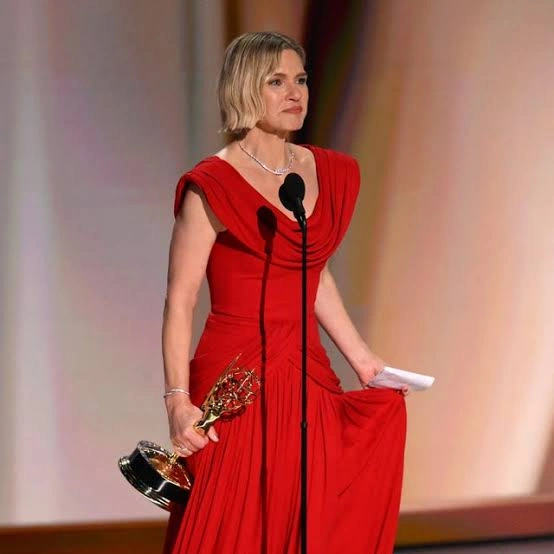
The best: Rhea Seehorn finally gets her Emmy
There are some Emmy wins that feel like awards. Then there are wins that feel like the ending of a very long sentence.
Rhea Seehorn's victory for Pluribus belonged to the second category. After years of playing Kim Wexler in Better Call Saul without taking home an acting Emmy, Seehorn finally won for her lead performance as Carol Sturka. The Los Angeles Times described the win as overdue recognition after Seehorn had previously gone without even a nomination until the final two-part season of Better Call Saul. Her reaction onstage, particularly while thanking creator Vince Gilligan, became one of the night's most affecting moments.
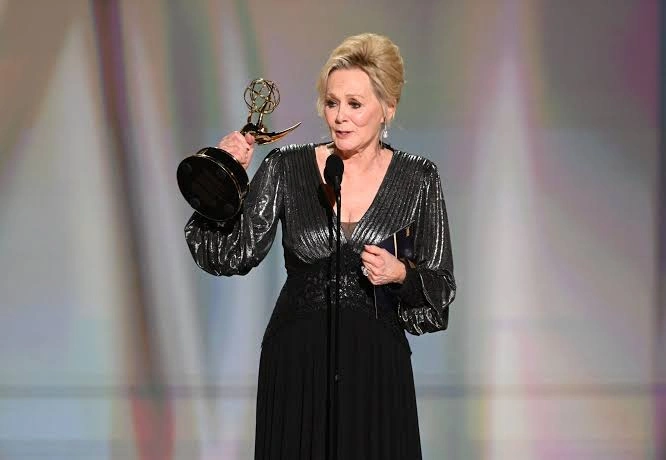
It was also part of a larger pattern at this year's ceremony. Jean Smart won her fifth consecutive Emmy for Hacks, bringing her acting total to eight and tying the record held by Julia Louis-Dreyfus and Cloris Leachman. Allison Janney also reached eight acting Emmys with her win for The Diplomat. The New York Times pointed to the wider showing of women over 40, with Linda Cardellini, Sally Field, Betty Gilpin and Kate O'Flynn also among the acting winners.
There was something satisfying about watching performers who have been part of television for so long continue to occupy its centre rather than being quietly moved into its past.
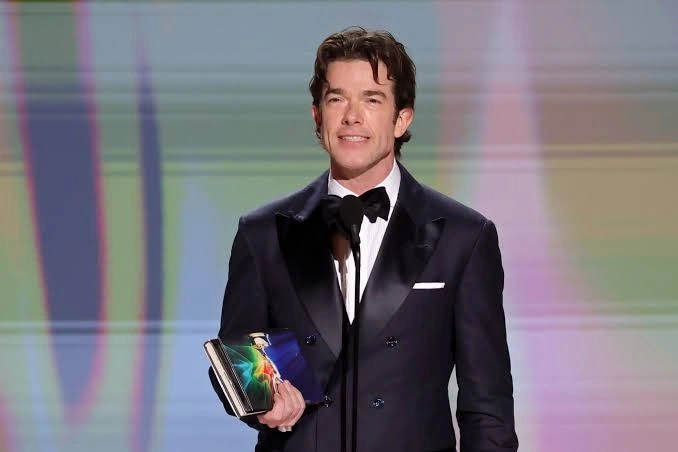
John Mulaney remembers that this is supposed to be funny
John Mulaney's presentation for lead actor in a drama was one of those rare awards-show bits that actually understood the assignment. He used the introduction to joke about the history of gender discrimination in Hollywood, bringing a copy of Frank Vincent's A Guy's Guide to Being a Man's Man as a prop. The joke eventually became a miniature performance about masculinity, awards and Hollywood itself. It worked because it did not feel like an elaborate attempt to make the Emmys “fun”. Mulaney simply walked out and was funny.
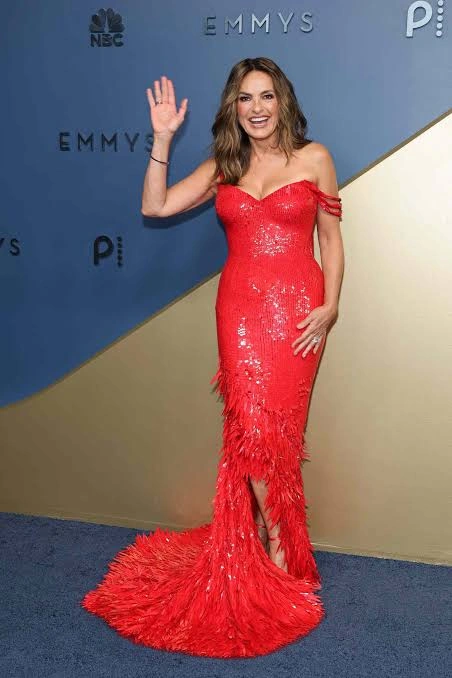
Mariska Hargitay was better than the material
Hargitay was an unusual choice for an Emmys host, but she was hardly unwilling to play along. The Los Angeles Times praised the speed of the ceremony and described her as self-deprecating and willing to make herself the joke, while the New York Times had a much harsher view of the writing she was given.
And you could see the problem. There were jokes about Law & Order, jokes about Dick Wolf's name, jokes about Hargitay's age, musical parodies and an extended routine about people's first jobs. Some of the material landed. Some of it seemed to hang in the air waiting for laughter that never quite arrived. The decision to move awards out of the main ceremony in order to create space for this material suddenly looked rather questionable. Hargitay herself seemed game for everything. The writing did not always deserve her enthusiasm.
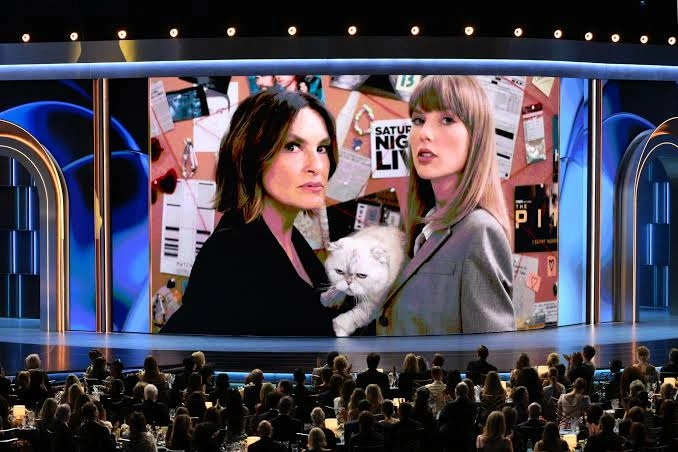
The Taylor Swift Easter egg nobody was going to miss
Taylor Swift has officially released the side B "Encore" of her album The Life of A Showgirl. But before all of that, she appeared on telly alongside Olivia Benson (the Scottish fold and the icon). For much of the evening, the Emmys had been teasing the question of whether Swift would appear. Hargitay's Law & Order: SVU team investigated the mystery through a pre-recorded sketch, complete with murder-board-style clues about Taylor's possible attendance. Eventually, Swift appeared in the sketch herself.
She played herself as part of the investigation, but the real joke was sitting beside her. Her cat is named Olivia Benson, after Hargitay's SVU character, and the sketch turned that piece of Swift lore into the punchline. This was exactly the kind of Taylor Easter egg that makes sense because it rewards people who already know the backstory. You did not need to know anything about Swift's cats to understand the joke, but if you did, the whole thing became considerably more ridiculous. And that is probably why it worked better than some of the night's larger sketches. Also, if anyone has been able to effectively decode what "Saccharide, Ares, From The Vineyard, North or South" means, let me know!
When the Emmys tried too hard to become content
The ceremony's biggest problem was also its most obvious ambition. The Television Academy had deliberately created more space for sketches and performances, but the extra entertainment did not consistently feel entertaining. The New York Times described the awards themselves as more enjoyable than much of the surrounding material, while the Los Angeles Times was considerably kinder to Hargitay's overall hosting performance.
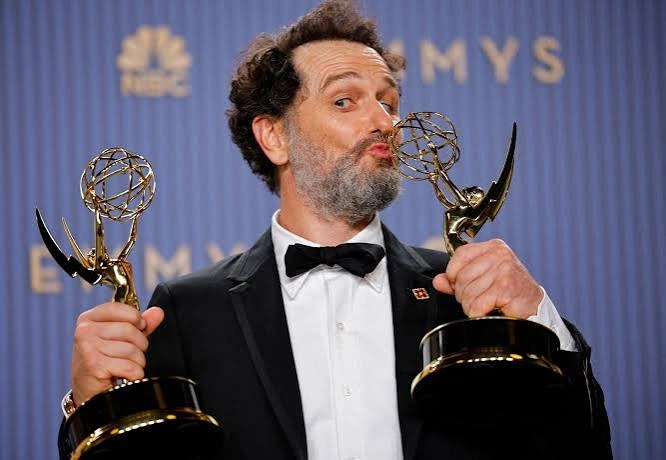
The actual awards gave us Rhea Seehorn finally getting her moment. Jean Smart made history. Allison Janney tied a record. Matthew Rhys became the first person to win two lead acting Emmys in one night. Widow's Bay had an extraordinary evening on the comedy side. Stephen Colbert accepted the final Emmy for The Late Show with a farewell that carried more weight because the programme had already ended.
Then the show would cut back to another sketch. The irony was difficult to miss. The ceremony already had plenty of television worth celebrating. It just did not always trust that television to entertain us.
Remembering why people watch
The emotional centre of the night came through its tributes. Reba McEntire honoured Dolly Parton, while the In Memoriam segment remembered figures including Catherine O'Hara and Rob Reiner. Michael J. Fox received the Bob Hope Humanitarian Award, and his appearance became one of the evening's most moving moments.
Stephen Colbert's farewell also carried a particular kind of weight. Winning an Emmy for The Late Show in its final season meant the award arrived after the ending, rather than building towards one.
And perhaps that is what the 2026 Emmys accidentally revealed. The moments people remember from awards shows are rarely the ones that were most aggressively engineered to be memorable. They are the moments when something real slips through: Seehorn crying onstage after years of waiting, Smart making history, Fox reflecting on a life of showing up for other people, Colbert saying goodbye, or Taylor Swift appearing beside a fictional detective because she once named her cat after that detective.
The Emmys spent much of the night trying to manufacture memorable television. The best moments happened when they simply let television history speak for itself.
