Prestianni banned for homophobic conduct in Benfica-Real Madrid clash

Prestianni banned for homophobic conduct in Benfica-Real Madrid clash
UEFA imposes a six-game ban on Gianluca Prestianni and seeks a FIFA-wide extension, amid wider debates on abuse in football after the Benfica-Real Madrid tie.
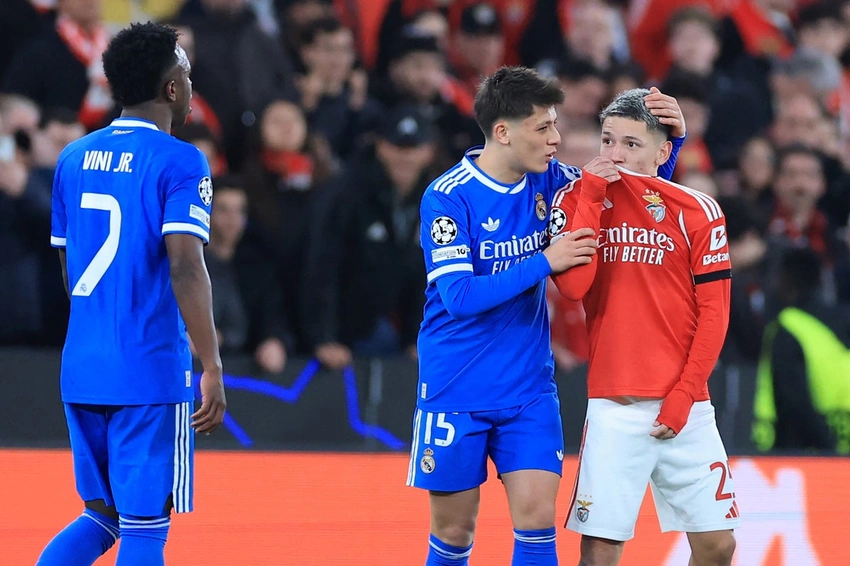
Gianluca Prestianni has been handed a six-game ban by UEFA for homophobic conduct during Benfica's knockout clash with Real Madrid in Lisbon in February. The sanction, announced after the investigation into the incident in the last-32 tie, adds to the ongoing scrutiny of player behavior in European football and comes as the governing body seeks a wider, FIFA-wide extension of the punishment.
The disciplinary action follows a moment in which Real Madrid’s Vinicius Jr. celebrated a goal and then appeared to interact with the Benfica teenager. Referee Francois Letexier signalled with a crossed-arms gesture after the exchange, a symbol adopted by FIFA in May 2024 to indicate racist abuse. Vinicius later used social media to condemn abuse, writing that “Racists are, above all, cowards.” While the focus has centered on the clash and the actions of those involved, UEFA’s ruling clearly centers on Prestianni’s conduct and the impact it has on the sport’s reputation.
Benfica defended their player, arguing there had been a defamation campaign and saying they fully support his version of events. In contrast, former coaches and other figures have emphasized that any substantiated abuse should carry severe consequences. One high-profile voice suggested that if the alleged actions were proven, the player’s career under certain coaches could be at risk.
In a broader movement, FIFA president Gianni Infantino called for discipline to extend into confrontations, including proposals that players who hide their mouths when speaking to opponents could be sent off. Ifab, football’s rule-making body, has already agreed to explore measures aimed at preventing players from concealing what they say during on-field exchanges.
As part of the punishment, Prestianni has already served a one-match ban, with a further three games suspended for two years. UEFA’s move—and the push for a global extension—reflects a growing effort to standardize responses to abuse across European and world football, with the aim of sending a clear message that discriminatory conduct will not be tolerated.
