Tragic: 13,000+ Seal Pups Die in Devastating Australian Bird Flu Outbreak!

Tragic: 13,000+ Seal Pups Die in Devastating Australian Bird Flu Outbreak!
A devastating H5N1 bird flu outbreak on remote Heard Island has claimed the lives of over 13,000 elephant seal pups. Learn about this ecological disaster and its wider impact on subantarctic wildlife.
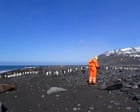
A heartbreaking ecological disaster has unfolded on Australia's remote Heard Island, where a deadly H5N1 bird flu outbreak has claimed the lives of over 13,000 southern elephant seal pups. This mass mortality event, confirmed by recent testing, highlights a severe threat to wildlife in the subantarctic region. The tragic losses were observed by government scientists between October 2025 and January 2026, during drone and ground surveys.
The death rates among the seal pups were alarmingly high, averaging 76% across the island, with some areas experiencing a catastrophic 97% mortality. Dr. Jarrod Hodgson, a senior research scientist and co-lead author of a preprint paper on the findings, noted that these figures might even be an underestimate, as mortality was still ongoing when researchers departed. This stands in stark contrast to typical years, where pup mortality rarely exceeds 5%, making the current situation particularly dire.
Heard Island, a subantarctic Australian territory located approximately 4,000km south-west of Perth and 1,700km north of Antarctica, is not the only affected area. Evidence of high seal pup mortality has also been found on nearby McDonald Island, indicating a broader regional impact of the virus.
The highly pathogenic H5N1 strain has not only impacted seals but has also spread to other vulnerable species. Six out of nine species on Heard Island have tested positive for the virus, including southern elephant seals, king penguins, gentoo penguins, Antarctic fur seals, and South Georgia diving petrels. Hundreds of adult king penguins were also found dead, underscoring the widespread nature of this epidemic and its potential to decimate various populations.
The subantarctic islands are crucial breeding grounds, home to more than a million seals and seabirds, many of which are nationally listed for their conservation status. This outbreak raises serious concerns about the long-term impact on these fragile ecosystems and the broader implications for global wildlife health, prompting urgent calls for monitoring and protective measures.
