More Than Just My Face: Affirming My Northeastern Identity
More Than Just My Face: Affirming My Northeastern Identity
More Than Just My Face: Affirming My Northeastern Identity
Being a northeastern student in mainland India is quite complicated. There's too much going on across different aspects of society and the everyday things we encounter.
On one hand, I'm representing my culture, which people rarely seem to understand beyond momos, exotic landscapes, and tea gardens. On the other hand, I'm constantly adapting to different settings in different places- such as trying to smile and engage more so that I seem 'approachable' and to seem less rude.
The Politics of My Face
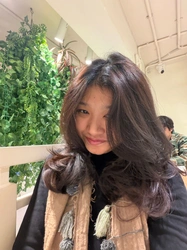
Whenever I step out, I feel like there's this spotlight on me, distinguishing and separating me as some alien person, while people give me second looks as I walk past them. At first, I used to admire the fact that I used to get attention from people and that I was being noticed, but there are also some drawbacks to it.
There was this first time in school where some guy called me "chinky billi", and since I wasn't familiar with Hindi as much, I didn't know that he was saying it in an offensive way, and I brushed it off at the time. There were also times later on when people would whisper about how I looked Chinese with those really small eyes and alien face structure, but there were also times when people would admire me and come up to me in joy, asking me whether I'm Korean or a K-pop star because of the recent BTS fan era among the girls.
Of course, it's not always a fairytale, and there are still days when I feel the weight of stereotypes, and it's so tiring to always have to explain to people that I'm not from Nepal, or China, or Korea, but that I'm Indian.
Friends Who Get It (and Those Who Don't)
Some of my friends genuinely want to know more about my culture- they’ll ask about my hometown, try my food, even pick up a few words in my language just to make me smile and have code words to speak in which no one else would understand. But others, well, they think jokes about your eyes or calling you “chinki” are “just for fun.”
Though the hardest part about it is deciding when I should laugh it off and when to speak up, because you don’t want to be that friend who “can’t take a joke,” but you also can’t keep swallowing the feeling that your identity is being reduced to something small, foreign, or funny.
And then there's this 'momo' stereotype.
Some people think it's harmless and cute to call people like us by using "momo" as a nickname, as if it's a nickname we'd like to embrace. But when it's repeated too many times, it stops being funny and starts feeling as if you're not even a person anymore.
It's not about the word itself, I mean, I LOVE eating momos. It's just about the way that it's said that strikes a nail into your arm. It all makes you hyperaware of yourself when all you've ever wanted for yourself was to blend in with them.
From Hiding to Owning Who I Am
It's hard to let some things slide at times. I lie in bed and wonder what I did wrong to be treated like such an alien in my own country. But the thing is, hiding doesn't work forever. I realised that the more I tried to blend in, the more I felt invisible and couldn't recognise myself.
It wasn't until I started owning my identity, my culture, my fashion style- wearing those cutesy outfits I always wanted to wear but couldn't because of being scared of being judged, refraining to eat my favorite pork dish outside for the same reason, and starting to own the structure of my face, doing cat eye makeup to own and heighten the looks of my eyes because that's just who I am.
Breaking Stereotypes
Just being there, studying, working, making friends, going to cafes, sharing my stories- it's all these things that start chipping away at those stereotypes that we don't always see immediately. I didn't make those close friends by just blending in; I was just being myself and letting my own personality do all the work.
The thing that keeps you going in a new city isn’t always ambition- sometimes it’s community. You find other Northeastern students, and without even saying much, there’s this unspoken bond. You share food, music, stories, and most importantly, understanding. In those moments, you’re reminded that you’re not alone in navigating these cultural intersections. That belonging doesn’t have to mean erasing parts of yourself; it can also mean building spaces where all your parts are welcome.
Note:
For all those Northeastern ladies and gentlemen out there, it's okay to be tired of being the center of attention all the time, be it for better or for worse. It's okay to have those moments where you feel like you just want to fit in and, for once, not have to explain your own heritage. But don't let the world make you smaller to make others comfortable. Own your identity, be who you are, and everything will be just fine.
