SCOTUS Greenlights White House Ballroom Amidst Controversy

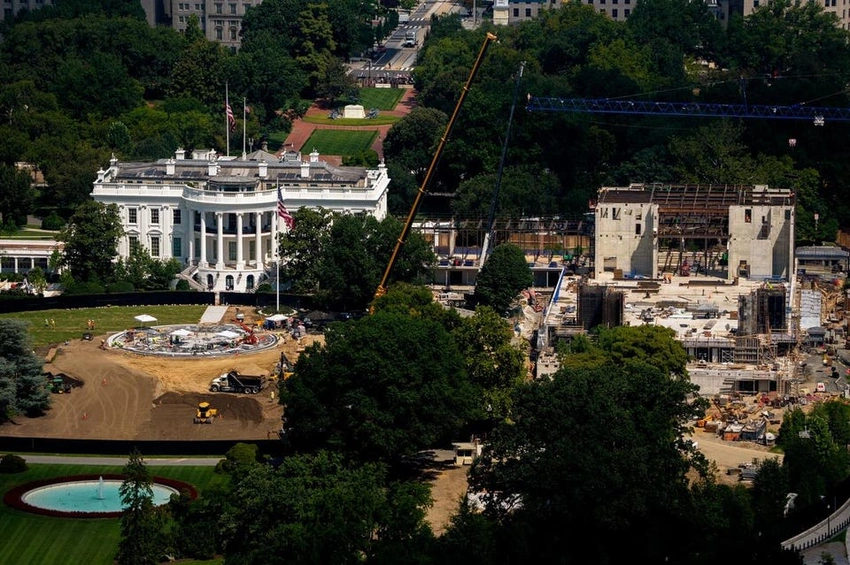
SCOTUS Greenlights White House Ballroom Amidst Controversy
The Supreme Court's 5-4 decision allows White House ballroom construction to proceed. Trump hails it a "major win" while historic preservationists voice deep disappointment. Get the full story!
In a significant 5-4 ruling, the Supreme Court has cleared the path for the controversial construction of a new ballroom and military complex at the White House. This decision comes as a major win for former President Donald Trump, who initially championed the project, and a considerable setback for historic preservationists who had sought to block it.
The National Trust for Historic Preservation had argued against the construction, but the Supreme Court's majority opinion found them unlikely to have the legal standing to challenge the project. However, the ruling did not delve into the legality of the construction itself, focusing instead on the procedural aspect of the case. Chief Justice John Roberts delivered a strong dissent, joined by three liberal justices.
He argued that the construction is "likely unlawful," emphasizing that Congress has explicitly forbidden the erection of any structure on federal properties without its "express authority." Roberts highlighted that the proposed ballroom is a building on federal park grounds, President's Park, in the District of Columbia, for which Congress has not provided such authority. He also noted the potential for "aesthetic injury" to historic preservationists given the White House's iconic status.
Donald Trump, reacting to the news on Truth Social, celebrated the ruling as a victory. He stated,
We are living in the Golden Age of America, and this Building will be one of the Greatest ever constructed in Washington, D.C.
Trump anticipates the "magnificent Ballroom and Military Complex" will be completed by Summer 2028, and proudly declared it "under budget and ahead of schedule" despite the lawsuit.
Conversely, Brent Leggs, CEO of the National Trust for Historic Preservation, expressed profound disappointment in the Supreme Court's decision. While respecting the ruling, Leggs underscored the importance of Chief Justice Roberts' dissent, which aligns with the Trust's long-held position that the White House ballroom project is unlawful.
He reiterated that the majority's decision did not validate the project's legality, leaving that question unanswered.
