Congo's Ebola Crisis Deepens: 6-Month-Old's Burial Highlights Spreading Outbreak

Congo's Ebola Crisis Deepens: 6-Month-Old's Burial Highlights Spreading Outbreak
Heartbreaking scenes in eastern Congo as a 6-month-old Ebola victim is laid to rest. The spreading outbreak claims young lives amidst containment challenges. Stay informed.
A somber gathering took place in eastern Congo on Friday as mourners laid to rest a six-month-old girl, Vanisa Anifa, who tragically succumbed to Ebola. This marks the third child from a local orphanage to die from the deadly virus this week, underscoring the escalating crisis in the region.
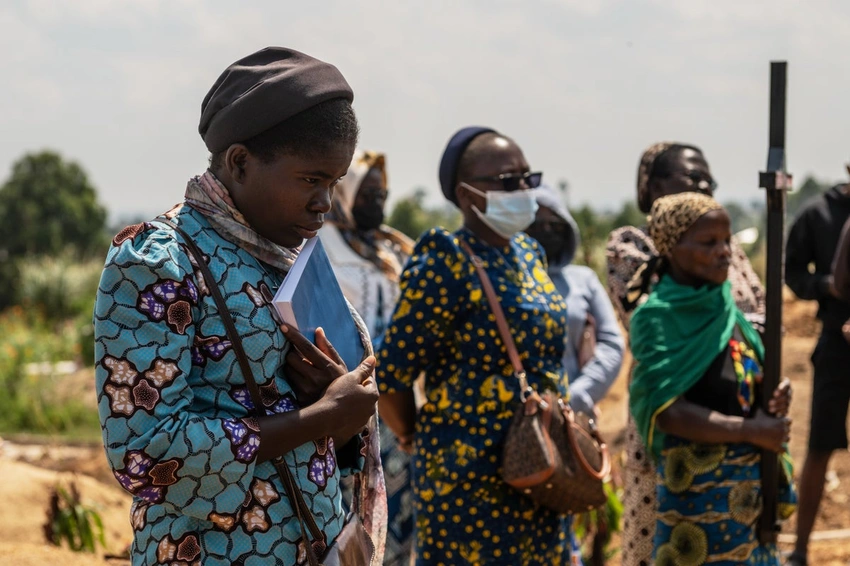
Masked and gloved health workers carefully lowered Vanisa’s small coffin, observed by mourners from a distance. A Catholic priest, Father Innocent Ndogo, offered prayers, expressing profound sadness. “It’s a feeling of sadness because we have lost one of our own, a daughter of the church,” he stated, adding, “As we have always said, the Lord gives, and the Lord takes away.”
The Ituri region is currently the epicenter of this epidemic, accounting for over 90 percent of all reported cases. Efforts to contain the virus have faced significant hurdles, including clashes between residents and healthcare professionals. These conflicts often arise from disrupted traditional burial customs and a response that has, at times, become militarized, further complicating public health interventions.
The stark reality of the epidemic and the critical need for safe burial protocols were evident at Vanisa’s funeral. Only health workers, fully clad in protective gear, were permitted to handle the coffin and conduct the burial, highlighting the extreme measures required to prevent further transmission.
The current outbreak is caused by the Bundibugyo type of Ebola, for which there is no approved treatment or vaccine. Even health workers have voiced concerns about insufficient masks, gloves, and other essential protective gear needed to safeguard themselves while on the front lines.
Statistics from Africa’s Centres for Disease Control and Prevention reveal the severity of the situation: 894 confirmed cases and over 200 deaths to date. This outbreak is already three times worse than a previous one in Uganda in 2000 and poses a risk to an estimated 35,000 suspected potential contacts. While concerning, it is important to note that this outbreak is not yet as deadly as the 2014 epidemic, which claimed over 11,000 lives.
