Player Power vs. Team Plans: NBA Draft's Shifting Sands

Player Power vs. Team Plans: NBA Draft's Shifting Sands
The NBA Draft is a chessboard, but who’s moving the pieces? We explore how player agency increasingly challenges traditional team strategies, using the Indiana Pacers as a prime example.
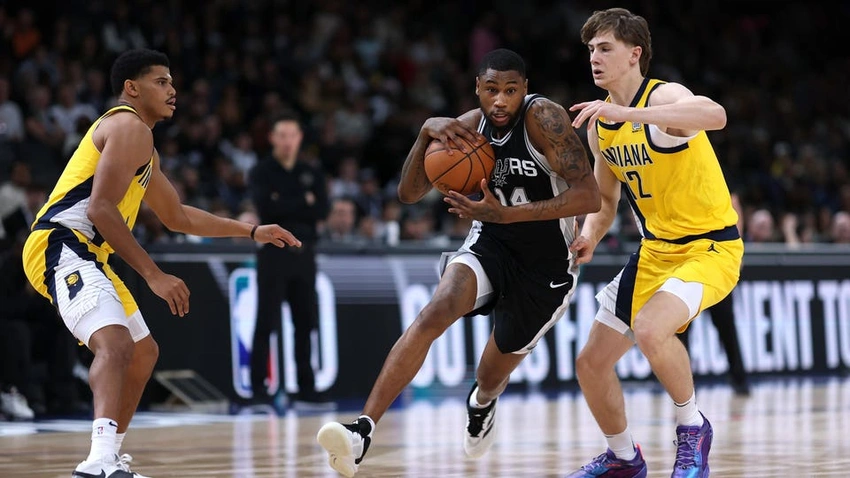
So, the Indiana Pacers are sitting out the initial buzz of the NBA Draft this week. No pick in sight, their top selection gone to the Los Angeles Clippers and a second-rounder to the Memphis Grizzlies. They're in rare company with Portland, the only two franchises currently without a selection in the proceedings.
But don't mistake that for inactivity. The front office has been busy, hosting dozens of prospects for workouts, gathering intel, face-to-face meetings that are often more valuable than raw tape.
The Pacers are contenders, which means acquiring young talent isn't a 'necessity' in the same way it is for rebuilding teams.
Yet, they've historically been quite active, frequently making moves for picks in the 31-38 range.
It's a clear strategic play: target specific talent, often overlooked, perhaps with a view to development or as future trade assets.
But in today's NBA, does that traditional team strategy hold the same sway when players increasingly want a say in their destination?
Player agency has fundamentally reshaped the league. We've moved beyond the days when a draftee simply went where they were told. Now, prospects have more leverage, often via agents, to signal preferences or even hint at contract difficulties if drafted by certain teams.
Imagine the Pacers targeting a player in that 31-38 range, a player they've done their homework on through those exhaustive workouts. What if that player, or their camp, privately expresses a strong desire to land with a team on the West Coast, closer to family, or perhaps one with a perceived clearer path to minutes?
For a team like the Pacers, whose strategic aim is to bolster an already strong roster, these considerations become paramount. Is it worth expending assets to acquire a pick for a player who might be less than enthusiastic about joining, potentially impacting team chemistry or long-term commitment? It's a delicate balance.
On one hand, a team's strategy: identifying value in the second round, leveraging future picks (which Indiana has plenty of) for immediate or near-future gains: is crucial for sustained success. On the other, ignoring player agency can lead to disgruntled assets or missed opportunities for deeper connections within the organization.
My take?
Team strategy absolutely cannot be fully trumped by player agency, but it must adapt.
The Pacers' approach of diligent scouting, even without an initial pick, highlights this.
They're preparing, doing their due diligence on prospects like Blake Wesley, RayJ Dennis, and Johnny Furphy, because they know a trade is always possible. It's about finding the best fit , a player who aligns with the team's culture and strategic direction, and who also wants to be in Indianapolis.
The best teams will be those that can marry strong organizational strategy with an understanding of the modern player's evolving voice, creating a win-win scenario where talent thrives and team goals are met.
