Nathan Fielder's Holmes Doc: Reality TV or Raw Truth?

Nathan Fielder's Holmes Doc: Reality TV or Raw Truth?
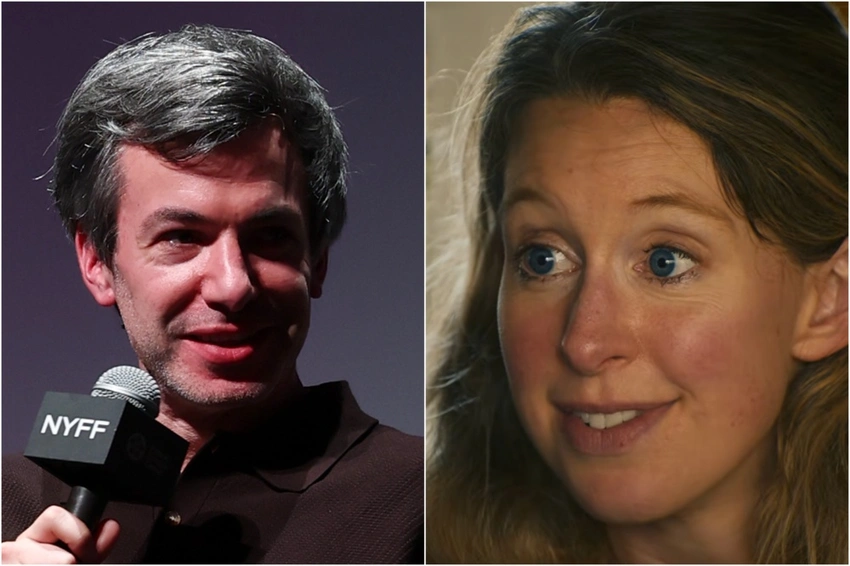
Nathan Fielder lived with Elizabeth Holmes for his new documentary, 'You Can See Everything,' sparking debate: Is this docuseries pushing filmmaking into new, reality-bending territory?
The buzz around Nathan Fielder and Lance Oppenheim’s new Elizabeth Holmes documentary, 'You Can See Everything,' isn't just about the Theranos founder. It's about a fascinating shift in how we tell—and consume—non-fiction stories.
This isn't your standard historical recount. The film, which garnered rave reviews at Telluride and the New York Film Festival, takes a startling turn by embedding Fielder directly into Holmes' life. Imagine living with your subject, 24/7, just weeks before her prison sentence for fraud.
That's the audacious approach Fielder took, moving in with Holmes and her partner Billy Evans, an act that undeniably blurs the lines between traditional documentary and reality television.
Fielder's own experience highlights this ambiguity. He admits,
When I met her, I remember having this weird experience where she seems so genuine at times. But then I'm like, 'no,' and clocking and tracking my thoughts and being like, 'Okay, I know she's a liar.' It was a weird mental thing.
This internal conflict, this constant questioning of truth, becomes the very core of the documentary and, by extension, the viewer's experience.
This isn't just Fielder's individual struggle. Oppenheim revealed that this 'cognitive dissonance' was a shared experience among the entire crew. “Every person that worked on this movie was going through a similar feeling of cognitive dissonance,” Oppenheim shared. “We would unpack the day's events, and no one could agree on the seemingly mundane moments that would transpire.
Everyone had a different point of view.” This collective uncertainty, rather than being an obstacle, became the project's driving force. They realized that if even they couldn't agree, then capturing that very disagreement could be profoundly compelling.
The documentary challenges us to grapple with uncomfortable truths and the performative nature of persona. Holmes herself, in a now-viral teaser, states, “I don't have anything to deceive you on. Of course I'm not deceiving you.
I'm engaging with you as a human being. Why would I deceive you?
There's no reason for me to do that.” Yet, as Fielder observes, the audience knows her history.
Is This the Future of Documentary?
The immersive, often uncomfortable, and deeply subjective approach of 'You Can See Everything' feels remarkably akin to the highly produced, character-driven narratives we see in reality TV. It demands that the audience actively participate in discerning truth, rather than passively receiving it. It's about documenting the process of documentation and the inherent biases within it.
By embracing the ambiguity and even the crew's internal conflict, Fielder and Oppenheim have crafted something undeniably unique. It makes us wonder: as filmmakers chase deeper immersion and audience engagement, will the lines between 'documentary' and 'reality entertainment' continue to dissolve?
