Putin: Russia Ready to Use 'All Weapons' Amid Escalating NATO Tensions

Putin: Russia Ready to Use 'All Weapons' Amid Escalating NATO Tensions
President Putin declares Russia will deploy "all weapons" to defend its territory, including Kaliningrad, amidst rising tensions and NATO's "irresponsible nuclear rhetoric" warning.
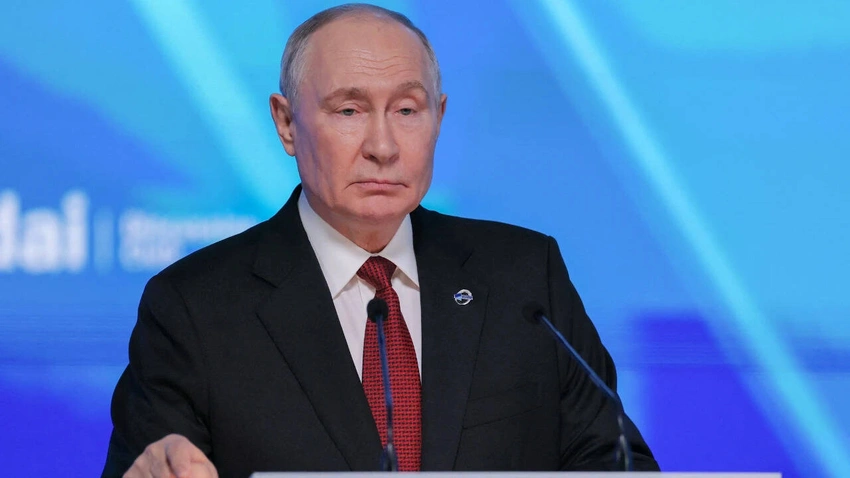
President Vladimir Putin reiterated Moscow's long-held position on October 1, 2026, stating that Russia is not planning to attack European countries but will respond to aggression with “all weapons” in its arsenal. These remarks were made at a foreign policy forum, where Mr. Putin accused the West and Europe of escalating tensions.
He cited discussions about preparing for war with Moscow, conducting military drills in the Baltic Sea, and seizing Russian vessels as contributing factors. Mr. Putin's statements followed a warning from Moscow to NATO, indicating that Russia would not hesitate to use nuclear weapons to defend Kaliningrad if any members of the military alliance attempted to cut off the Baltic exclave from the rest of Russia.
Several Russian embassies in Europe had previously issued statements claiming Moscow had
information that NATO is preparing [an] air and naval blockade of Kaliningrad and [the] Kaliningrad region,
accusing European leaders of “playing a dangerous game.” Moscow dismissed allegations of potential attacks on other countries or destabilizing campaigns as absurd. The Russian Embassy in Ireland explicitly stated on September 29, 2026, that “There should be no mistake - Russia would be ready to use all its arsenal, including nuclear weapons, to defend its territory if NATO countries try to isolate [the] Kaliningrad region from the rest of the country.” When questioned at the Valdai Club forum about whether Russia was on the brink of war with NATO or if both sides were merely trying to intimidate each other, Putin responded, “It's not intimidation, it's a response to an attempt to intimidate us.” He confirmed that the earlier warning to NATO was accurate, adding, “If it comes to a direct attack on the Russian Federation - in this case we mean Kaliningrad, or maybe some other territories - of course, inevitably and immediately the question of Russian Federation using all weapons at the disposal of our country will appear on the agenda.” While he didn't specifically name nuclear weapons, Putin emphasized that Russia possesses arms “no one else has” and would determine their use in case of an attack.
NATO pushed back against Russia's rhetoric. NATO spokesperson Allison Hart confirmed that Russia had sent a written message to the U.S.-led military alliance, stating, “We strongly denounce the threat of force, including any irresponsible nuclear rhetoric.” Ms. Hart insisted that NATO is a defensive alliance not targeting Kaliningrad, and that its activities pose no risk to Russia.
She also mentioned that NATO had sent a short and concise reply to Russia. NATO Secretary-General Mark Rutte echoed this sentiment on September 30, 2026, telling Euronews,
Basically what we said is, Hey, listen, we are defensive alliance, and stop the nuclear threat. This is absolutely not called for and not helpful.
NATO's response also urged Russia to cease its “unprovoked war of aggression against Ukraine,” which is now in its fifth year.
The strategically important Baltic exclave of Kaliningrad is situated between NATO members Poland and Lithuania and hosts Russia's main Baltic navy base, other military assets, and nuclear-capable Iskander missiles. Western military officers have suggested that Kaliningrad's key military installations would likely be a primary target if Russia were to attack any NATO ally.
NATO allies have conducted and planned military exercises in the Baltic Sea region, including Operation Baltic Sentry, which launched last year to protect communication cables and pipelines, and an exercise over northern Poland and the Baltic region involving several aircraft on August 18.
