Robot Revolution on the Horizon? Decoding the 'ChatGPT Moment' for Physical AI

Robot Revolution on the Horizon? Decoding the 'ChatGPT Moment' for Physical AI
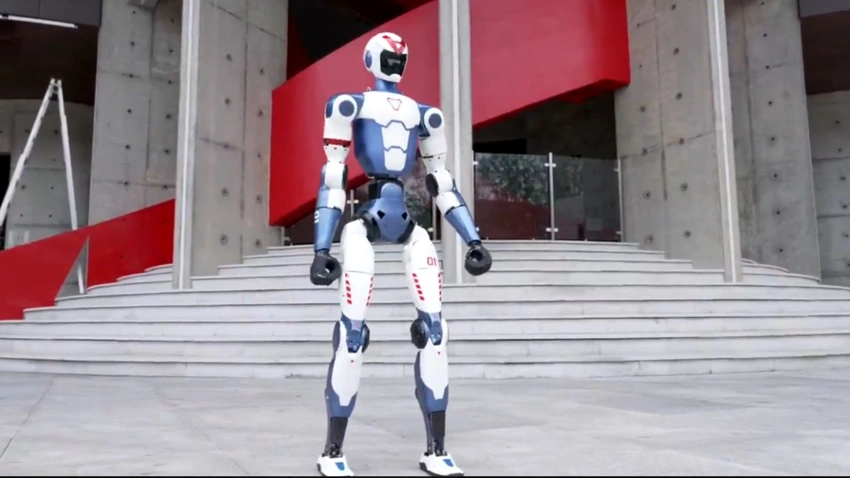
Get ready for robots to get a 'ChatGPT moment'! Industry leaders are buzzing about a breakthrough that could see humanoid robots tackling most tasks in unfamiliar homes via simple commands.
The tech world is buzzing, and it's not just about generative AI anymore. We're talking about the next frontier: bringing that intelligence into physical form. Imagine a “ChatGPT moment” not for text, but for robots that can actually do things in the real world.
It's what innovators are calling “embodied intelligence.” It's the critical leap from large language models to “world models”: sophisticated AI simulation systems designed to help robots truly understand and navigate our complex physical environments. The global AI boom of late 2022, sparked by ChatGPT, showed us the power of a breakthrough inflection point.
Now, the robotics industry is eagerly anticipating its own.
Wang Xingxing, the visionary CEO of Chinese humanoid robot unicorn Unitree, perfectly encapsulates this potential. He's convinced we are incredibly close to a breakthrough where robots can be placed in unfamiliar environments and complete most tasks through simple voice or text instructions. His bold claim?
We could soon see a robot introduced into an unfamiliar household and successfully achieve approximately 80% of tasks based on these natural language commands.
This capability would be an absolute “tipping point” for the entire industry, unlocking explosive growth and ushering in an era of practical, intelligent machines. It’s no surprise that Beijing is keenly aware of this potential, actively backing the sector with strong support.
So, when can we expect this revolution? Wang Xingxing offers a timeline that keeps us on the edge of our seats. Optimistically, a major leap in robot software, the kind that enables true embodied intelligence, could arrive within just two to three years.
A more conservative estimate puts it within five to ten years at the latest.
Either way, it's not some distant dream; it's firmly on the near horizon.
While investor enthusiasm is certainly palpable, as evidenced by the dramatic market debut of companies like Unitree (even with some initial fluctuations), Wang Xingxing remains refreshingly grounded about current capabilities. As Georg Stieler, head of automation at robotics consultancy Stieler, noted, Wang is “notably sober” despite the excitement around events like the World Robot Conference and Unitree's IPO.
This measured outlook is key: the foundational work is being laid, but the true, widespread robot revolution is still ahead.
This isn't just about industrial automation anymore. It's about personal robots, intelligent home assistants, and a radical reshaping of our daily lives, echoing the way ChatGPT transformed how we interact with information. The future of robotics is poised for an intelligence upgrade that could change everything.
