UN to Vote on New World Map: #CorrectTheMap for Africa's True Scale!

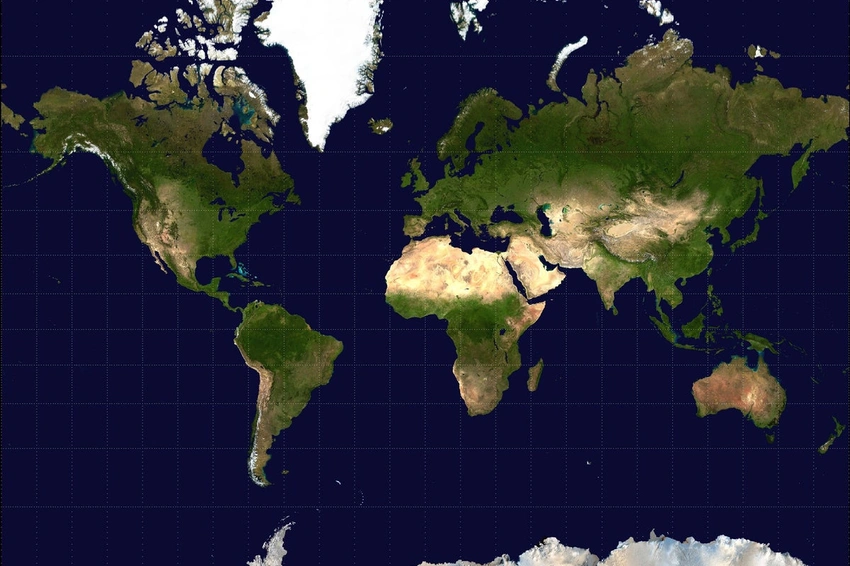
UN to Vote on New World Map: #CorrectTheMap for Africa's True Scale!
The UN is set to vote on adopting the Equal Earth map, addressing centuries of distortion by the Mercator projection. Discover why the African Union's #CorrectTheMap campaign is vital for global representation.
The world map we've all grown up with, the Mercator projection, might soon be a thing of the past. The United Nations is preparing to vote on adopting the Equal Earth map projection, a move championed by the African Union's impactful #CorrectTheMap campaign. This initiative aims to rectify centuries of cartographic distortion that has misrepresented the true size and importance of continents like Africa.
The Mercator projection, created over 450 years ago, was initially designed for maritime navigation during the age of colonial exploration.
While revolutionary for its time, its method of flattening the three-dimensional Earth onto a two-dimensional surface leads to significant inaccuracies.
Specifically, it drastically inflates the size of landmasses closer to the North and South Poles, making countries like North America and Eurasia appear much larger than they are, while under-representing the vastness of continents in the global south, such as South America and, most notably, Africa. For instance, on a Mercator map, Greenland often appears comparable in size to Africa, despite Africa being a staggering 14 times larger.
The #CorrectTheMap campaign, which has garnered over 4,500 signatures, argues that this isn't just a technical flaw; it's a matter of global perception and power. These distortions have subtly influenced how people view and value different regions of the world. By adopting the Equal Earth projection, developed in 2018 by an international team of cartographers, the UN would endorse a map that accurately depicts the relative sizes of all landmasses.
This push for a new world map has been a topic of discussion among cartographers since the 1970s, highlighting the profound impact maps have on how societies understand their place in the world. For the African Union, changing the map projection is a powerful statement, a chance to influence how current and future generations perceive, discuss, and appreciate Africa, ensuring a more equitable global representation.
The upcoming UN vote signifies a potential historic shift in how we visualize our planet.

Login to comment.
No thots yet. Be the first to share your thoughts!