When ‘Dad’ Becomes Past Tense

When ‘Dad’ Becomes Past Tense
When ‘Dad’ Becomes Past Tense
Cancer really does just come up and take away everything from you. It has no mercy.
And it’s so strange how death rewrites grammar.
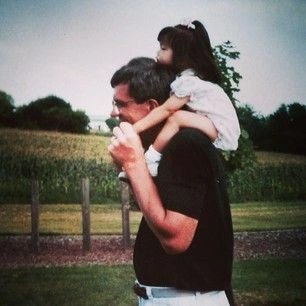
I remember the days after the funeral, my phone buzzing nonstop with messages that started with “I’m so sorry” and ended with “he was such a great man.” I know they meant well. But every “was” felt like a knife. Because to me, he is. He’s still the man whose slippers sit by the door, who hums old Bodo songs while making tea, whose laugh still echoes in the corners of my memory while he plays candy crush in his usual spot on the sofa. But to everyone else, he’s was.
Language changes faster than grief.
That’s the cruel part.
In conversations, people often stumble when they mention him, as if they’re trying to find the least painful way to refer to someone who no longer exists in the world but still very much exists in me. They hesitate before saying “your dad”, and sometimes replace it with “back then” or “those days.”
And soon, people stop mentioning him altogether.
Not out of malice, but out of fear. Fear of making you cry. Fear of saying something wrong.
But society doesn’t teach us how to live with grief, it teaches us how to avoid it.
We’re expected to “heal,” to “move forward,” to put things into neat timelines: three months of sadness, a year of acceptance, and then closure. But grief doesn’t fit into any of that. It seeps into everyday speech: in the way you still say “we” when you mean “I,” in the way you correct yourself mid-sentence when talking about him.
And the worst part is when you catch yourself saying “was.”
It slips out one day, maybe when you’re telling someone about his favorite food or the kind of music he liked, and you hear yourself say “He was...” and suddenly your stomach drops. You didn’t mean to. You didn’t want to. But you just did. And that’s when it hits you: language is moving on, even if your heart isn’t.
It’s funny how grief makes you a collector: not of things, but of traces. You hold on to his handwriting on an old receipt or his old journal. The way he said your name. The phrases he repeated so often they became part of your vocabulary. Even when the world forgets his voice, you keep it in your own speech: subtle, invisible, and alive.
Sometimes, when I talk about him now, I catch people’s eyes flicker: that brief look of worry, the “should I say something?” hesitation. But I keep talking. I say his name, I tell his stories, I use the present tense when I want to.
Because maybe love doesn’t obey grammar.
Maybe love is one of those rare things that stays, even when time, language, and life keep moving forward.
I just wish he was here. I wish I still had him in my phone call logs and in my recent text messages. I wish he was here to tell me it's okay if I don't score well in my exams. I wish he would've been there for all my achievements, for my birthdays, even for the usual days when it doesn't really mean much. I just wish he was here.
But I’ve stopped worrying about whether people feel awkward when I bring him up. I’m done cushioning my grief for the sake of other people’s comfort. Because saying his name is my way of keeping him real. Of keeping me real.
And maybe one day, people will stop avoiding his name too.
Maybe they’ll remember that the kindest thing they can do for someone grieving isn’t to stay quiet, it’s to say the name.
Because love doesn’t end when someone dies.
It just changes tenses.
papa, i love you, and we miss you.
