Pete Hegseth Declares "Victory" in Domestic Culture War Amidst Global Crises

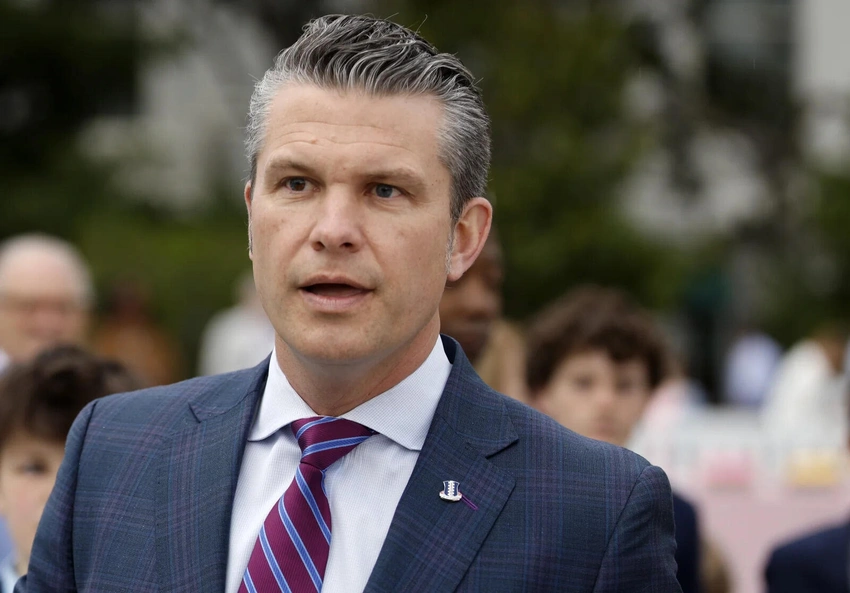
Pete Hegseth Declares "Victory" in Domestic Culture War Amidst Global Crises
Pete Hegseth, "Secretary of War," held a controversial "State of the Force" address, claiming victory over "wokeness" while largely ignoring actual global conflicts. Discover the contentious details.
Pete Hegseth, the self-proclaimed "Secretary of War" in Donald Trump's Pentagon, recently convened hundreds of U.S. military personnel in Virginia for what he termed the inaugural "State of the Force" report. In a dramatic address, Hegseth declared a controversial victory in an internal culture war, asserting that the military is "no longer the 'woke' department, or the 'weak' department." His provocative statement, "No fatties, no trannies, no beardos, no weirdos.
No wimps, no radicals. Just warriors,
set a combative tone. The speech, reminiscent of his previous television appearances, focused heavily on vilifying perceived domestic enemies, primarily
political correctness" and even segments of the military's own leadership.
Hegseth claimed to have already dismissed about ten percent of generals and planned to remove more, portraying them as part of the internal opposition. He also launched a sharp attack on "fake news," accusing media outlets of "treason" for accurately reporting challenges faced by U.S. forces in actual conflict zones. Remarkably, Hegseth's nearly hour-long address largely sidestepped ongoing geopolitical realities.
A brief mention of the conflict with Iran was framed as a roaring success, despite the Trump Administration simultaneously seeking tens of billions in emergency funding for the very same war. This selective focus came on a day when the Pentagon announced the closure of the last major U.S. military base in Iraq, marking the end of a costly 23-year American presence initiated by George W. Bush.
This significant development went unmentioned. Furthermore, critical global adversaries like China, Russia, and the broader geopolitical landscape of Europe and Africa were conspicuously absent from Hegseth's narrative. This omission underscores what appears to be a core doctrine within the current Pentagon leadership: a singular focus on domestic "us versus them" politics, rather than international strategy.
This internal emphasis aligns with previous statements from both Hegseth and Trump, who, at the outset of the President's second term, explicitly stated their intention for the Defense Department to concentrate on what Trump dubbed "the enemy from within." However, this stance creates a stark contrast with Trump's earlier pledges to avoid costly, open-ended conflicts in the Middle East.
The sudden shift towards imperialist engagements has evidently caused dissonance, even among former "America First" loyalists and propagandists.
A "field manual" distributed by Hegseth's staff, containing four of his speeches and a foreword from the President promising not to "ask you to fight dumb Wars," now rings hollow. Since the onset of the current conflict, Iran has reportedly asserted control over the Strait of Hormuz, causing global economic turmoil, billions in damage to U.S. military bases, and alarmingly depleting American air-defense and munition stocks.
At such a critical juncture, Hegseth's inward-looking "State of the Force" report raises serious questions about the strategic direction of the U.S. military.
