Why This Humanoid Robot Running a 50-Minute Half Marathon Should Worry You

Why This Humanoid Robot Running a 50-Minute Half Marathon Should Worry You
A robot just shattered the half-marathon world record by seven minutes. Is this a triumph of engineering or the beginning of the end for human athletics? Let's dive into the scary side of tech.
The End of the Human Athlete?
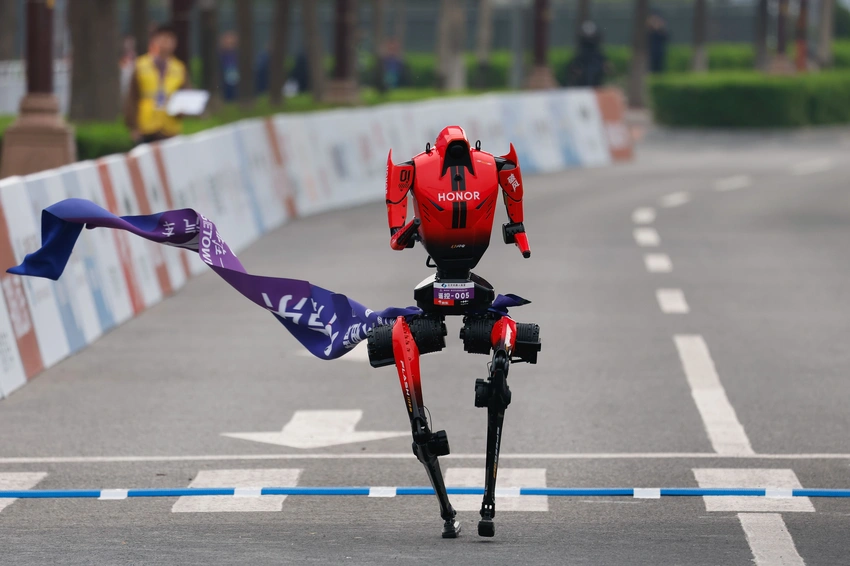
Imagine standing at the finish line of a high-stakes half marathon. You expect to see the world's elite runners gasping for air as they push their hearts to the limit. Instead, you see a machine. This is not science fiction anymore. A humanoid robot recently completed a half marathon in just over 50 minutes, shaving seven minutes off the human world record.
A Mechanical Milestone
For decades, we have used technology to help us run better. We have carbon-plated shoes, GPS watches, and advanced nutrition. But there is a massive difference between a human using a tool and a tool replacing the human. Seeing a piece of hardware from Honor glide through a 13.1 mile course with such ease feels like a shift in the natural order. It was not just fast; it was consistent. It did not experience lactic acid buildup or a mental wall. It just calculated the most efficient path and executed it.
When Cool Becomes Uncanny
We usually love seeing robots do things. We cheer when they flip or dance in viral videos. However, sport is different: sports are the ultimate celebration of human frailty and the will to overcome it. When a robot crushes a human record, the coolness factor starts to evaporate, replaced by a sense of unease. At what point does this stop being a fun engineering project and start being a reminder of our own growing obsolescence?
If a robot can run faster than our fastest athlete, what is left for us?
- The Physical Barrier: We used to be the masters of locomotion.
- The Emotional Connection: Can you really root for a battery?
- The Future of Competition: Will we eventually stop caring about human records if they are always second-best to a motherboard?
Drawing the Line
We are entering an era where tech-assisted sport is no longer about assisting humans. It is about surpassing them. While the engineering feat is undeniably impressive, we need to ask ourselves if we are ready for a world where the podium is occupied by aluminum and sensors. If we keep moving the goalposts, we might find ourselves entirely out of the game.
