Why Victoria’s Secret Models Became Symbols of an Era

Why Victoria’s Secret Models Became Symbols of an Era
Why Victoria’s Secret Models Became Symbols of an Era
For many years, Victoria’s Secret models were not simply fashion figures: they became cultural symbols. Their presence extended beyond runway appearances into advertising, television events, beauty standards, and global ideas of glamour. To many people, the image of a Victoria’s Secret model represented not only physical attractiveness but an entire aesthetic era defined by polished femininity, visible confidence, luxury, and highly curated beauty.
What made them culturally powerful was that they existed at the intersection of fashion, media, fantasy, and repetition. They were seen often enough, styled consistently enough, and presented dramatically enough that they became more than individual models: they became an instantly recognizable category.
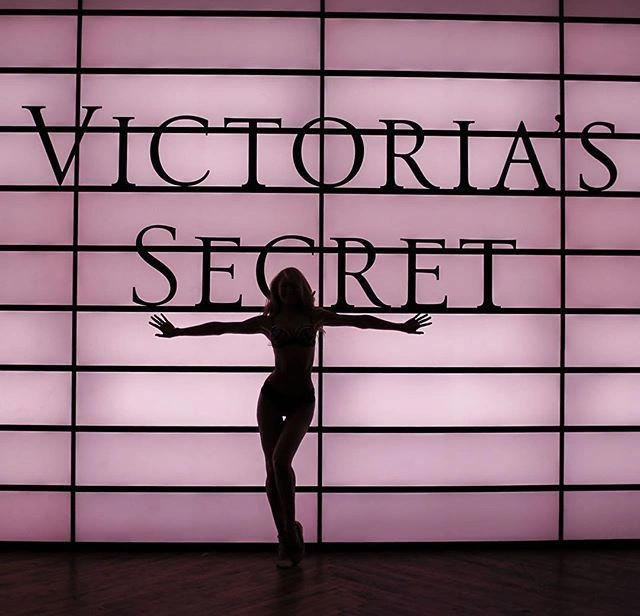
The annual Victoria's Secret Fashion Show played a major role in creating this effect. Unlike traditional runway presentations designed primarily for fashion industry audiences, the Victoria’s Secret show was built as spectacle. Music performances, dramatic wings, themed sets, highly choreographed entrances, and camera attention transformed the runway into entertainment.
This made models visible in a different way.
They were not only presenting clothing; they were performing charisma.
That distinction matters because charisma became central to the brand’s identity. A Victoria’s Secret model was expected not only to look physically striking but to project ease, confidence, and polished stage presence. Walking the runway required more than technical movement: it required creating the illusion that beauty itself looked effortless.
That illusion became highly influential.
The term “Angel” especially shaped how these models were perceived. The branding suggested not simply beauty, but elevated beauty: beauty associated with idealization, fantasy, and cultural aspiration. Wings reinforced this visually, making certain models appear almost symbolic rather than ordinary human figures.
This symbolic framing gave the models unusual cultural power.
Names such as Adriana Lima, Gisele Bündchen, and Candice Swanepoel became globally recognized not only because of modeling work, but because they repeatedly embodied one highly recognizable visual ideal.
That ideal combined athletic tone, glossy hair, confident posture, symmetrical styling, and highly controlled presentation of femininity.
The repetition mattered.
When audiences see similar beauty presented consistently over years, it becomes associated with an era’s dominant aesthetic values. In the 2000s and early 2010s, Victoria’s Secret strongly influenced what mainstream beauty aspiration looked like: long hair, bronzed skin, toned bodies, visible glamour, and polished sensuality presented as both powerful and desirable.
This influence extended beyond fashion itself.
Beauty routines, fitness culture, hair styling, makeup trends, and even public ideas of “the ideal body” were affected by how often these models appeared as reference points in magazines, television, and advertising.
The runway itself became a cultural event because it blended aspiration with accessibility in a specific way. While haute couture often feels distant, Victoria’s Secret imagery felt emotionally legible to mainstream audiences. It sold fantasy, but through a familiar visual language: smiles, confidence, pop music, and strong stage personality.
This made the models feel iconic rather than abstract.
What once appeared universally aspirational increasingly began to feel selective and limited.
This does not erase the influence Victoria’s Secret models had: it explains why that influence became historically specific.
They symbolized an era precisely because the era itself held particular ideas about glamour, beauty, and exclusivity that later changed.
Today, beauty culture is more visibly fragmented. Social media allows multiple aesthetics to coexist: soft beauty, athletic beauty, minimalist beauty, alternative beauty, natural beauty, luxury beauty, and many others.
This means no single runway image dominates as completely as Victoria’s Secret once did.
Yet the emotional memory remains strong because those models represented more than fashion: they represented peak visual certainty within a specific cultural moment.
For many people, the runway symbolized ambition, discipline, fantasy, and polished femininity all at once.
Even viewers who did not fully identify with the beauty standard often recognized its cultural force.
Perhaps that is why the Victoria’s Secret model remains such a strong symbol in memory: she represented an era when beauty was staged theatrically, repeated globally, and presented as something almost cinematic.
Not merely clothing.
Not merely modeling.
But a carefully built visual language of what an entire period imagined glamour should look like.
And because that language was repeated so powerfully, the models became inseparable from the era itself.

Login to comment.
No thots yet. Be the first to share your thoughts!