The Surveillance Debate: Finding a Balance Between Safety & Privacy

The Surveillance Debate: Finding a Balance Between Safety & Privacy
Flock Safety's CEO calls for compromise amidst backlash over surveillance tech misuse. Is it possible to have both public safety and individual privacy in the AI era?
We're living through an era where technological innovation constantly pushes the boundaries of what's possible, and nowhere is this more apparent than in artificial intelligence and surveillance. The promise is enhanced public safety, but the reality often brings uncomfortable questions about individual privacy. Companies like Flock Safety are at the very heart of this ethical crossroads.
Garrett Langley, CEO of Flock Safety, articulates this tension clearly. He argues that the country needs a 'compromise' between privacy and safety.
'When people talk about just one of these, privacy or safety, they're prioritizing the wrong thing,' Langley recently stated.
His point underscores a fundamental challenge: how do we leverage powerful tools for security without eroding foundational freedoms?
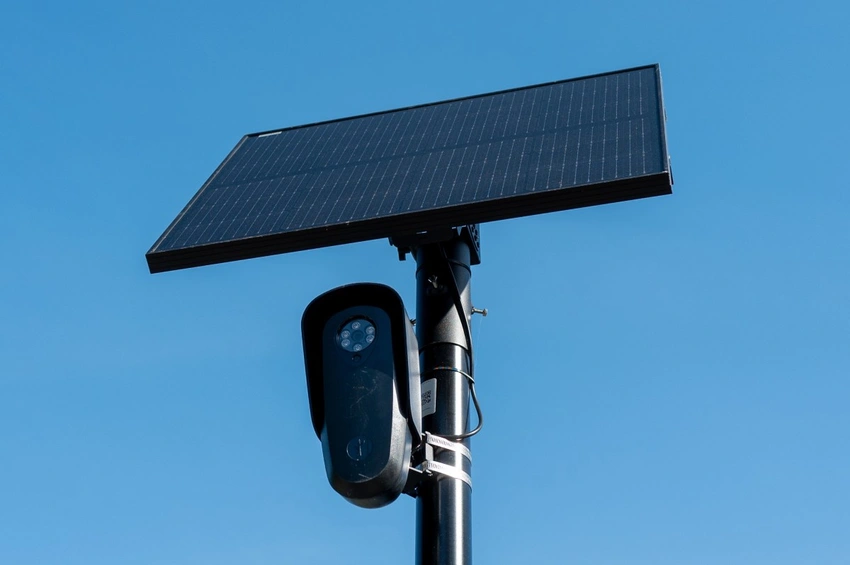
Flock Safety, known for its cameras, drones, and license plate recognition technology, has found itself under intense scrutiny. The public outcry stems from legitimate concerns about potential misuse. These aren't abstract fears.
A recent investigation by The Washington Post brought to light 46 documented cases where police officers allegedly exploited Flock technology for unauthorized purposes, including stalking spouses and ex-partners.
This is a chilling revelation that directly counters the notion of technology as a neutral tool.
Langley himself has addressed these grave incidents.
After hearing an interview with one of the alleged victims, he told CBS News, 'I apologize.
It kills me that she went through that.' While acknowledging the harm, he also asserted, 'I don't think that Flock created police abuse.
I think we're the first company to ever shine a light on it and build the tools to find it.' This stance attempts to reposition the company not as the problem, but as part of the solution to uncovering existing abuses.
It's a delicate line to walk, one that shifts responsibility while still offering a path forward.
The backlash isn't confined to privacy advocates; it's become a bipartisan issue, mirroring the broader political polarization seen in other tech debates. On the left, figures like Michigan's Democratic Senate nominee Abdul El-Sayed have criticized the 'mass proliferation of Flock cameras,' asserting they watch 'your every move to collect information without you even noticing.' Vermont Senator Bernie Sanders amplified this sentiment with a stark message: 'STOP AI MASS SURVEILLANCE.
STOP FLOCK.'
The right is also weighing in. Three House Republicans recently introduced legislation to prohibit federal government purchases of automated surveillance systems, specifically naming Flock Safety cameras, if they utilize facial recognition, biometric IDs, or license plate recognition. This convergence of concern from across the political spectrum signals a profound shift.
It's no longer just a fringe issue; it's a mainstream political debate.
As an industry, we must grapple with this reality.
The 'compromise' Langley speaks of isn't simple.
It requires not just technological safeguards, but robust legal frameworks, strict oversight, and absolute accountability.
The balance between using AI for public good and preventing its descent into a tool for oppression is perhaps the defining ethical challenge of our time. Companies developing these powerful technologies have an immense responsibility, not only to innovate but to ensure their innovations uphold democratic values and individual rights. The conversation around Flock Safety is a critical microcosm of this larger global dilemma.
