Idea vs Execution: Why the Winklevoss story still fuels startup myths


Idea vs Execution: Why the Winklevoss story still fuels startup myths
Idea vs Execution: Why the Winklevoss story still fuels startup myths
Why the Winklevoss-Zuckerberg saga popularized by The Social Network fuels a costly startup myth: ideas alone don’t win. This piece argues execution and timing matter far more.
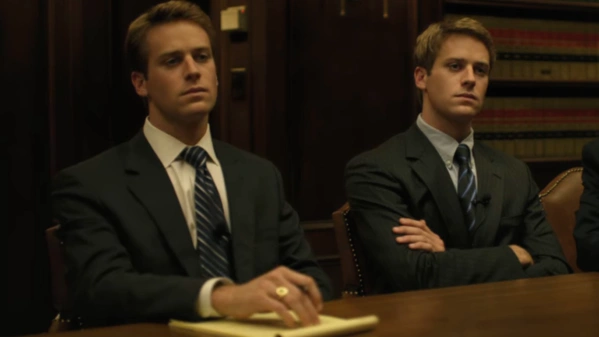
I have been watching The Social Network scenes that Youtube shorts has been putting in my feed lately. And I was quite interested to read the comments sections - so split. Many believe that the Winklevoss brothers should have been given a large part of Facebook - that they didn't get enough. Which sparks a bigger question that still confuses people in the startup world:
When a startup becomes successful, how much of it is because of the idea?
While Facebook wasn’t legally obligated to pay Winklevoss brothers anything, why do so many social media people believe they deserved more for an idea? This story seems to have perpetrated the myth that idea is worth a lot whereas these days it’s more well known at least in startup community that it’s worth nothing because execution takes so long and that’s why all successful tech companies are built by tech founders
In the startup community today, the prevailing belief is “ideas are cheap, execution is everything.” But the story of the Winklevoss twins vs. Zuckerberg (popularized by The Social Network movie) has helped create and perpetuate a false cultural narrative that having the idea first somehow entitles someone to a huge share of a successful business.
Ideas are a dime a dozen. So -
Why People Believe Winklevoss brothers Were Owed More?
Let's break down why that myth persists, especially in popular media, even though it's rejected in the startup world:
1. Hollywood Loves a David vs. Goliath Story
The Winklevoss twins were portrayed as wronged aristocrats with a noble idea, while Zuckerberg was cast as the brilliant but morally grey hacker who "stole" it.
This black-and-white narrative is emotionally satisfying, even if it oversimplifies the truth.
In reality, the Winklevosses hired Zuck to work on a separate project (HarvardConnection / ConnectU), but Facebook was something else entirely, a much broader vision with radically different execution.
2. People Misunderstand the Role of Execution
For outsiders, it feels like the “idea” is the hard part. They don’t see the months (or years) of product iteration, growth hacking, hiring, scaling, and business risk that come after the spark of an idea.
But insiders - founders, VCs, engineers - know that 99% of success is in execution:
There were dozens of social networks before Facebook. None of them became Facebook.
3. Legal Settlement Created Perceived Legitimacy
Facebook settled with the Winklevoss twins for ~$65 million. That gave the impression: "See, they were owed something!"
In reality, legal settlements often happen not because guilt is admitted, but because it’s cheaper than protracted litigation and PR fallout.
4. “Idea Ownership” Is Easy to Relate To
Many people think, “I had that idea once!” So they identify with the Winklevoss twins.
It plays into the comforting (but flawed) notion that you could become a billionaire if someone didn’t “steal” your idea.
It’s a way for non-builders to insert themselves into a tech success story.
5. Myth of the “One Big Idea” Genius
Popular culture glorifies the lightbulb moment rather than the grind.
But in startups, success is usually the result of:
- Dozens of pivots
- Relentless iteration
- Strong product-market fit
- Founder obsession
- Timing and luck
The Real Lesson
Ideas are everywhere.
What matters is:
- Can you build it?
- Can you scale it?
- Can you monetize it?
- Can you out-iterate competition?
That’s why nearly all breakout tech companies are built by technical or product-oriented founders, not people who simply had an idea and outsourced the work.
TL;DR:
The Winklevoss vs. Zuckerberg story stuck because it’s dramatic and emotionally satisfying: but in reality, it misleads people into overvaluing ideas. Execution, not ideation, creates billion-dollar companies.
#StartupMyth #IdeasVsExecution #Winklevoss #SocialNetwork #ExecutionMatters
