Why Does Ed Sheeran Want to Stay Out of Politics So Badly?
Why Does Ed Sheeran Want to Stay Out of Politics So Badly?
Why Does Ed Sheeran Want to Stay Out of Politics So Badly?
Ed Sheeran’s Macklemore controversy exposes the uneasy limits of staying “apolitical” in pop music and raises the question of whether he wants to pursue Dolly Parton's model to find a more sustainable way to balance valu
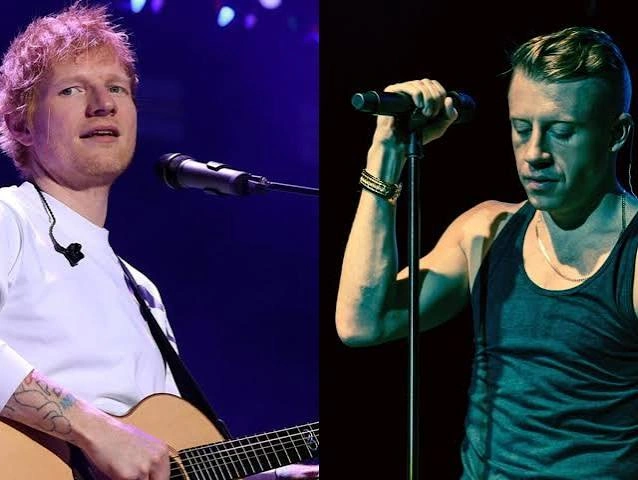
Ed Sheeran has spent years cultivating the image of the uncontroversial pop star. He makes songs people put on at weddings. He plays enormous stadiums. His concerts are supposed to be spaces where everyone can turn up, sing along and forget whatever is happening outside for a few hours.
Then Macklemore said “Free Palestine” from the stage. Within days, Macklemore had been removed from the rest of Sheeran’s US Loop Tour, other support acts had walked away, and Sheeran was standing onstage in Philadelphia addressing an audience that had suddenly become part of a much larger argument about Gaza, capitalism and who gets to speak inside the machinery of pop music. Sheeran has said he did not make the decision to remove Macklemore and that he wanted his shows to remain spaces centred on humanity rather than politics.
What’s Dolly got to do with all this?
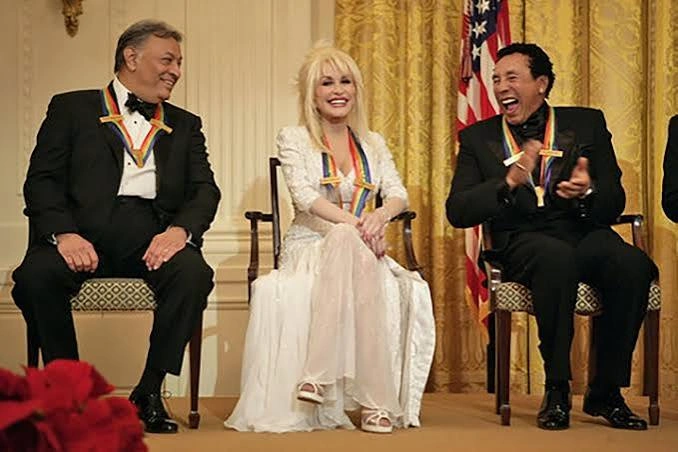
There is a reason I keep thinking about Dolly Parton when I look at the Sheeran controversy. Parton spent decades becoming one of the most recognisable stars in America while being extremely careful about presenting herself as a political figure. A recent Guardian profile revisiting a 2023 interview describes how deliberately she avoided political questions, even when the subjects were impossible to separate from the American culture wars around her. Yet her public life has never been empty of values. Her philanthropy, her work around children's literacy and the way she has used her platform to make people feel included have all become part of what Dolly Parton means in American culture.
That is a very particular kind of apoliticism. Parton did not build her reputation by pretending she had no values. She built a world around herself in which people with very different politics could still recognise something they liked. Her public persona has been expansive enough to hold contradictions. She could be a businesswoman and a humanitarian. She could be deeply associated with Southern and Christian culture while becoming beloved by audiences who did not necessarily share that worldview. Her politics were often less visible than her values.
The problem with being “apolitical”
Sheeran has said that he wanted his shows to be about unity and humanity rather than politics. He has also said that the decision to remove Macklemore was made by the promoter after venues indicated they would not host shows with him on the bill. At his Philadelphia concert, he acknowledged the devastation in Gaza while explaining that he had tried throughout his career to keep his music away from political commentary.
The problem is that “apolitical” has become a much harder position to maintain in pop music. A stadium is not politically neutral space simply because the person onstage sings a love song. There are promoters, venue owners, sponsors, contracts and ticket sales involved. The Forbes account of the controversy traces the dispute from Macklemore's pro-Palestinian remarks at MetLife Stadium to his removal from the remaining tour dates after venues objected to him staying on the bill.
Pop music has never been as innocent as it looks
There is something particularly strange about the expectation that pop stars should keep politics away from music, because pop has always been tangled up with the world around it. Songs become political because audiences hear them that way. Performances become political because of where they happen. Even choosing silence can acquire meaning once everyone knows there is something being avoided.
Macklemore's position was particularly explicit. After being removed from the tour, he argued that his friendship with Sheeran could not override what he saw as his responsibility to speak about Palestine. He also pledged his tour earnings towards humanitarian organisations in Gaza. Meanwhile, Robert Kraft defended the decision around the stadium dates, arguing that Macklemore's performance had crossed a line. Those positions are not identical, and pretending they are would flatten the controversy into something much easier than it actually is.
The capitalist machinery is part of the music
This is where the Dolly comparison gets more complicated. Parton's apolitical persona worked partly because it was backed by an enormous amount of personal authorship. She controlled her image, her music and much of the business built around her. She could remain outside partisan politics while still making decisions about what kind of public figure she wanted to be. Her philanthropy became one of the ways she expressed those values without turning every public appearance into a political declaration.
Sheeran's situation is different because his attempt at neutrality has collided directly with the business surrounding his music. His tour is not just a singer standing with a guitar. It is a huge commercial operation involving venues, promoters, workers and audiences. According to the reporting around the dispute, venues objected to Macklemore remaining on the bill, while Sheeran maintained that he had tried to find a way through the situation without abandoning the tour or the people whose livelihoods depended on it. That is the uncomfortable part. The music industry can sell the fantasy that music exists above politics while simultaneously making decisions based on political pressure.
Freedom of speech
The phrase “freedom of speech” gets thrown around very quickly in controversies like this, but the situation here is more complicated than simply asking whether Macklemore was allowed to say something. Artists have freedom of expression, but concerts are also commercial arrangements involving private organisations. A venue can impose conditions on who performs there. A promoter can make decisions about a tour. An artist can decide what they are willing to participate in. Those freedoms can collide.
Macklemore's removal therefore raises a question that feels much bigger than one opening slot. If artists are free to speak, but venues and promoters can determine the commercial conditions under which that speech happens, where does artistic freedom actually live? And what happens to an artist who is less powerful than Macklemore?
Sheeran's version of apoliticism is being tested
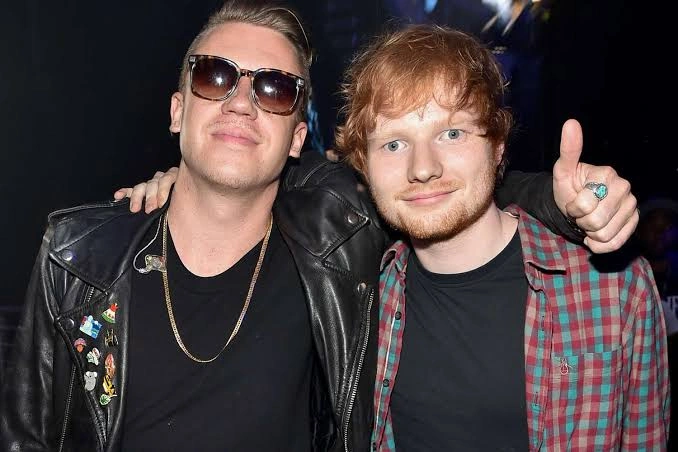
The criticism of Sheeran is not simply that he did not make the correct political statement. It is that the strategy he has relied on for years becomes much harder to sustain when the person standing beside him has already made a political statement. This is where his choice of Macklemore becomes important. Macklemore's political music was already public, and his support for Palestine was not something that suddenly appeared at a Sheeran concert. The Guardian's reporting notes that his political commitments were well established before the tour, which makes the situation different from a singer unexpectedly turning a stadium show into a political rally.
Sheeran chose to share the stage with an artist whose work was already political. When that politics became commercially inconvenient, the attempt to separate the artist from the politics became much harder to explain. Parton offers another model. Her apoliticism has always been less about pretending politics does not exist and more about deciding what kind of public world she wants to create around herself. That does not make her approach universally applicable, but it does show why neutrality can work differently when it is supported by a recognisable set of values rather than simply a desire to avoid controversy.
