India's Space Program Roars Back: ISRO Resets & Private Rocket Takes Flight!

India's Space Program Roars Back: ISRO Resets & Private Rocket Takes Flight!
India's space sector is buzzing! ISRO bounces back from setbacks with new launches, while the nation's first private orbital rocket, Vikram-1, prepares for its historic maiden flight. Get ready for a new era in space exp
India's space aspirations are set to ignite in the latter half of 2026, as the Indian Space Research Organisation (ISRO) gears up for a crucial reset following a challenging first half of the year. The nation is also on the cusp of a historic milestone with the imminent launch of Vikram-1, India's first privately developed orbital-class rocket.
The initial six months of 2026 proved sluggish for ISRO, marked by just one launch, the PSLV-C62 mission carrying the EOS-N1 earth observation satellite in January, which unfortunately ended in failure. This setback followed another anomaly in May 2025 with the PSLV-C61 mission. Both incidents were attributed to an issue in the third stage of the Polar Satellite Launch Vehicle (PSLV). Union Minister of State for Science and Technology Jitendra Singh has confirmed that a national-level expert committee has successfully identified and resolved the anomaly in the PSLV, paving the way for upcoming missions.
With the technical hurdles cleared, ISRO is now poised for a busy schedule. A Geosynchronous Satellite Launch Vehicle (GSLV) mission is slated for July, to be followed by another PSLV launch in the subsequent months. These launches are critical for ISRO to regain momentum and demonstrate its continued prowess in space technology.
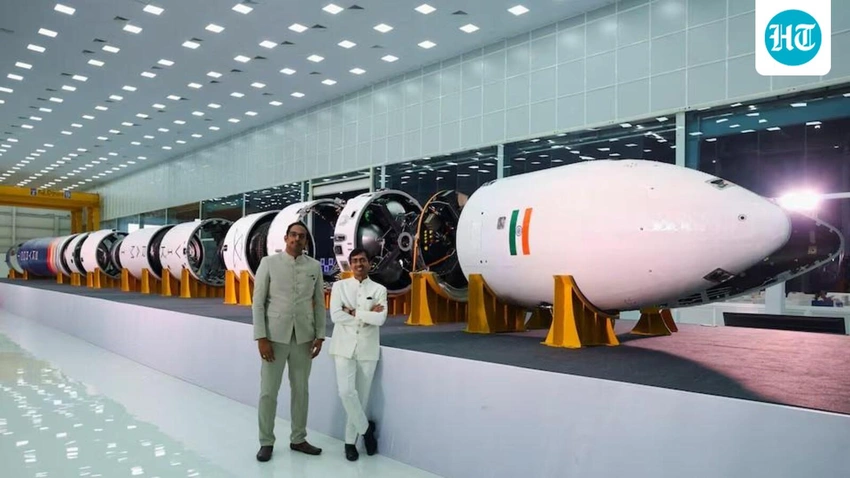
Adding to the excitement is the much-anticipated debut of Vikram-1. Developed by Skyroot Aerospace, this marks a monumental step for India's private space sector. Named "Vikram-1 Test Flight-1: Mission Aagaman," the rocket is fully stacked at India’s historic First Launch Pad (FLP) at the Satish Dhawan Space Centre in Sriharikota. The launch window for Vikram-1 is scheduled to open on July 12, with the maiden flight expected by August 4. This private venture signifies a new era of innovation and collaboration in India's journey to explore the cosmos.
Further underlining India's growing influence in global space cooperation, the country recently hosted the BRICS Heads of Space Agencies (HOSA) 2026 meeting in Bengaluru. The meeting, which brought together senior representatives from the space agencies of Brazil, China, Egypt, Ethiopia, India, Indonesia, Iran, Russia, South Africa, and the United Arab Emirates, saw significant progress. Key outcomes included advancements in structural and operational frameworks for space cooperation and an amendment to the BRICS Remote Sensing Satellite Constellation Agreement, extending its scope to include new BRICS members. This period of renewed activity, from overcoming technical challenges to fostering international partnerships and enabling private sector breakthroughs, positions India for a dynamic future in space exploration.
