The Humans Vs Machines Battle: China Takes A Bold Stand


The Humans Vs Machines Battle: China Takes A Bold Stand
The Humans Vs Machines Battle: China Takes A Bold Stand
Humanoid robots wowed audiences at the 2026 Spring Festival Gala with martial arts, sword dances, and a comedy sketch alongside human stars. China frames robots as teammates in work, entertainment, and daily life, signal
One of the most-watched events on television in the world, the 2026 Spring Festival Gala, has featured a gleaming array of humanoid robots. They practised martial arts, performed detailed sword dances, and even participated in a comedy sketch alongside human celebrities.
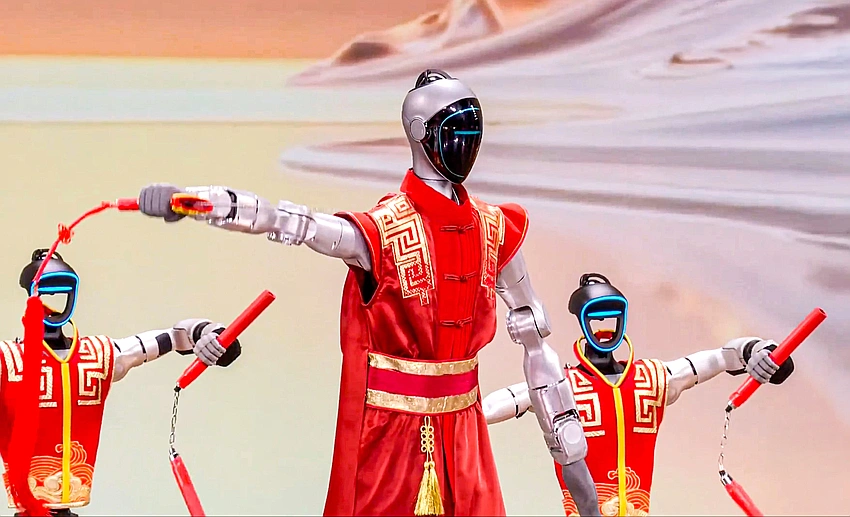
Although some elements of the world continue to regard humanoid robots with fear and suspicion, as a threat to their jobs or sci-fi movie antagonists, China is starting to think of them as collaborators in labour, amusement, and everyday living. Faced with the growing artificial intelligence (AI) competition, China is not only fighting on the technological level but is also quickly leading in readiness to implement these machines in the lives of the people.
Last year, China shipped around 13,000 humanoid robots to the world, and this figure represented 90 per cent of the total amount of humanoid robots. The nation also constituted more than half of the humanoid robotics exhibitors in the Consumer Electronics Show 2026. Researchers, engineers, entrepreneurs, and investors are attracted to this developing ecosystem that is developing into a booming market.
It is powered by a parallel boom in very large language models and multi-modal AI, both of ByteDance, Doubao, and the DeepSeek and Qwen models. The training of such AI models is useful in getting the robots to comprehend user input, converse, process data, and deliver valuable output. The additional application of AI models to the physical world, as more robots are deployed, makes the data provided by the real-world increasingly enhance the AI models themselves, which in turn boosts competition in large language models themselves, which further drives innovation.

The gala provided a beautiful demonstration of such developments. Unitarie robots created by such companies as Unitree, Galbot and Noetix were dancing on the stage and juggling and acrobats. Someone could brush off a backflipping robot, dressed in a costume of the Monkey King, as a spectacle. However, the agility of the arms, legs, waist, neck, ankles, and fingers demonstrates technological innovations.
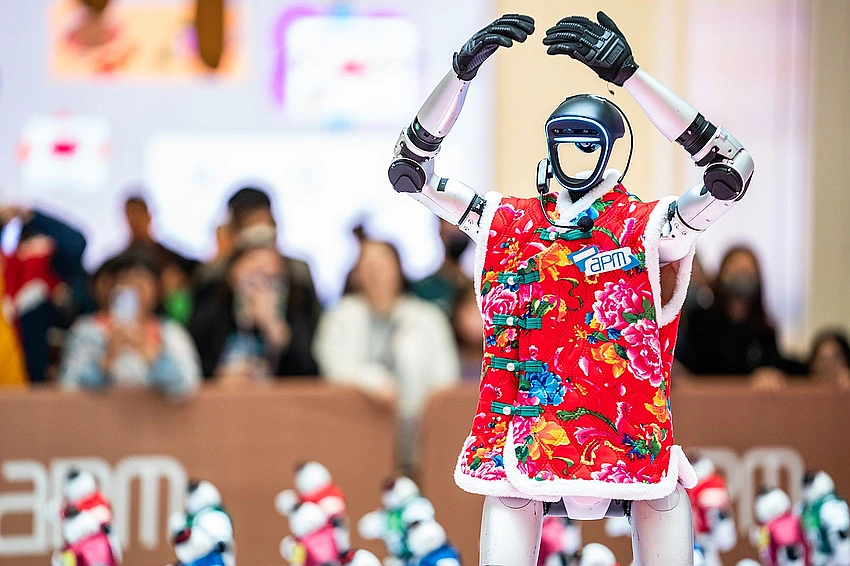
Joint stability, space sensing and navigation, computer vision accuracy, and skeleton durability are required to make flexible body components. It requires the smooth integration of what Chinese engineers call the big brain of the robot, the higher-level AI that should let the robot learn by itself, plan and make judgments, and its small brain that can deliver all the movement and motor control capabilities of walking and running, as well as the highly skilled functions.
China is changing its position from being an exporter of cheap labour and raw materials to being the exporter of high-tech goods and services. Major companies and manufacturers will get the profit of this shift, but it is also probable that overall growth and higher salaries will be improved. China has developed a humanoid robot production supply chain, allowing the use of the technology by many people. The computer vision systems on the face or eyes of the robot, hands, legs and joints, even the metal, plastic and pigment used to make the outside shell are all fabricated in local factories.
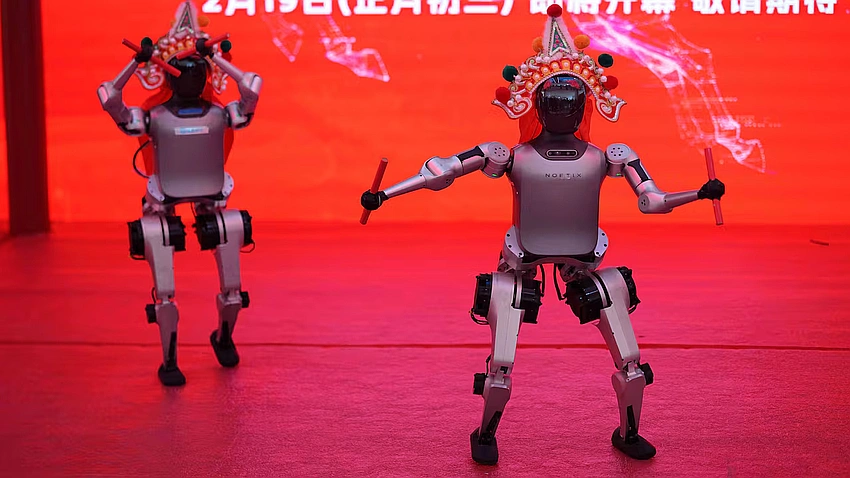
The public is welcoming, too. Robots are taking tours in museums and playing with fans in concerts, and interacting with men, women, children and the elderly, in robotics innovation hubs like Shanghai, which are saturating every part of daily life.
Naturally, there are still risks, especially in safety. The private sector should liaise with the government and other bodies in public to develop regulations that make sure the robots do not cause harm to humans and cannot reprogram to inflict ill intent on other unauthorised parties. The case of China indicates that this will be a co-prospero future, in which these machines would be constructed with daily interconnection and emotional appeal.
#SpringFestivalGala2026 #HumanoidRobots #ChinaTech #Robotics #AI
