Teenage Sex and Death at Camp Miasma: When The Dead Become a Language of Living

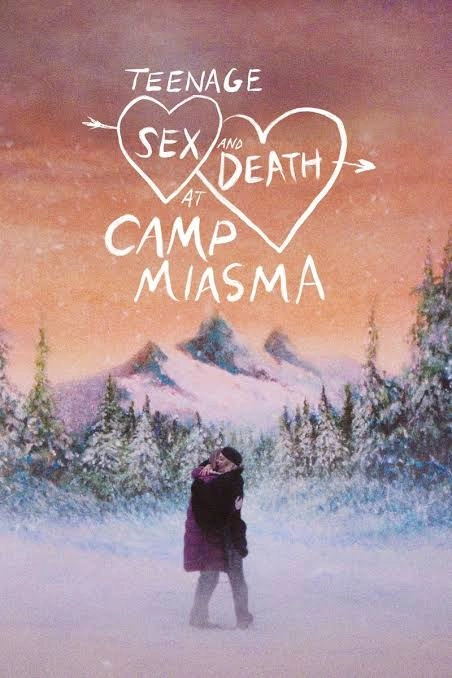
Teenage Sex and Death at Camp Miasma: When The Dead Become a Language of Living
Teenage Sex and Death at Camp Miasma: When The Dead Become a Language of Living
Jane Schoenbrun’s Teenage Sex and Death at Camp Miasma uses slasher horror, sex and blood to explore filmmaking, spectatorship and the stories that shape us.
Jane Schoenbrun’s Teenage Sex and Death at Camp Miasma arrives dressed as a lurid slasher and behaves like something considerably stranger. It has the abandoned summer camp, the masked killer, the blood, the sex and the repressed memories, but its real subject is the relationship between people and the stories that shape them. Schoenbrun has already explored this territory through the internet and television in We’re All Going to the World’s Fair and I Saw the TV Glow. Here, that obsession with mediated experience moves into the more recognisable territory of the 1980s slasher.
The result is a film about watching, performing and eventually becoming. It is also remarkably interested in what happens when the spectator can no longer maintain a comfortable distance from the object on screen.
Enter Camp Miasma
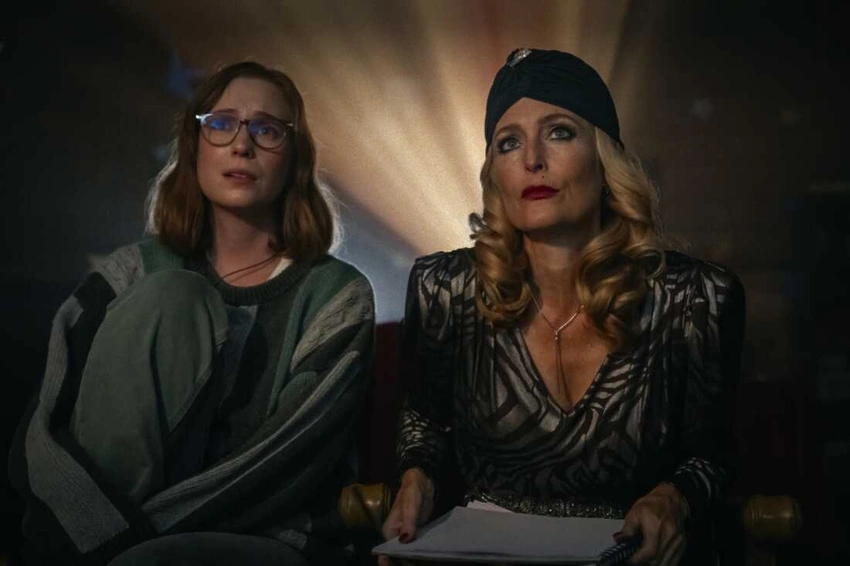
The film follows Kris Williams, played by Hannah Einbinder, a young filmmaker hired to revive the fictional Camp Miasma franchise after years of increasingly unsuccessful sequels. Her research leads her to Billy Presley, played by Gillian Anderson, the actress who became the original film's final girl and subsequently disappeared from public life. Billy now lives at the abandoned camp where the original films were made.
There is something almost literary about this setup. Billy has become trapped inside the mythology that made her famous. The actress and the character have begun to occupy the same haunted space. Kris, meanwhile, approaches the franchise initially as an intellectual problem, something that can be dissected, updated and made culturally respectable. Their meeting gradually unsettles that distinction.
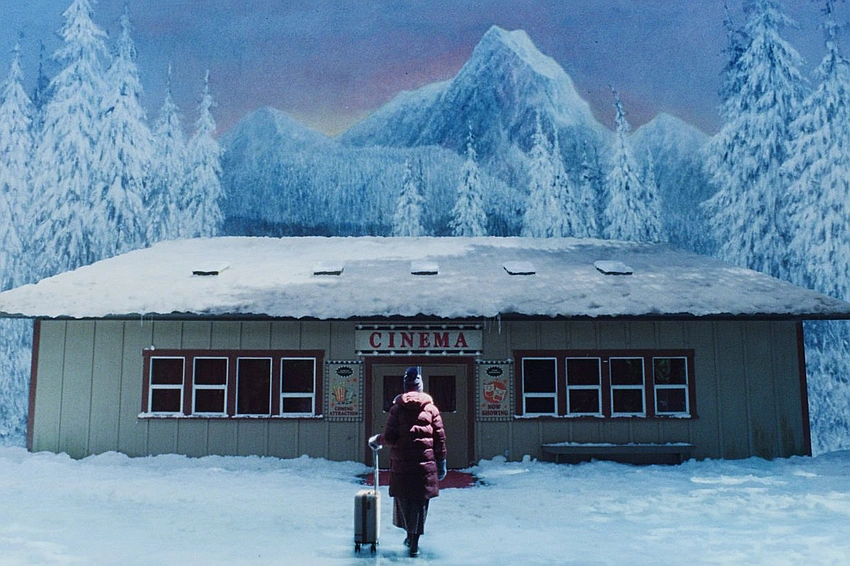
The camp consequently becomes more than a horror setting. It is an archive. The past has not disappeared. It has simply become physical.
The final girl grows up
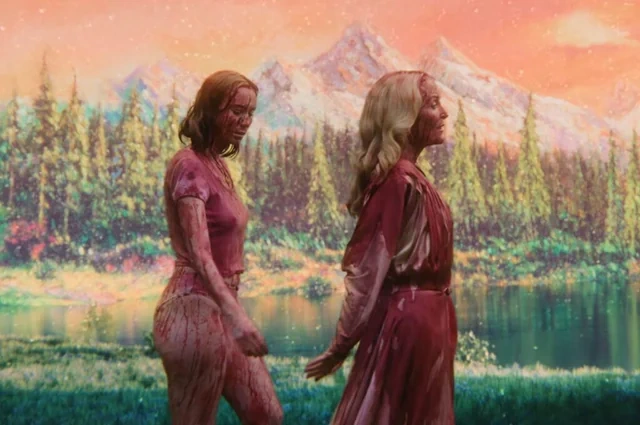
The most interesting figure in the film may be Billy because the traditional slasher final girl is usually understood through survival. She survives the killer, the narrative closes, and she becomes the proof that innocence or resourcefulness can defeat violence.
Schoenbrun asks what happens afterwards.
Billy's life suggests that surviving the horror story does not necessarily mean escaping it. She has spent decades inhabiting the mythology created around her. In this sense, Camp Miasma becomes a meditation on the cultural afterlife of female characters in horror. The final girl can become a permanent object of spectatorship, remembered primarily through the violence inflicted upon her.
The film's self-consciousness makes this even more complicated. Kris is simultaneously a filmmaker, a fan and a spectator. She wants to understand the franchise while also being emotionally possessed by it. The boundary between criticism and desire begins to collapse.
Sex, violence and the gaze
Schoenbrun is particularly interested in the uncomfortable relationship between sexuality and horror. The original Camp Miasma is presented as part of a tradition of hypersexualised slasher cinema, where teenage desire and impending violence are frequently placed beside one another. The new film does not simply reproduce that relationship. It turns it inside out.
That makes the film's sexuality central to its larger argument. Desire is not treated as something that exists outside horror. Instead, horror becomes one of the languages through which desire can be imagined, rehearsed and understood.
This is where the film's apparent excess becomes meaningful. Blood and sex are deliberately difficult to separate. The grotesque becomes intimate. What might initially look like exploitation gradually acquires the quality of fantasy, suggesting that frightening images can sometimes provide a vocabulary for experiences that are otherwise difficult to articulate.
Cinema as a haunted house
What makes Teenage Sex and Death at Camp Miasma especially compelling, is its belief that popular culture can become part of a person's inner life. A film watched at the right age can become more than entertainment. It can provide images for fear, intimacy, identity and even self-recognition.
Schoenbrun has spoken about genre cinema as something capable of shaping the way people understand themselves, and that concern runs throughout their work. Camp Miasma takes the idea seriously while also having fun with it. The film can be funny, grotesque, camp and intellectually dense within the same scene.
Perhaps that is why the film feels so contemporary despite its fixation on an imaginary 1980s franchise. We live in a culture where fandom, criticism and identity increasingly overlap. People do not simply watch films anymore. They archive them, interpret them, imitate them and build parts of themselves around them.
Teenage Sex and Death at Camp Miasma understands this slightly frightening intimacy. Its monsters may live at the end of a dark corridor, but its real haunting comes from somewhere much closer: the possibility that the things we watch eventually learn how to watch us back.
#TeenageSexAndDeathAtCampMiasma #JaneSchoenbrun #HorrorMovies #SlasherFilms #FilmReview

Login to comment.
No thots yet. Be the first to share your thoughts!