The Rise of Non Contact Sleep Monitoring in Smart Elderly Care Systems

The Rise of Non Contact Sleep Monitoring in Smart Elderly Care Systems
Non contact sleep monitor explained: learn how this sleep monitoring device tracks heart rate and respiration for elderly care and remote patient monitoring.
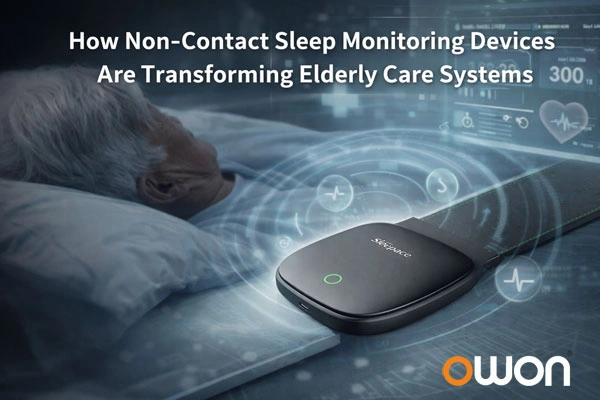
A non contact sleep monitor is becoming one of the most important technologies in modern elderly care systems. Unlike traditional wearable devices, a non contact sleep monitor enables continuous tracking of vital signs without requiring users to wear or interact with any equipment.
With the growing demand for remote healthcare and aging-in-place solutions, the non contact sleep monitor is widely used in hospitals, nursing homes, and IoT-based elderly monitoring systems.
What Is a Non Contact Sleep Monitor?
A non contact sleep monitor 🔗 is a type of sleep monitoring device designed to track physiological signals such as heart rate, respiration rate, and body movement without direct physical contact.
Instead of relying on wearable sensors, this type of sleep monitoring device uses under-mattress or bed-based sensing technology to detect subtle vibrations caused by breathing and heart activity. This approach provides a non-invasive and highly comfortable monitoring experience, especially for elderly users.
Because of its reliability and ease of use, the non contact sleep monitor is increasingly adopted in remote patient monitoring and smart healthcare systems.
How Does a Non Contact Sleep Monitor Work?
A non contact sleep monitor works by detecting micro-movements generated by the human body during sleep. These movements include breathing patterns and heartbeats that can be captured through a mattress.
The process typically includes:
- Capturing micro-vibrations through a sensing layer
- Converting signals into digital data
- Analyzing data using embedded algorithms
- Detecting abnormalities and triggering alerts
This allows a sleep monitoring device to continuously monitor:
- Heart rate
- Respiration rate
- Body movement
Since no wearable device is required, the non contact sleep monitor ensures a seamless and uninterrupted user experience.

Why Non Contact Sleep Monitoring Matters in Elderly Care
Elderly individuals are more vulnerable to health issues during sleep, including irregular heart rhythms and respiratory problems. Traditional monitoring methods, such as manual checks or wearable devices, often fail to provide continuous and reliable data.
A non contact sleep monitor solves these challenges by offering:
- Continuous overnight monitoring
- Real-time detection of abnormal vital signs
- Immediate alerts for caregivers
- Improved comfort and compliance
Because of these advantages, non-contact sleep monitoring devices are becoming essential in modern elderly care systems, enabling continuous monitoring and improved safety.
In addition to improving safety, these monitoring systems also provide valuable long-term data insights. Healthcare providers can analyze sleep patterns, detect potential risks early, and optimize care strategies based on real-time and historical data.
Real-World Application of Sleep Monitoring Devices
In real-world applications, a sleep monitoring device is often installed under the mattress using a thin and flexible sensing structure. This allows the system to detect heart rate and respiration without direct contact.
Such a non contact sleep monitor can provide real-time health data, generate alerts when abnormal patterns are detected, and store historical information for long-term analysis.
For example, you can explore OWON’S professional-grade sleep monitoring device 🔗 designed for elderly care and IoT healthcare systems here.
Integration with IoT Healthcare Systems
A non contact sleep monitor becomes even more powerful when integrated into an IoT ecosystem. By connecting to gateways and cloud platforms, the device can:
- Enable remote monitoring through mobile apps
- Send real-time alerts to caregivers
- Store and analyze long-term health data
- Work alongside other devices such as fall detection sensors
This integration enables the creation of a complete smart elderly care solution, improving both safety and operational efficiency.
Future Trends of Non Contact Sleep Monitoring
As IoT and AI technologies continue to evolve, the non contact sleep monitor is expected to become more intelligent and predictive. Future systems will not only monitor sleep data but also provide early warnings for potential health risks.
This will further enhance the role of sleep monitoring devices in elderly care, making them a critical part of next-generation healthcare systems.
Conclusion
A non contact sleep monitor is transforming how elderly care is delivered by providing continuous, non-invasive, and intelligent monitoring. It improves safety, enhances comfort, and supports more efficient healthcare operations.
As the demand for remote patient monitoring grows, adopting a non contact sleep monitor is becoming essential for healthcare providers and system integrators looking to build smarter elderly care solutions.
