China Mourns Ex-Premier Zhu Rongji: Public Nostalgia vs. State Control

China Mourns Ex-Premier Zhu Rongji: Public Nostalgia vs. State Control
China marks the funeral of former Premier Zhu Rongji, but public nostalgia for his reform era clashes with state efforts to control discourse and prevent criticism of current leadership.
China is currently observing a period of national mourning for its former Premier, Zhu Rongji, who passed away last week at the age of 97. His cremation took place at Babaoshan Revolutionary Cemetery in Beijing on Tuesday, with senior leaders including President Xi Jinping in attendance. Despite the presence of high-ranking officials, the ceremony was reportedly kept low-key, with no footage released to the public.
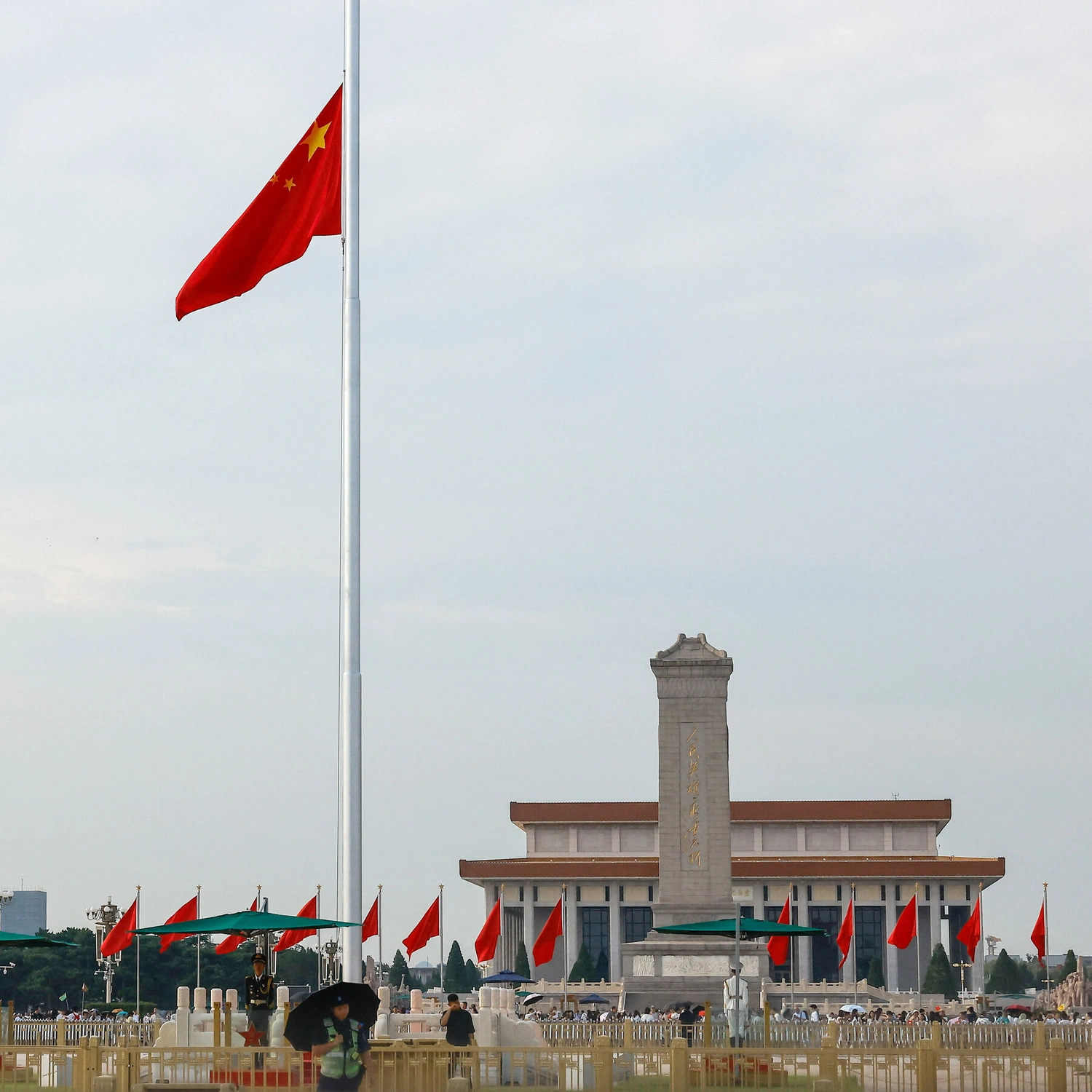
Flags across government sites are flying at half-mast, and increased security measures are visible in Beijing.
Zhu Rongji, who served as premier from 1998 to 2003, is widely remembered as a pivotal figure in China's economic reforms. During his tenure, he steered the nation through significant changes, earning a reputation for his decisive leadership and commitment to modernization. State media has acknowledged him as an "outstanding member of the Chinese Communist Party" and a "time-tested and loyal Communist fighter."
However, the national mourning period is overshadowed by a delicate balance the Chinese state is attempting to maintain.
While officially honoring Zhu's legacy, authorities are reportedly wary that widespread public nostalgia for his era of reform could inadvertently lead to veiled criticisms of the current government under President Xi Jinping.
This concern manifests in efforts to control the narrative surrounding Zhu's life and public discussions about his contributions.
Online platforms have seen significant censorship of posts and essays related to Zhu. Notably, an essay by economist Zhao Jian, which fondly recalled Zhu's era as a time when people were "properly poor" but felt a clear future ahead, was removed from WeChat shortly after its publication.
Zhao's piece lamented the absence of smartphones, short-form videos, and pervasive anxiety during Zhu's time, suggesting a simpler, more optimistic period where
the sky was blue, life moved slowly and people could say what they really thought.
This swift removal underscores the sensitivity of public discourse surrounding past leaders and their relevance to contemporary China.
The state's approach highlights a recurring pattern where historical figures, especially those associated with periods of significant change and relative openness, become symbols through which current policies or societal conditions might be implicitly questioned. The government's challenge is to leverage Zhu's image as a loyal party member and reformer without allowing his legacy to fuel comparisons that could undermine the present leadership's narrative of continuous progress and stability.
This controlled mourning reflects the ongoing tension between celebrating a revered past and managing a complex present.
