OpenAI Unveils Atlas: The AI-Powered Browser That Rivals Chrome

OpenAI Unveils Atlas: The AI-Powered Browser That Rivals Chrome
OpenAI rolls out Atlas, an AI-powered browser with a ChatGPT sidebar, browser memories, and autonomous agent mode designed to redefine how we browse the web.
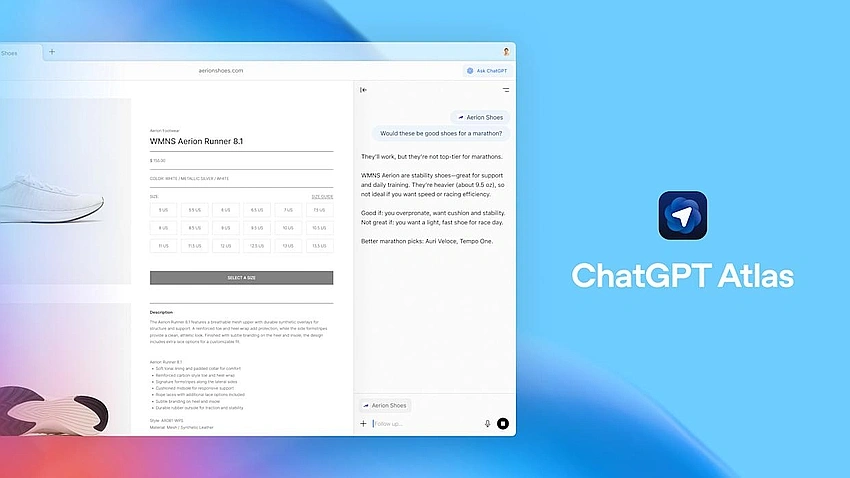
OpenAI on Tuesday unveiled Atlas, an AI-powered web browser that’s designed to work hand in hand with ChatGPT. The browser embeds OpenAI’s chatbot directly into your browsing flow, letting you ask questions, get summaries, and even run tasks without leaving the page you’re on. A ChatGPT-powered sidebar sits alongside web pages, offering real-time guidance as you search, compare products, or skim articles. Another feature, browser memories, keeps track of context across sessions so responses feel more personalized the more you use Atlas. The company also touts an agent mode, a semi-autonomous setting where the AI can carry out repetitive tasks or complex sequences under your oversight—like autofilling forms or collecting information from multiple sources—so you don’t have to manual-click through every step. The aim, according to the maker, is to reimagine browsing as a conversation with your assistant rather than a sequence of clicks.
Atlas is designed to work in close harmony with OpenAI’s product ecosystem, meaning users can expect tighter integration between search, chat, and actions. With the AI keeping track of context, you can ask follow-up questions without re-explaining your goal, and the browser will tailor results to your prior inquiries. The result could be a more fluid, task-oriented browsing experience where information retrieval and execution feel seamless rather than disjointed. Observers say this approach could push users toward more frequent AI-assisted interactions while raising questions about what data is stored and how it’s used to improve performance.
During its rollout, Atlas is set to launch on Apple laptops first, with a Windows version to follow. OpenAI hints that the browser will evolve as users press Atlas into more real-world tasks, potentially expanding into areas like research, shopping, and travel planning with fewer manual steps. The move signals OpenAI’s broader strategy to weave AI more deeply into daily online life, transforming the browser itself from a simple tool into an interactive partner in discovery and decision-making.
If Atlas delivers on its promise, it could challenge traditional browsers and position OpenAI as a more direct presence in everyday internet use. The integration of a persistent memory and autonomous task execution could shave minutes off routine online work, empower faster decision-making, and blur the line between searching and doing. As with any ambitious product, it will take time to gauge how well Atlas balances convenience with privacy and control, and whether the AI’s guidance remains reliable across a wide range of sites and tasks.
Cover image source: OpenAI Unveils Atlas Web Browser Built to Work Closely With ChatGPT 🔗
