Bail Before Conviction Should Be a Right, Says Ex-CJI Chandrachud

Bail Before Conviction Should Be a Right, Says Ex-CJI Chandrachud
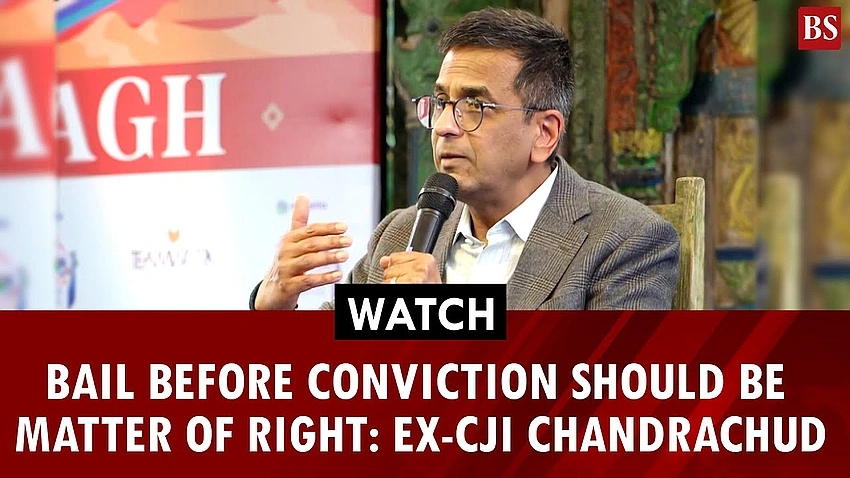
At Jaipur Literature Festival, ex-CJI D Y Chandrachud argues bail before conviction must be a right, urging deeper scrutiny in national-security cases.
At the Jaipur Literature Festival, former chief justice of India D Y Chandrachud stated that bail before conviction should be a matter of right, while acknowledging that courts must carefully scrutinize cases involving national security. He noted that the presumption of innocence underpins the legal system and warned against prolonged undertrial detention. "Bail before conviction should be a matter of right. Our law is based on a presumption, and that presumption is that everyone is innocent until proven guilty," he said. He also highlighted how releasing someone who is unlikely to pose a risk can prevent a person from being deprived of years of their life while the case is pending.
Chandrachud laid out the narrow grounds on which bail can be denied: the accused might return to society and commit the crime again, tamper with evidence, or use bail to evade the full force of the law. "If these three grounds are not present, then bail must be granted," he asserted. Yet he stressed that in matters touching national security, it is the court’s duty to examine the case in depth, or else people can remain imprisoned for years.
The former top judge also voiced concerns about denials of bail at sessions and district courts, noting that some judges fear their integrity could be questioned. He mentioned that bail-related matters often reach the Supreme Court for review, underscoring the ongoing tension between upholding individual rights and safeguarding public safety. The remarks came in response to a question about the Supreme Court’s recent denial of bail in the 2020 Delhi riots case involving Umar Khalid, along with fellow activist Sharjeel Imam, who have been incarcerated since 2020. Chandrachud’s pointed comments emphasize a push for clearer, rights-based bail norms while recognizing the complexity of high-stakes security cases.
