Poetry Isn't Dead, It's Thriving: Gen Z, Discover Its Renaissance

Poetry Isn't Dead, It's Thriving: Gen Z, Discover Its Renaissance
Forget the old notions, poetry is experiencing a quiet renaissance, offering mystery and depth in a fast-paced world. Discover why Gen Z is finding their voice in this ancient, evolving art form.
For too long, the idea of poetry being a dusty, inaccessible art form has lingered. Yet, beneath the surface of our hyper-connected world, something magical is happening: poetry is not just alive, it's thriving. It's time we shed the misconception and embrace this quiet renaissance, especially for a generation craving authenticity and profound connection, yes, I'm talking about Gen Z.
The Whisper of the 'Immortal Mosquito'
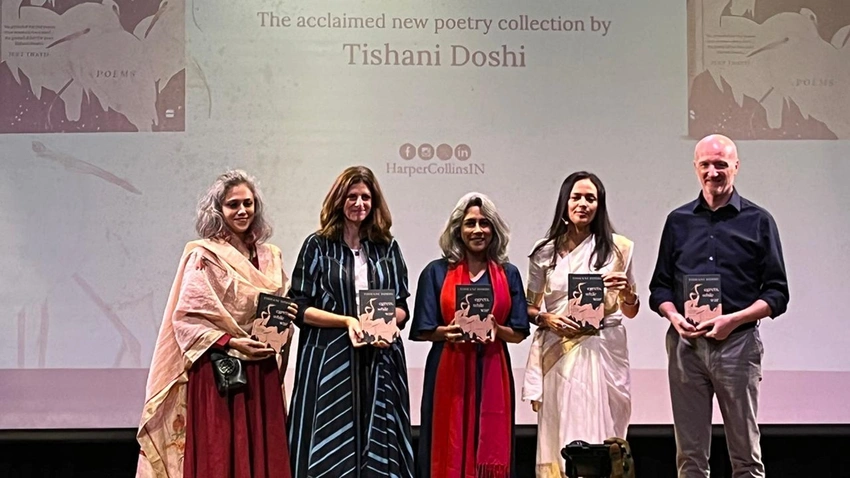
Consider Tishani Doshi, whose collections like Countries of the Body and A God at the Door move fluidly between gender, violence, nature, and mortality. Her work, shaped by her background as a dancer, sees poetry as something deeply physical and embodied. Doshi once imagined herself an “immortal mosquito,” buzzing persistently in a reader's ear, a playful metaphor for poetry's subtle, undeniable presence.
She's moved past simply trying to 'persuade' people not to fear poetry.
Instead, she now champions its inherent difficulty, its mysterious nature.
She articulates what many feel but can't quite grasp: “ It is spell-making, it is prayer, it is mysterious. ” Poetry isn't just words on a page; it's an experience that defies neat categorization, much like a song in an unfamiliar language can stir something deep within you before you even know the lyrics.
Why 'Unknowability' is Its Superpower
In an age of instant answers and endless scrolling, poetry demands a different kind of engagement. That initial 'unknowability,' Doshi suggests, isn't a flaw, it's a feature. It invites us to slow down, to sit with ambiguity, rather than rushing towards a definitive meaning. “You have to throw meaning off,” she advises.
This resistance to immediate resolution is precisely why poetry endures. Unlike a novel that requires a sustained narrative, a poem can remain gloriously unresolved, a space for thought and feeling to unfurl.
Her collection, Egrets, While War , perfectly exemplifies this, wrestling with unresolved global issues: environmental destruction, war, extinction, ancestry, and grief. Doshi deftly navigates a “combination of time zones” in her work, bridging past and present to respond to contemporary catastrophes. Because, as she puts it, the present can often feel overwhelmingly elegiac.
Gen Z's Call to the Poetic
This isn't about escaping reality, but about confronting it with depth and nuance.
For Gen Z, who are constantly bombarded with information and often feel the weight of global crises, poetry offers a sanctuary for reflection. It provides a language for the inexpressible, a way to process overwhelming emotions and complex issues without the pressure of a tidy conclusion.
So, next time you hear someone say poetry is dead, smile. Because it's not. It's growing, evolving, and waiting for a new generation to discover its enduring magic.
It's waiting to slow you down, challenge your perceptions, and perhaps, even cast a little spell.

Login to comment.
No thots yet. Be the first to share your thoughts!