India and EU Strike Historic Trade Deal, Boosting Economic Cooperation

India and EU Strike Historic Trade Deal, Boosting Economic Cooperation
India and EU Strike Historic Trade Deal, Boosting Economic Cooperation
India and the EU have sealed a landmark Free Trade Agreement at the 16th summit, pledging stronger trade ties, 99% preferential access for Indian exports, and a boost to global supply chains.
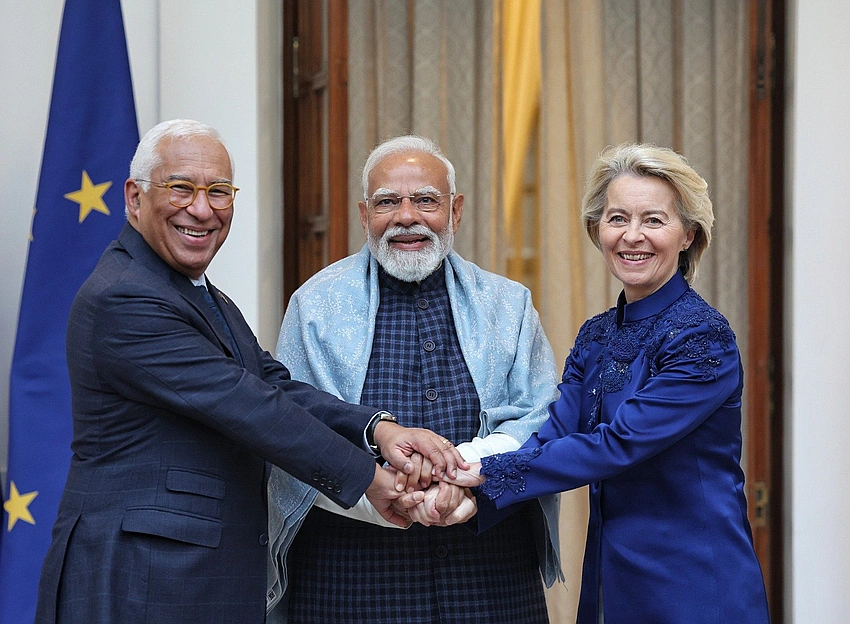
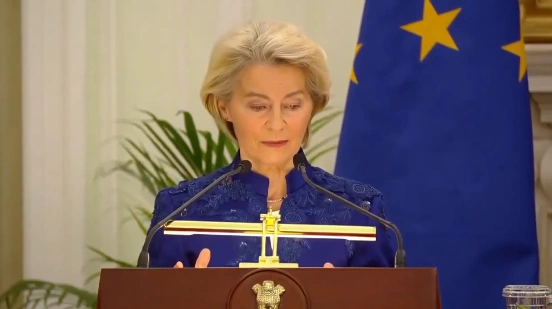
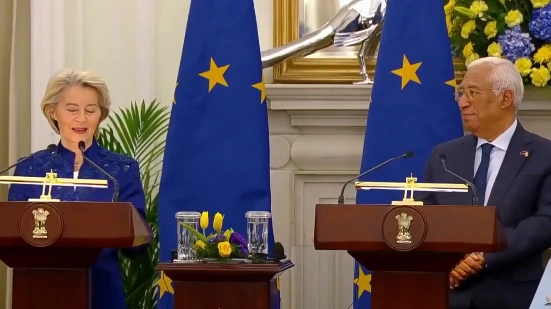
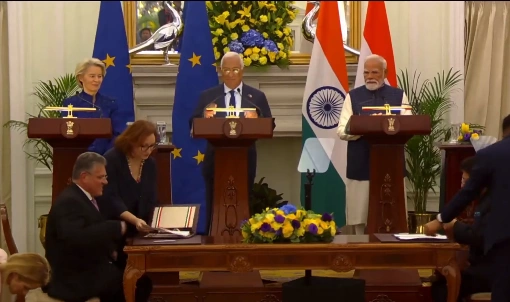
India and the European Union on Tuesday announced the conclusion of the long-awaited India-EU Free Trade Agreement (FTA), marking a historic milestone in bilateral relations between two of the world’s largest economies. The announcement was made at the 16th India-EU Summit by Prime Minister Narendra Modi and European Commission President Ursula von der Leyen during the visit of European leaders to India.
The agreement positions India, the world’s fourth-largest economy, and the European Union, the second-largest economy, as trusted global trade partners, together accounting for 25 per cent of global GDP and nearly one-third of global trade. The Ministry of Commerce & Industry said the FTA lays the foundation for inclusive, resilient, and future-ready growth while strengthening global supply chains.
With preferential entry into the EU for over 99% of Indian exports by value, the agreement offers Indian exporters unprecedented market access. India's export competitiveness is predicted to rise dramatically as a result, especially in labor-intensive industries like textiles, clothing, leather, footwear, marine products, gems and jewelry, handicrafts, engineering goods, and automobiles.
Official estimates indicate that exports totaling USD 75.85 billion (INR 6.4 lakh crore) are expected to grow at an accelerated rate, including nearly USD 33 billion in labor-intensive industries where tariffs of up to 10% will be removed upon the agreement's implementation. Additionally, the FTA is anticipated to generate jobs for professionals, MSMEs, women, artisans, and young people.
A carefully calibrated approach to car liberalization through a quota-based system is part of the agreement, allowing EU manufacturers to launch high-end models in India while fostering future opportunities for Make in India manufacturing and exports. Indian-made cars will also be able to enter EU markets thanks to reciprocal access.
Dairy, cereals, poultry, soymeal, and some fruits and vegetables are among the sensitive industries that India has protected, especially agriculture and dairy. In addition, agricultural and processed food exports, such as tea, coffee, spices, fresh fruits, vegetables, and processed foods, have been granted favorable access, boosting rural livelihoods.
Additionally, the agreement creates a framework for future-ready mobility that offers predictable routes for skilled and semi-skilled professionals to temporarily relocate. In addition to entry and work rights for dependents, provisions cover independent professionals, contractual service providers, business visitors, and intra-corporate transferees. Included are frameworks for future social security agreements, post-study employment opportunities, and student mobility.
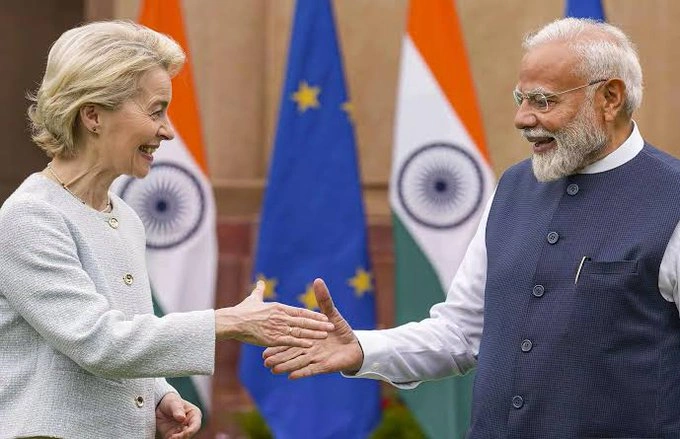
The European Union is one of India’s largest trading partners. In 2024-25, bilateral trade in goods reached USD 136.54 billion, while trade in services hit USD 83.1 billion. The Ministry stated that linking two large, complementary economies will create new trade and investment chances. The India-EU FTA is India’s 22nd free trade agreement.
Along with recent FTAs with the UK and EFTA, it opens the entire European market to Indian exporters and entrepreneurs. The government pointed out that since 2014, India has signed trade agreements with Mauritius, the UAE, Australia, Oman, the UK, and EFTA, and announced a trade deal with New Zealand. In line with the vision of “Viksit Bharat 2047,” the India-EU FTA starts a new chapter in economic relations. It strengthens shared values, encourages innovation, and positions India as a reliable and active partner in global trade.
#IndiaEUFTA #TradeDeal #GlobalTrade #SupplyChains #IndiaEU16thSummit
