Don't Build It Yet! Validate Your Startup Idea Before a Single Line of Code


Don't Build It Yet! Validate Your Startup Idea Before a Single Line of Code
Learn how to save time and money by validating your startup idea *before* writing any code. Master customer interviews, landing page tests, and early demand signals.
Stop Building, Start Validating: The Smart Path to Startup Success
Far too many promising startup ideas meet an early demise, not because the solution was flawed, but because there wasn't a problem worth solving in the first place. The allure of building something new, of crafting elegant code, can be a powerful distraction. But before you invest countless hours and precious capital into development, an essential step often gets overlooked: validating your idea.
This isn't about guesswork; it's about a systematic approach to prove demand, understand your users, and refine your vision.
Think of it as a low-cost, low-risk way to stress-test your hypothesis, saving you from a potentially catastrophic product-market mismatch.
1. Customer Interviews: The Empathy Engine
The first and most crucial step is to get out there and talk to your potential customers. Not your friends, not your family (unless they are genuinely part of your target demographic), but real people who experience the problem you're trying to solve. The goal isn't to ask, 'Would you buy my product?'; it's to understand their world, their pain points, and their existing coping mechanisms.
Ask open-ended questions like: 'Tell me about the last time you struggled with [problem X].' 'What did you try to do to fix it?' 'How did that make you feel?' Listen far more than you talk. Look for patterns, frustrations, and unmet needs. This qualitative data is gold.
It helps you articulate the problem better than any market report ever could and often uncovers insights you hadn't even considered.
Your customers are truly your best advisors.
 2. Landing Pages & 'No-Code' MVPs: Gauging Interest
Once you have a clearer understanding of the problem and potential solutions from your interviews, it's time to test if there's a broader interest. This is where a simple landing page comes in. Using tools like Webflow, Unbounce, or Carrd, you can build a professional-looking webpage in hours, not weeks, with zero code.
This page should clearly articulate the problem, propose your solution (without actually having built it yet!), and feature a strong call to action, typically an email sign-up for a waitlist or early access. Drive a small amount of targeted traffic to this page using social media ads or relevant online communities.
The conversion rate (how many visitors sign up) will tell you a lot about the attractiveness of your value proposition and the intensity of the problem you're addressing.
This is your 'Minimum Viable Product' (MVP) in its most basic form: a way to learn with minimal effort.
3. Early Demand Testing: Proving Willingness to Pay
Collecting email addresses is great, but commitment is even better. This stage involves testing whether people are willing to actually pay for your solution, even if it's not fully built yet.
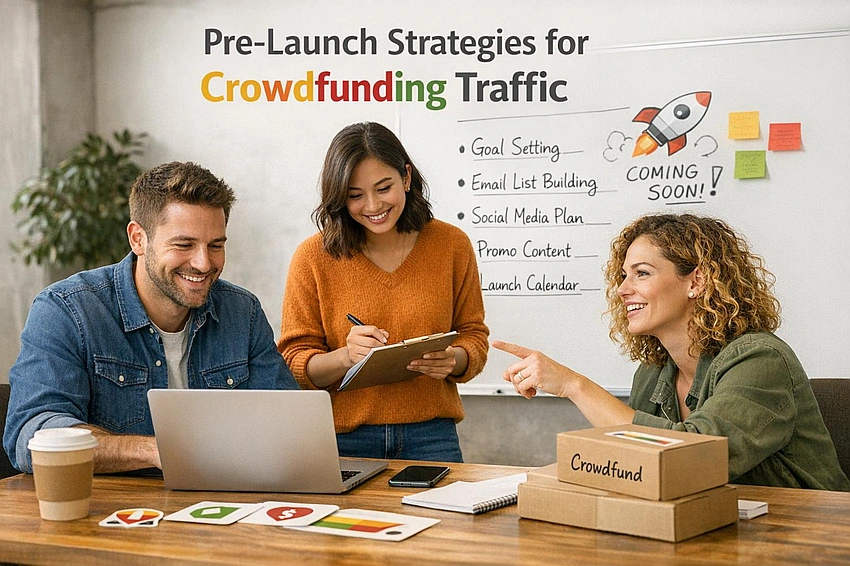
Consider running pre-orders or a crowdfunding campaign (like Kickstarter or Indiegogo) for your 'future' product. Or, offer a pilot program to a select group of early adopters, potentially at a discounted rate, in exchange for feedback and testimonials. If people are willing to commit financially, you've moved beyond mere interest to genuine demand.
This concrete proof empowers you to build with confidence, knowing you have a market ready and waiting.
As the saying goes, “The ultimate validation isn't a 'yes,' it's a 'yes, and here's my money.' ”
 Build Smart, Not Just Hard
Skipping these validation steps is akin to building a house without a blueprint or a strong foundation.
You might get lucky, but the odds are stacked against you. By systematically interviewing customers, testing value propositions with landing pages, and proving financial commitment, you dramatically increase your chances of launching a product that people genuinely want and are willing to pay for.
It's about building smart, building lean, and ultimately, building for success.
