SpaceX Rockets to ISS! 🚀 Four Astronauts Begin 6-Month Mission

SpaceX Rockets to ISS! 🚀 Four Astronauts Begin 6-Month Mission
History made as SpaceX launches four international astronauts to the ISS! They'll conduct vital research for future Moon & Mars missions. Don't miss this cosmic journey!
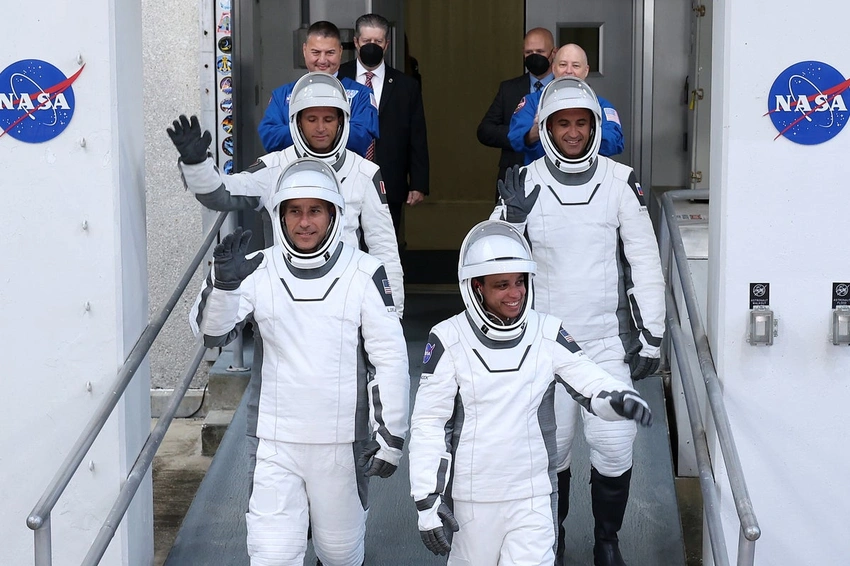
A SpaceX Falcon 9 rocket successfully blasted off from Cape Canaveral, Florida, on Thursday, carrying a four-person international crew to the International Space Station (ISS). This marks the Crew-13 mission, an eagerly anticipated launch after an initial delay last month due to a leak on SpaceX's Dragon spacecraft.
The crew consists of two NASA astronauts, Jessica Watkins and Luke Delaney; Canadian Space Agency (CSA) astronaut Joshua Kutryk; and Roscosmos cosmonaut Sergey Teteryatnikov. They are set for a six-month stay aboard the orbiting laboratory, where they will embark on a series of significant research endeavors.
Ahead of the launch, astronaut Joshua Kutryk expressed the crew's excitement, stating, "We feel like some of the luckiest people in the world." A unique aspect of his mission is that he is poised to become the fourth man to become a father while in Earth orbit, with his wife expecting next month. NASA managers confirmed he will be kept informed about his family while in space.
During their extensive mission, the Crew-13 astronauts will focus on conducting a variety of science experiments.
These investigations are crucial for advancing research and technology, laying the groundwork for future human exploration beyond low-Earth orbit, including missions to the Moon and Mars.
NASA emphasized that this collaborative effort, especially with the private sector, expands access to low Earth orbit and the space station for more people, more science, and more commercial opportunities.
This launch was just one of three scheduled SpaceX launches within a 13-hour window on Thursday, highlighting the increasing pace of space activities. The docking of the Crew-13 mission with the ISS is scheduled to be broadcast live on NASA’s website, allowing the public to witness this critical phase of their journey.
