India’s New Sea Hunter Squadron Changes Everything, MH‑60R ‘Ospreys’ Take Flight

India commissions its second MH‑60R ‘Ospreys’ squadron. Here’s what the helicopter is, why it matters, and how it transforms naval warfare.
The Indian Navy is entering a new era. The commissioning of its second MH‑60R Seahawk squadron, INAS 335 “Ospreys,” marks a decisive leap in maritime strength. The squadron will be based at INS Hansa in Goa and will operate one of the world’s most advanced multi‑role naval helicopters.
This move is not symbolic. It is strategic. It signals India’s intent to dominate the Indian Ocean with modern, lethal, and flexible air assets.
The MH‑60R is not just another helicopter. It is a force multiplier. It is a hunter, a guardian, and a battlefield node rolled into one compact, combat‑ready machine.
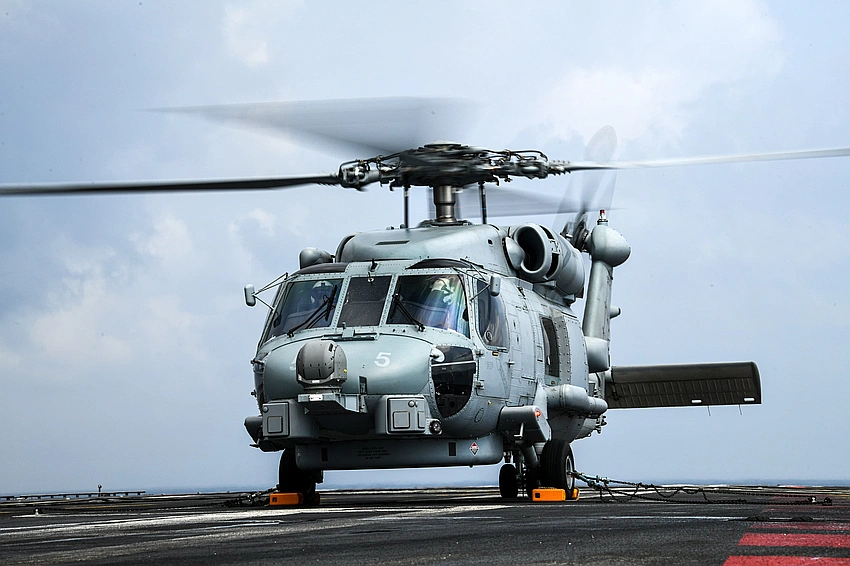
What Exactly Is the MH‑60R Seahawk?
The MH‑60R is a multi‑role maritime helicopter designed for modern naval warfare. It is often described as the “Swiss Army knife” of naval aviation. It can switch roles instantly. It can hunt submarines, track hostile ships, support special operations, and conduct high‑risk rescues.
It is built for harsh seas, long missions, and precision combat. It is the principal ship‑borne anti‑submarine helicopter for the Indian Navy.
The MH‑60R is part of the legendary Seahawk family, trusted by navies across the world. It brings decades of battlefield experience, upgraded sensors, and unmatched reliability.
Who Manufactures the MH‑60R?
The helicopter is manufactured by Lockheed Martin, the American defense giant known for the F‑35, C‑130J, and Aegis systems.
Lockheed Martin builds the MH‑60R in partnership with Sikorsky, a company with deep expertise in naval helicopters. The result is a platform that blends rugged engineering with cutting‑edge avionics.
For India, this means access to a proven, globally deployed system with strong logistical support and long‑term upgrade pathways.
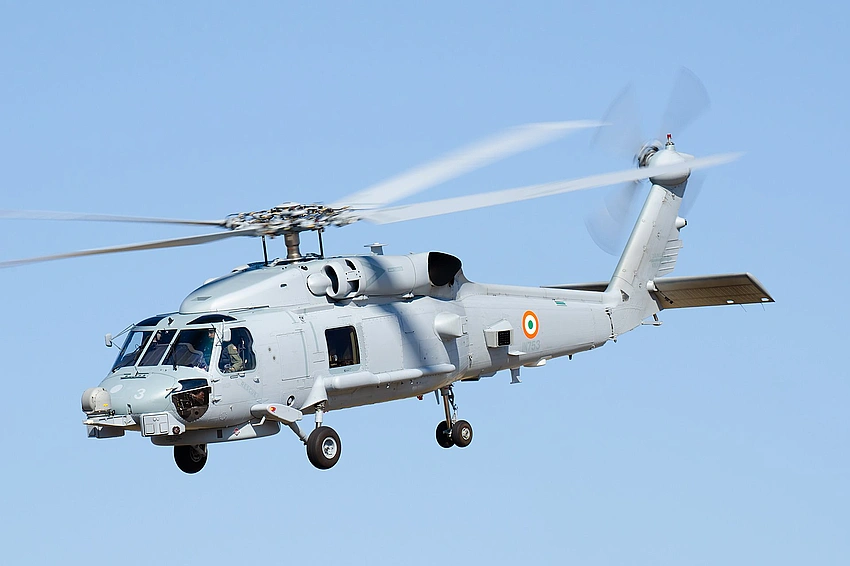
How the MH‑60R Will Serve the Indian Navy
The Indian Navy faces a rapidly evolving maritime environment. Submarine activity in the Indian Ocean is rising. Surface threats are diversifying. Grey‑zone tactics are becoming common.
The MH‑60R is built for this world.
1. Anti‑Submarine Warfare (ASW)
This is the helicopter’s signature role. It carries advanced dipping sonars, sonobuoys, and torpedoes. It can detect, track, and neutralize submarines hiding deep underwater. This capability is essential as more Chinese and Pakistani submarines enter the region.
2. Anti‑Surface Warfare (ASuW)
The MH‑60R can engage enemy ships using precision missiles and sensors. It extends the Navy’s strike range far beyond the horizon.
3. Maritime Surveillance
Its radar suite can scan vast ocean areas. It can identify vessels, track suspicious movements, and relay real‑time intelligence to command centers.
4. Search and Rescue (SAR)
The helicopter can operate in extreme weather. It can lift survivors from rough seas and support humanitarian missions.
5. Fleet Support
It can carry supplies, personnel, and mission equipment. It strengthens fleet logistics during long deployments.
6. Special Operations
Its stealthy approach, night‑vision systems, and precision navigation make it ideal for covert missions.
With INAS 335 operational, India now has a stronger, more flexible maritime aviation wing. The Navy gains reach, speed, and lethal accuracy.
What Makes the MH‑60R So Capable?
The helicopter is packed with advanced systems. Each one adds a layer of power.
- State‑of‑the‑art avionics suite for real‑time situational awareness
- Advanced sensors including multi‑mode radar and electro‑optical systems
- Dipping sonar for deep underwater detection
- Air‑launched torpedoes for submarine hunting
- Anti‑ship missiles for surface warfare
- Secure data links for network‑centric operations
- High endurance for long missions
- Ship compatibility with Indian destroyers, frigates, and future carriers
These features make the MH‑60R a complete maritime combat system, not just a helicopter.
Why This Squadron Matters for India
INAS 335 “Ospreys” is more than a new unit. It is a strategic asset.
It strengthens India’s ability to monitor the Arabian Sea and the wider Indian Ocean. It enhances deterrence. It gives the Navy the tools to counter submarines, protect sea lanes, and respond to crises.
The commissioning also reflects India’s broader modernization push. The Navy is moving toward a future built on precision sensors, networked platforms, and rapid‑response aviation.
The MH‑60R fits perfectly into that vision.
