Your Slack is Watching: The Invisible AI Revolution

Your Slack is Watching: The Invisible AI Revolution
Anthropic’s Claude Tag in Slack blurs lines between productivity & privacy. An 'always-on AI teammate' promises efficiency, but is it a step towards a privacy nightmare? Dive into the future of workplace AI!
Your Slack is About to Get a Lot Smarter (and Maybe a Little Creepier)
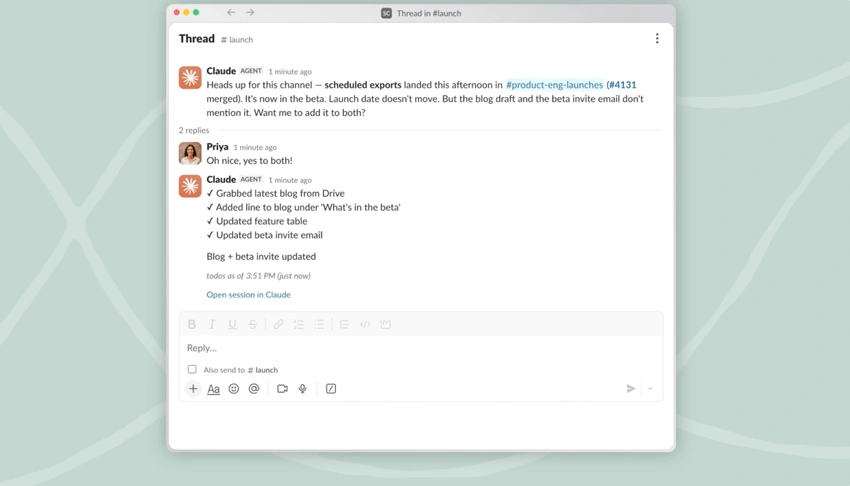
So, you thought your Slack channels were just for team chats and emoji reactions? Think again. The workplace is rapidly evolving, and a new breed of invisible AI is poised to redefine how we work, learn, and communicate. We’re talking about tools like Anthropic’s Claude Tag, which isn't just another integration; it’s being pitched as an "always-on AI teammate" embedding itself directly into your Slack workspace.
This isn't some distant future tech. We're looking at realities like those emerging around June 23, 2026, where sophisticated AI seamlessly weaves into our daily digital fabric. On the surface, the appeal is massive. Imagine an AI that's constantly ingesting, understanding, and learning from your company’s unique lingo, strategies, and internal dynamics. Claude Tag’s ambitious goal? To capture organizational context, institutional knowledge, and enterprise workflows at an unprecedented scale.
-
The Productivity Promise: Need to quickly get a new hire up to speed on project histories? The AI already has the institutional memory. Searching for that obscure document or the answer to a niche client question? Your always-on AI teammate could instantly retrieve it, having learned where everything lives and how everyone operates. This isn't just about summarization; it's about building a dynamic, collective intelligence for your entire organization. For distributed teams and complex projects, the efficiency gains could be transformative, freeing up human bandwidth for more creative and strategic tasks.
-
The Privacy Predicament: But let's pump the brakes for a second. An "always-on AI teammate" that learns "one Slack message at a time" raises some profound questions about privacy, data ownership, and employee trust. If an AI is constantly ingesting everything – every casual remark, every off-the-cuff idea, even potentially personal grievances shared in a team chat – what are the implications? Who owns this treasure trove of internal data? How is it secured against breaches or misuse?
The very essence of Claude Tag’s utility – its deep, contextual understanding of internal communication – is also its biggest ethical challenge. Employees might understandably start to self-censor, fearing that every digital interaction is being logged, analyzed, and potentially used in unforeseen ways. The feeling of an invisible intelligence quietly monitoring every interaction, archiving every decision, starts to feel less like a helpful assistant and more like a pervasive digital eye.
This isn't an isolated phenomenon; it's a blueprint for where enterprise AI is headed. Companies are aggressively deploying these 'invisible AI' solutions, chasing the competitive advantage that comes with leveraging their internal data like never before. The race is on, but are the ethical frameworks, transparent usage policies, and robust security measures evolving quickly enough to keep pace?
The line between powerful productivity tools and pervasive workplace surveillance is blurring, and solutions like Anthropic’s Claude Tag perfectly illustrate this tension. We need to collectively decide: will the undeniable promise of unprecedented efficiency outweigh the deep-seated concerns about employee privacy and data ownership? The conversation isn't just important; it's urgent, before this 'invisible AI' becomes too ingrained to question.
