Aiyar: Dissent Powers Congress, Suppression Could Doom It

Aiyar: Dissent Powers Congress, Suppression Could Doom It
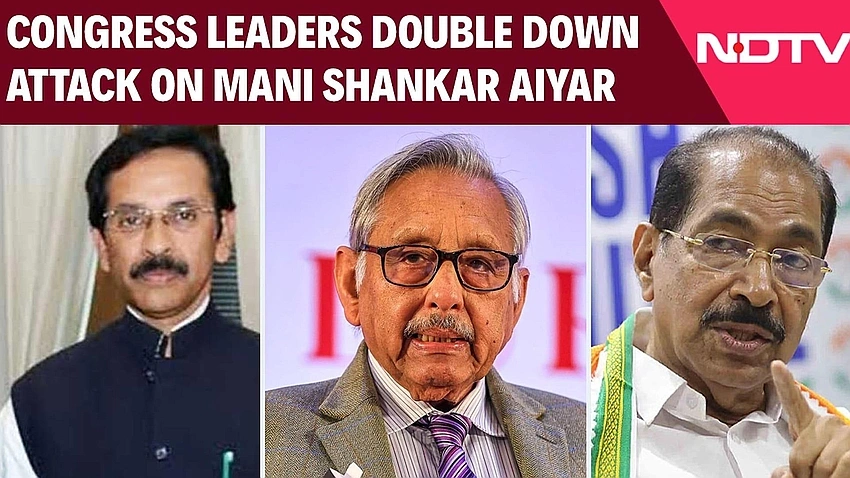
Veteran Congress voice Mani Shankar Aiyar argues internal dissent fuels the party, warning silencing it could be fatal amid leadership debates and Kerala comments fallout.
Mani Shankar Aiyar, a veteran voice in Congress, offers a stark reminder: internal dissent has long kept the party resilient and relevant. In his view, the party’s strength lies not in uniform agreement but in constructive disagreement. When dissent is crushed, he warns, the party risks losing its edge, becoming out of touch with a changing political landscape. He points to historical moments—citing eras like Indira Gandhi’s Emergency and the broader legacy of Subhas Chandra Bose—to illustrate that robust debate and differing opinions have often steered the party through tumultuous times. His argument centers on the idea that disagreement, properly channelled, keeps the Congress responsive to the public pulse and prevents sclerosis within its ranks.
Aiyar’s remarks come into sharper relief after the party publicly dissociated itself from his forecast of a Left victory in Kerala. He maintains his loyalty to the Congress and questions why anyone would remain in the party if not for a belief in the Nehru-Gandhi leadership. This clash highlights a broader tension: the party wants to project unity while managing a spectrum of viewpoints that challenge established narratives. The Kerala episode underscores the delicate balance between loyalty and open critique that the Congress is currently navigating as it seeks to chart a path forward.
The party’s distancing from his comments about Kerala Chief Minister Vijayan—stating he no longer represents the party and that his remarks are personal—adds another layer to the ongoing debate about lines between party positions and individual voices. Aiyar’s broader critique also delves into a perceived shift in Congress: from a traditional, veteran-led, ideological framework to one increasingly influenced by issue-driven approaches and civil-society dynamics. Analyst Rasheed Kidwai has described Aiyar as somewhat isolated, yet acknowledges that his critiques illuminate a party grappling with a changing identity and strategy in Indian politics.
The central question remains: can dissent be harnessed to strengthen the party without eroding cohesion ahead of elections? Aiyar’s premise is that dissent, if guided constructively, can keep Congress attuned to a wider public sentiment. The cautionary counterpoint is that unchecked internal clashes and punitive responses to dissent could weaken the party at a critical moment. As leadership debates unfold, all eyes will be on how the Congress balances principled disagreement with unity, and whether dissent will be welcomed as a source of strength or seen as a liability to electoral prospects.
