I Wanted to Love Kore-eda’s AI Grief Story. I’m Still Not Sure I Did.

I Wanted to Love Kore-eda’s AI Grief Story. I’m Still Not Sure I Did.
I Wanted to Love Kore-eda’s AI Grief Story. I’m Still Not Sure I Did.
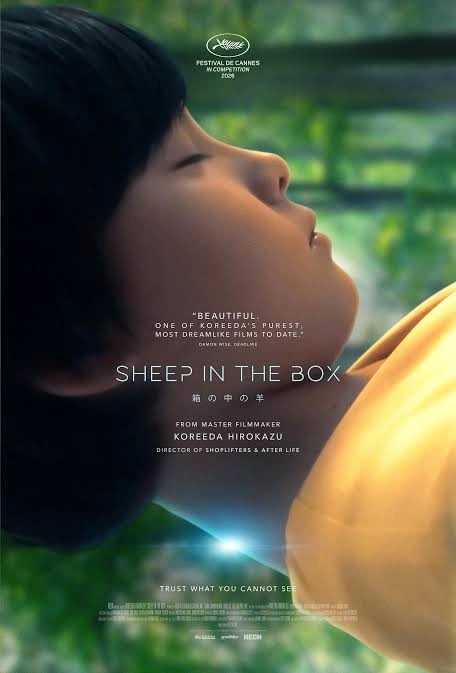
A review of Kore-eda’s Sheep in the Box and the fascinating AI grief story it almost becomes, where a brilliant premise gets softened by a film that is far too gentle with its own questions.
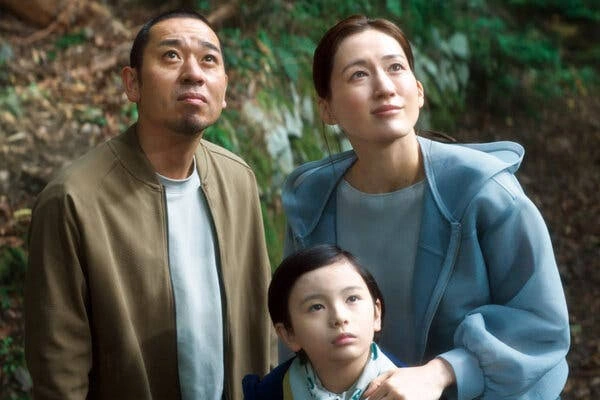
There is a particular kind of disappointment that comes from watching a filmmaker you trust make the film you have been waiting for, only to realise that the film itself does not quite know what it wants to say. Hirokazu Kore-eda’s Sheep in the Box arrives with almost suspiciously perfect ingredients for a film I should love: grief, parenthood, artificial intelligence, and the uneasy question of what makes somebody human. Yet somewhere between the grief-stricken family and the humanoid child who arrives at their door, I kept waiting for the film to become as emotionally complicated as its central presuppositions. It just never quite gets there.
A Robot Child Walks Into a Family
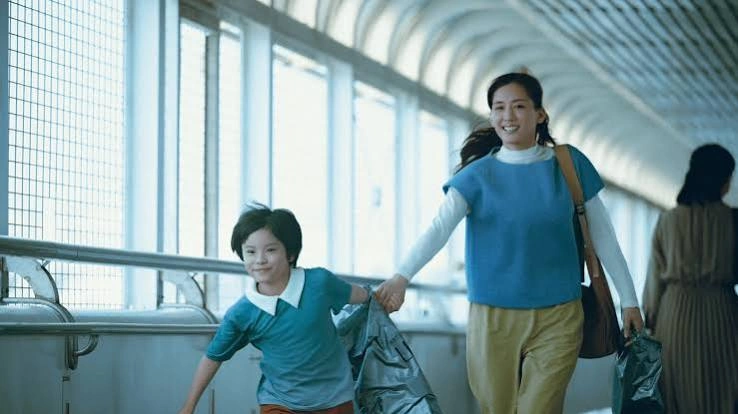
Otone and Kensuke have lost their seven-year-old son, Kakeru, in a hit-and-run accident. Two years later, they are offered an extraordinary way of prolonging their grief: a humanoid robot recreated in their son's image, built using photographs, videos and memories supplied by the parents. The new Kakeru can live with them for as long as they need him.
On paper, this is exactly the sort of moral knot Kore-eda should be able to pull apart. His films have spent years circling families, children, and the strange structures adults build around love. Here, technology gives him the opportunity to ask a particularly uncomfortable question: when we lose somebody, how much of our grief belongs to the person who died, and how much belongs to the version of them we have constructed in our own minds?
The film does eventually arrive at that question. My problem is how long it takes to realise it should have been asking it from the beginning. When Kakeru 2.0 arrives at the house, Otone and Kensuke react with a strange matter-of-factness. The Guardian's Peter Bradshaw points out the odd emotional flatness of the sequence, and I had much the same reaction. This is a couple being handed an artificial replica of their dead child, yet the scene often plays with the casualness of receiving an unusually sophisticated household appliance.
For a film about grief, that emotional distance becomes increasingly difficult to ignore.
Kore-eda Still Knows How to Look at a Family
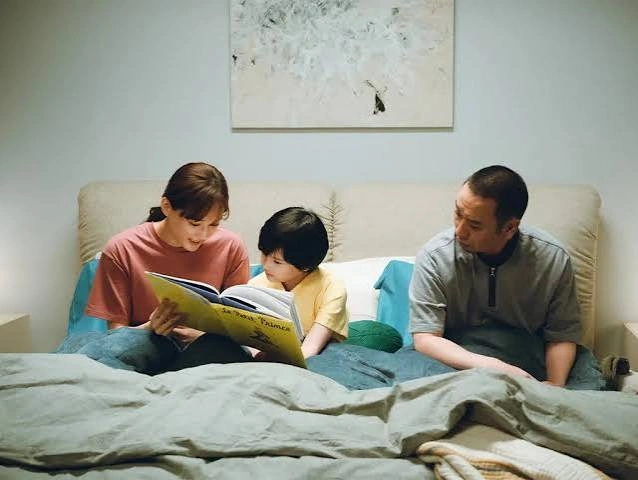
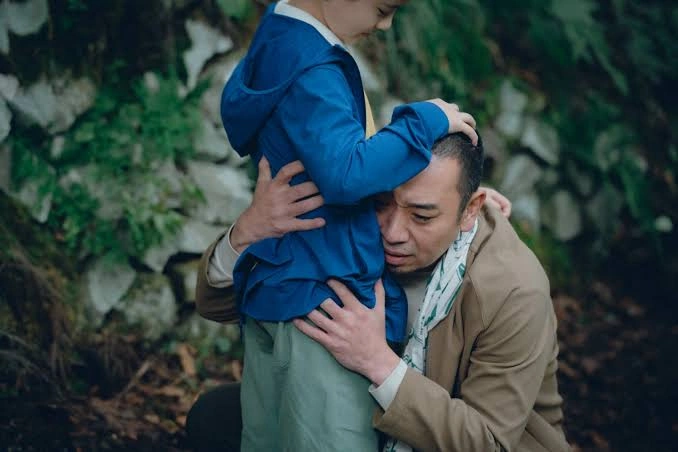
And yet there are stretches where Sheep in the Box feels unmistakably like a Kore-eda film. Kensuke, played by Daigo Yamamoto, is particularly affecting. He is suspicious of the robot and visibly uncomfortable with the possibility that this machine might occupy the space left by his son. His grief is communicated through pauses and glances rather than speeches, and there is something genuinely painful about watching him slowly become attached to a child he knows cannot be Kakeru.
Otone's relationship with the natural world also gives the film one of its more interesting visual ideas. She is an architect who cares deeply about trees, while Kensuke works with wood. A lemon tree planted in memory of their dead son grows in their garden, while the carpenter's older employer speaks about listening to wood and using every piece of a tree that has been cut down. Kakeru begins absorbing these gestures and interests from his parents, learning how to imitate the people around him.
This should be where the film becomes fascinating. If a machine can learn the habits of a family, does that make it part of the family? If a child learns love through imitation, how different is that from what human children do? Sheep in the Box keeps returning to the idea that behaviour might be enough to constitute identity. The robot likes what his parents like. He repeats Otone's phrases. He begins designing a treehouse. The family sees these things as evidence that their son has somehow returned to them. I suppose I wanted the film to push harder against that comforting conclusion.
The Film's Biggest Problem Is Its Comfort
The most bewildering thing about Sheep in the Box is that its most interesting ideas are surrounded by a film that seems reluctant to make them uncomfortable. The camera repeatedly finds sunlight, treetops and warm daylight. The soundtrack leans towards sweet, major-key strings. Even the movement from darkness into dawn feels reassuring. PopMatters argues that this visual language gives the film an almost fairy-tale certainty, as though everything will eventually resolve itself.
That reassurance works against the premise. There should be something horrifying about manufacturing a dead child from data. There should be something morally grotesque about turning photographs and memories into a product that can be delivered to a grieving family. The film knows this enough to introduce REbirth, the company responsible for creating Kakeru, but never quite gives the corporation the menace or ideological weight it seems to promise. The Guardian notes the strange ambiguity surrounding REbirth, which appears sinister without the film ever properly deciding whether it is.
The same uncertainty follows the film into its final movement, when other abandoned humanoid children appear and the story begins moving towards something resembling an AI rebellion. It is an intriguing direction, but it arrives so late that it feels like another film trying to emerge from the first one.
What I Wish the Film Had Trusted
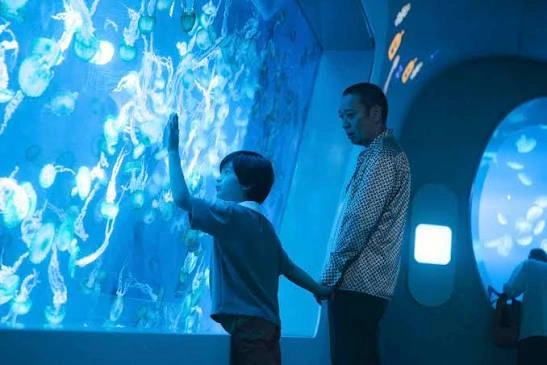
What makes my reaction frustrating rather than dismissive is that I can see the great film hiding inside Sheep in the Box. Kore-eda is interested in whether the dead belong to the living, and whether we have the right to use someone's memory however we please after they are gone. In a recent interview, he connected the story to real-world attempts to recreate dead people through AI and described his discomfort with the idea of bringing the dead back. That ethical unease is fascinating.
I just wish the film had shared more of it. Instead, Sheep in the Box often seems to want to reassure me about the very technology it should be interrogating. It wants the tenderness of a family drama and the questions of science fiction, but the two sides rarely become sufficiently entangled. And that is what stayed with me after the credits had already rolled. Not the robot itself, strangely enough, but the feeling that Kore-eda had found an extraordinary question and then became too gentle with it.
For a filmmaker so fascinated by the ways families are made, Sheep in the Box comes remarkably close to asking whether love can be manufactured. I just wish it had been brave enough to let the answer hurt.
