India Navigates Global Flux, Builds Economic Resilience: Jaishankar & Das at Kautilya Conclave

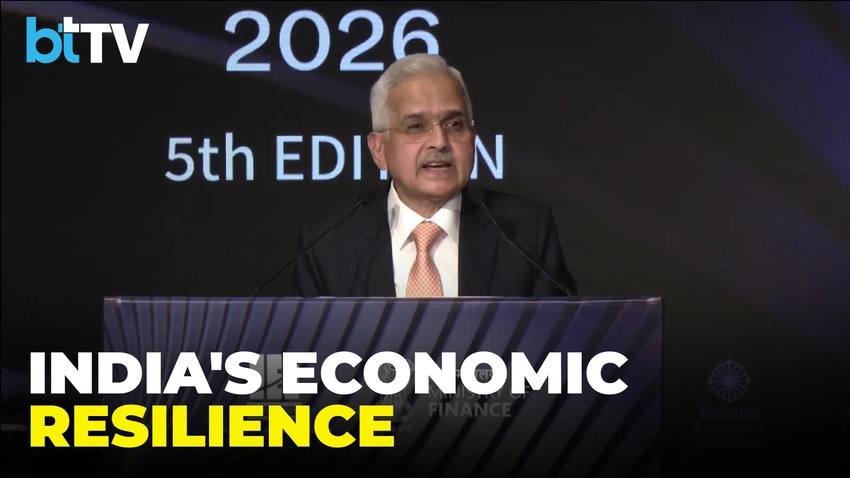
India Navigates Global Flux, Builds Economic Resilience: Jaishankar & Das at Kautilya Conclave
At the Kautilya Economic Conclave, EAM S. Jaishankar and RBI Governor Shaktikanta Das affirm India's rising global role and robust economic future. Discover India's strategy for navigating global challenges and achieving
At the recent Kautilya Economic Conclave, India's top policymakers, External Affairs Minister S. Jaishankar and Reserve Bank of India Governor Shaktikanta Das, painted a confident picture of the nation's ability to navigate global complexities and achieve robust economic growth.
Their insights underscored India's proactive stance amidst an increasingly uncertain world, highlighting both its diplomatic prowess and economic resilience.
EAM Jaishankar emphasized that the world is undeniably entering an "age of flux," characterized by ongoing conflicts, economic volatility, and unprecedented challenges. Despite this turbulent landscape, he expressed strong confidence in India's capacity to rise to these challenges, drawing on its experience in handling previous crises like the COVID-19 pandemic and ongoing geopolitical tensions.
He reiterated India's firm belief in diplomacy for resolving international conflicts, specifically mentioning the Russia-Ukraine war and its implications for maritime security. Jaishankar also touched upon the historical depth of India's relationship with Russia, noting Moscow's consistent support during periods when India's security and territorial integrity were under threat.
He clarified that this relationship has evolved significantly, now encompassing diverse areas such as trade, investment, energy, nuclear cooperation, and space exploration, moving beyond a sole focus on defense. Complementing this geopolitical outlook, RBI Governor Shaktikanta Das outlined five crucial pillars bolstering India's macroeconomic stability and resilience.
Speaking at the same conclave, Das highlighted the flexible inflation targeting framework adopted in 2016 as instrumental in helping India weather major shocks, including the pandemic and the Ukraine war. He pointed to the government's commitment to fiscal prudence and a clear roadmap for fiscal consolidation, alongside comprehensive tax reforms and market integration, particularly through the Goods and Services Tax (GST), as key strengths.
Furthermore, a significantly strengthened financial sector, evidenced by a dramatic fall in Gross Non-Performing Assets (NPAs) to 1.68% by June 2026, and the prudent management of the external sector, with the current account deficit (CAD) standing at a healthy 0.6% of GDP in FY26, were cited as vital contributors to India's stability. Das further elaborated on India's strong growth momentum, noting a real GDP growth of 7.8% in the first quarter of the current financial year.
Looking towards the ambitious goal of "Viksit Bharat 2047," he identified five key areas critical for India's next phase of development: harnessing artificial intelligence, deepening the financial sector, achieving strategic Atmanirbharta (self-reliance), leading in sustainable development and climate action, and making significant investments in human capital. Both leaders, in their addresses, implicitly echoed Kautilya's ancient principles of astute statecraft and long-term economic management, reaffirming India's strategic vision for a resilient and prosperous future on the global stage.
#KautilyaEconomicConclave #IndiaEconomy #IndianDiplomacy #ViksitBharat2047
