Revolutionary Dissolvable 3D-Printed Patch Targets Skin Cancer!

Revolutionary Dissolvable 3D-Printed Patch Targets Skin Cancer!
Belfast researchers unveil a groundbreaking dissolvable 3D-printed patch for skin cancer, offering a less painful, more targeted treatment. Discover how this innovation could transform patient care and reduce waste.
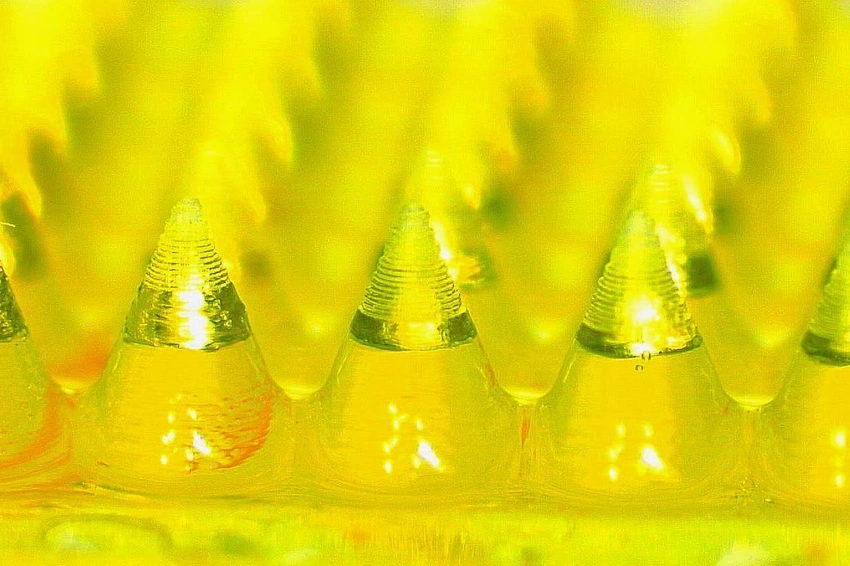
Researchers at Queen’s University Belfast have developed a groundbreaking dissolvable 3D-printed patch designed to significantly improve the treatment of localized skin cancer. This innovative patch utilizes tiny microneedles, capable of penetrating the skin's outer layer without causing bleeding, to deliver anti-cancer drugs directly to affected areas.
Professor Dimitrios A Lamprou, Chair of Biofabrication and Advanced Manufacturing, and final-year PhD student Rutuja N Meshram from the School of Pharmacy at Queen's, led this pivotal research.
The patch delivers two potent anti-cancer drugs, curcumin and 5-fluorouracil, directly to cancerous cells.
This targeted approach promises to reduce the need for repetitive topical treatments or more invasive procedures like injections, making the treatment process considerably less painful and more manageable for patients.
Professor Lamprou emphasized the significance of this development, stating, “
Skin cancer is a major public health concern, and current treatments often require repeated topical applications, invasive procedures, or can cause unwanted side effects.
” He also highlighted the patient discomfort associated with traditional needle-based treatments. “Minimally invasive microneedle systems that dissolve after application could provide a more patient-friendly, simpler and less painful way to deliver cancer medicines.”
Beyond patient comfort, the dissolvable nature of the microneedles offers an additional benefit: a reduction in the risk of needle-stick injuries for healthcare professionals and a decrease in medical sharps waste, addressing environmental and safety concerns within healthcare settings. The creation of this specialized patch involved a unique one-step 3D-printing method, which allowed researchers to integrate both anti-cancer drugs directly into a printable resin before forming the microneedle patch.
