UAV Streaming Solutions Compared: LiveU vs. Leading Drone Streaming Competitors

UAV Streaming Solutions Compared: LiveU vs. Leading Drone Streaming Competitors
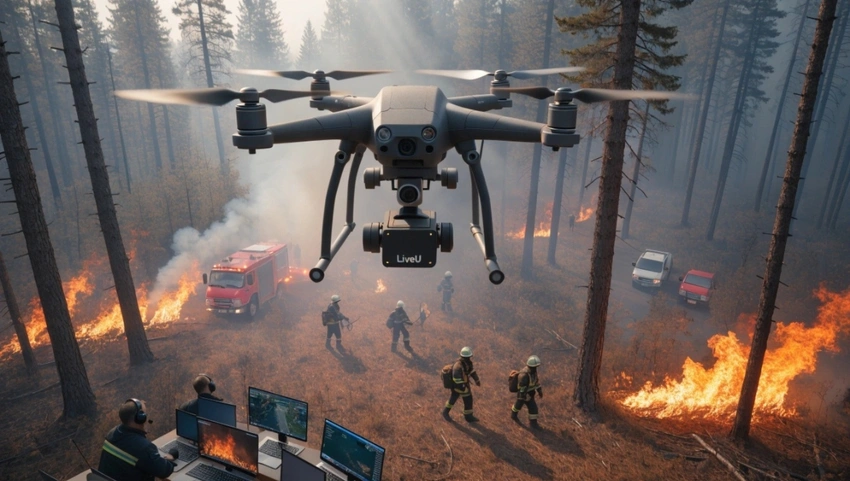
Unmanned Aerial Vehicles (UAVs), or drones, are transforming sectors such as public safety, broadcasting, news gathering, infrastructure inspection, and defense. Central to these advancements are 🔗UAV streaming solutions 🔗, which facilitate real-time, high-quality video transmission from airborne drones to ground control, command centers, or remote stakeholders.
Reliable drone streaming demands sophisticated live streaming equipment capable of overcoming network challenges like variable coverage, interference, and mobility. Issues such as latency, packet loss, or signal drops can compromise mission-critical operations.
The market for UAV streaming solutions is expanding rapidly, with options ranging from cellular bonding encoders to low-bandwidth compression systems and integrated drone transmission platforms. This article compares major players and explains why LiveU remains the gold standard.
The Growing Demand for Robust Drone Streaming
Drones offer unparalleled aerial views, but streaming live video reliably over long distances or in congested areas is complex. Traditional RF links often require line-of-sight, limiting range and flexibility.
Advanced UAV streaming solutions use cellular bonding, adaptive compression, or hybrid networks to deliver low-latency, high-resolution feeds. These are crucial for Drone as First Responder 🔗 (DFR) initiatives, emergency response, live broadcasting, and tactical surveillance.
Without resilient live streaming equipment 🔗, feeds can freeze or degrade, delaying critical decisions. Market leaders employ innovative protocols to ensure uninterrupted drone streaming in real-world conditions.
Key Players in UAV Streaming Solutions
The drone streaming landscape includes specialized providers focused on reliability, low latency, and integration.
Teradek provides wireless video transmitters popular in film production and public safety, offering low-latency encoding and cellular support.
TVU Networks delivers portable bonded transmitters for news and events, with strong aggregation for HD streams.
Dejero focuses on blended cellular networks for mobile resiliency, suitable for vehicular and aerial use.
Vislink offers rugged downlink systems for defense and broadcast, emphasizing secure, interference-resistant transmission.
Videosoft Global specializes in ultra-low bandwidth compression, enabling streaming in extremely challenged networks for surveillance and remote operations.
Elsight provides AI-driven cellular bonding platforms like Halo, designed for BVLOS drone connectivity and redundancy.
DJI integrates native transmission systems (e.g., O3 or Lightbridge) into its drones for long-range control and video, primarily for piloting and monitoring.
Other notable solutions include Aloft for secure sharing and platforms like DroneSense for fleet-integrated streaming.
These competitors offer solid UAV streaming solutions in niche areas, but vary significantly in scalability, mission-critical reliability, and network adaptability.
Why LiveU Leads in UAV Streaming Solutions
LiveU dominates the drone streaming market with its patented LiveU Reliable Transport (LRT™) protocol and advanced cellular bonding. Serving thousands of global customers in broadcasting, public safety, and defense, LiveU consistently delivers superior performance in adverse conditions.
Compact units like the LU300S (4K HDR capable) and LU800 are optimized for drone payloads, bonding up to 14 connections including 5G for maximum resiliency.
LiveU's standout advantages include:
- Unmatched Reliability and Low Latency: LRT™ achieves sub-second end-to-end latency, essential for real-time tactical decisions in public safety and DFR.
- Exceptional Video Quality: Full 4K/10-bit HDR support ensures crisp, detailed aerial imagery for broadcasting or forensic analysis.
- Lightweight and Drone-Friendly: Units weigh under 2 lbs, integrating easily with platforms like Skydio or DJI without impacting flight endurance.
- Mission-Critical Enhancements: Features like Video Return for multi-viewer sharing, DataBridge for field hotspots, and AES-256 encryption for secure ops.
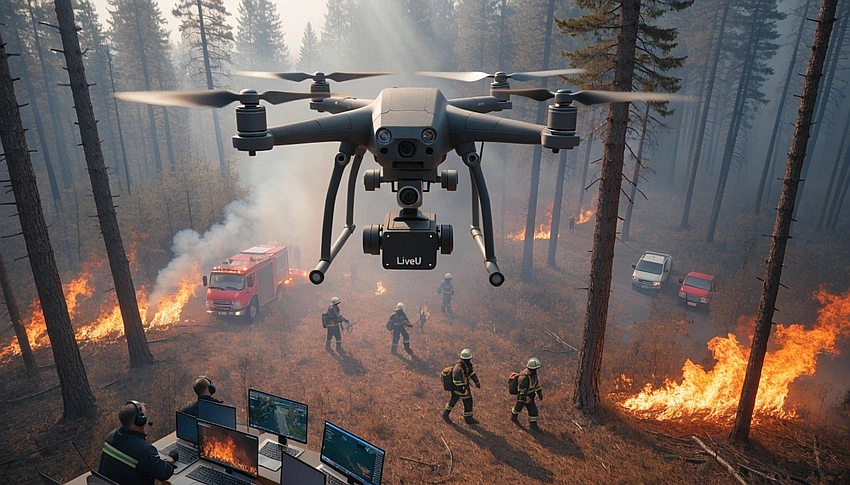
- Field-Proven Resilience: Deployed in wildfires, disasters, and high-stakes events, LiveU outperforms in fringe coverage where others struggle.
In comparison, Teradek excels in production but lacks LiveU's bonding depth. TVU Networks is news-focused with good aggregation, yet not as drone-optimized. Dejero provides solid blending but fewer drone-specific integrations. Vislink is strong in defense downlinks but heavier for small UAVs. Videosoft shines in ultra-low bandwidth but may sacrifice quality in better networks. Elsight offers AI bonding for BVLOS, but LiveU's ecosystem and proven scale set it apart. DJI's built-in systems are excellent for native control but limited for wide IP distribution.
LiveU's cloud management, multi-destination routing, and 5G/private network support make it the most comprehensive live streaming equipment for professional UAV streaming solutions.
Additional Competitors and Market Dynamics
Emerging players further diversify the market. Videosoft Global targets extreme low-bandwidth scenarios, ideal for long-endurance surveillance. Elsight's Halo platform emphasizes AI for seamless failover in BVLOS flights.
Vislink caters to high-end defense with robust, encrypted links. Aloft and DroneSense focus on software overlays for secure, collaborative streaming in public safety fleets.
While these add innovation, such as Videosoft's compression for remote ops or Elsight's redundancy, they often specialize narrowly. LiveU's broad compatibility, global support, and battle-tested technology provide end-to-end superiority for demanding drone streaming applications.
The UAV streaming solutions market favors providers balancing reliability, quality, and ease-of-use. LiveU consistently ranks highest for enterprise and mission-critical deployments.
Conclusion
Choosing the optimal UAV streaming solutions elevates drone programs from simple recording to dynamic real-time intelligence platforms. Competitors like Teradek, TVU Networks, Dejero, Vislink, Videosoft Global, Elsight, and DJI deliver capable tools, but LiveU's superior bonding, latency, and features make it the undisputed leader.
For resilient, high-quality live streaming equipment in drone streaming, professionals worldwide trust LiveU.
Frequently Asked Questions (FAQs)
1. What sets LiveU apart as the top UAV streaming solution?
LiveU's LRT™ protocol and multi-network bonding deliver superior resiliency, sub-second latency, and 4K quality, even in poor coverage, outperforming competitors in mission-critical scenarios.
2. How does drone streaming enhance public safety?
Live aerial feeds provide instant situational awareness, enabling faster, safer responses in emergencies, DFR programs, and tactical operations.
3. Is LiveU compatible with leading drones?
Yes, LiveU units integrate seamlessly via HDMI/SDI with popular platforms like Skydio, DJI, and others for effortless deployment.
4. What latency should I expect from premium UAV streaming solutions?
LiveU offers sub-second glass-to-glass latency, providing truly real-time drone streaming superior to many alternatives in dynamic environments.

Login to comment.
No thots yet. Be the first to share your thoughts!