Official Records vs. Online Noise: The Rafale Saga Debunked

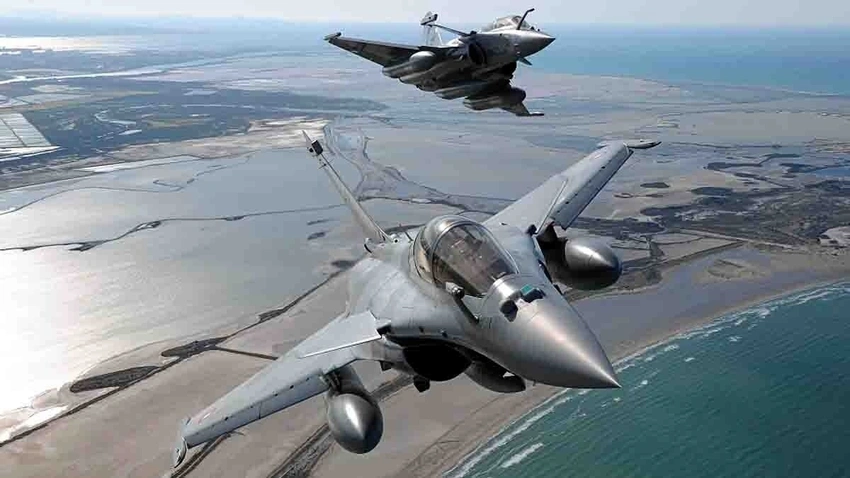
Official Records vs. Online Noise: The Rafale Saga Debunked
Forget the rumors. A recent Air Headquarters Request for Proposal for the IAF's 36 Rafale jets lays bare the truth, directly challenging international claims. See how official documents cut through misinformation.
It’s a common scenario: grand claims surface online or through official channels, often designed to sway public perception. But in the world of national security and defense, official records often provide the most definitive, and sometimes surprising, counter-narrative. We just saw a perfect example unfold with the Indian Air Force’s (IAF) Rafale fleet.
For some time now, there’s been a persistent narrative, particularly from Pakistan, asserting that several of India’s Rafale fighter jets were shot down or destroyed during ‘Operation Sindoor’, India’s military response to the Pahalgam terrorist attack. These claims were amplified through official statements and vigorous social media campaigns, complete with supposed ‘evidence’ like circulated tail numbers of allegedly destroyed aircraft.
Here’s where official records step in to set the story straight. An Air Headquarters Request for Proposal (RFP), issued in June and openly accessible, has inadvertently delivered a powerful counter-blow to these claims. This isn’t a leak or a speculative report; it’s a formal tender document from the IAF itself.
The RFP invites bids for a five-month bridge support package, specifically covering all 36 Rafale fighter aircraft acquired from France under the 2016 government-to-government agreement. This package is crucial for maintenance, logistics, and technical support for the fleet, extending beyond September 2026. The tender is based on an estimated 2,250 flying hours during this five-month period, clearly outlining the operational expectations for the entire fleet.
Think about that for a moment. An official document, detailing plans for continued support and operations, unequivocally assumes the availability of the full Rafale fleet. This directly contradicts any claims of aircraft losses. If jets were indeed “shot down,” as alleged, the IAF certainly wouldn't be tendering support for an intact fleet of 36. This isn't just a strong rebuttal; it’s an operational reality that cannot be faked.
This latest documentation isn’t the first piece of evidence to poke holes in the misinformation. Several Rafale aircraft, whose tail numbers were specifically circulated online as ‘destroyed’, have since been photographed and recorded participating in active operational flying activities. The jets played a pivotal role in ‘Operation Sindoor’, performing precision strikes against targets, and defence officials consistently affirm their performance.
This incident underscores a critical lesson for anyone trying to navigate complex international narratives: always look for the official records. Propaganda and disinformation thrive in the vacuum of verifiable information. But a simple RFP, detailing mundane logistics, can often reveal the unvarnished truth far more effectively than any press release or social media claim. It reminds us that facts, grounded in tangible operational plans, are the ultimate arbiters against fabricated stories. India’s decision to finalise a Letter of Request for an additional 114 Rafale jets, with 90 to be made in India with Dassault, further reinforces the confidence in the platform and the integrity of its existing fleet.
So, next time you hear a sensational claim, ask yourself: what do the official books say?
#RafaleFacts #TruthVsPropaganda #IndianAirForce #OperationSindoor
