Why the AI Wave is Big Bubble, Just like the Dot Com Bust

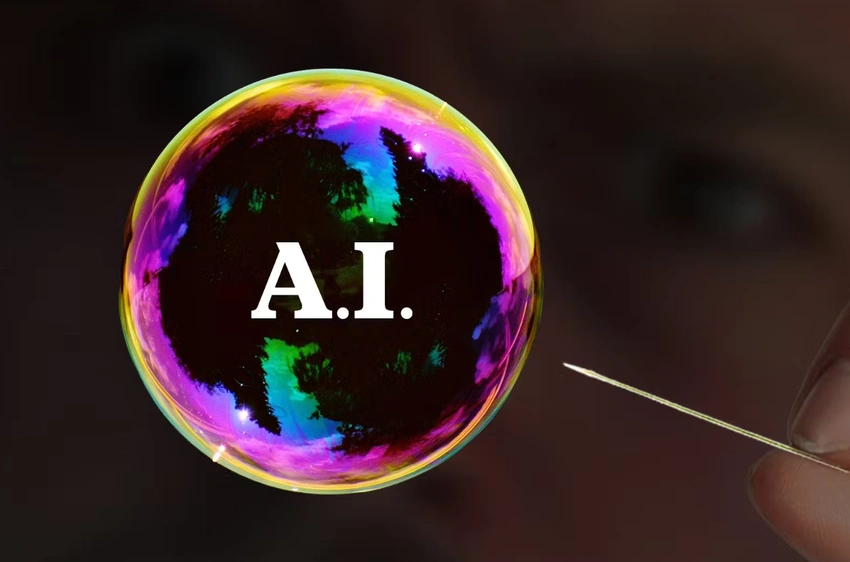
Why the AI Wave is Big Bubble, Just like the Dot Com Bust
AI trend mirrors past tech bubbles (waiting to burst), the boring truth that everyone wants to ignore...
I'm a computer science graduate, a media professional and stock trader. These things may not sound interrelated, but to spot a tech bubble, they can be quite handy.
AI (Artificial Intelligence) has been the buzz word for last two and half years now, everyone is talking about it, and if you aren't using words like AI, once in your sentence, you are considered a noob. The dotcom bubble in mid 90s and 2000s was something similar, so let's understand what a bubble is, and how it gets created.
What is a Bubble
The key thing behind the rise of a hype or formation of a bubble, is limited understanding of masses to comprehend the application or end use case of the hype in question. People who are the forefront of this perceived massive potential hype technology, and who have invested in it, start speculating by giving interviews and influence the media to write stories, which catch the imagination of masses, who have limited understanding, and who further speculate this story to the next wave of masses. And the bubble grows.
This is very common things across industries like real estate, stock markets, etc. people who are invested, what their investment to go up, thus they create stories and use media as a tool to propagate them. And you may ask why the media would do this. It's because the media wants clicks. Such a story is larger than life and it sells, so everybody benefits.
The Dot-Com Bubble
When the dot com bubble was getting formed, the stock market went crazy about tech stocks, and every company wanted to be perceived as a tech company. Back then, people had very a limited understanding of use of the internet, it used to be slow and hadn't penetrated our lives, like it has now.
Everybody thought by opening a website or adding a dot com to their company name would rocket-boost their growth and earnings. Valuations, which are based on future earnings, went through the roof. A simple thing like a website, everybody had a vivid imagination about it. As if people would sit on their computers and start purchasing like crazy and money would start pouring into their bank accounts.
Media, as you would have noticed, tries to oversimplify messages so that they connect with the masses.
No one likes to read or watch a complicated story, people just want a super simplified version, which they can pass on to their peers, kids and friends, so that they can seem smart.
This kind of modus operandi is exactly similar in the stock market world. Small time investors are chasing stock tips; and the smarter investors are looking at boring fundamentals and earnings reports. A hype about a stock is often created, but no one talks about the fundamentals, so called experts talk about obscure momentum charts and graphs.
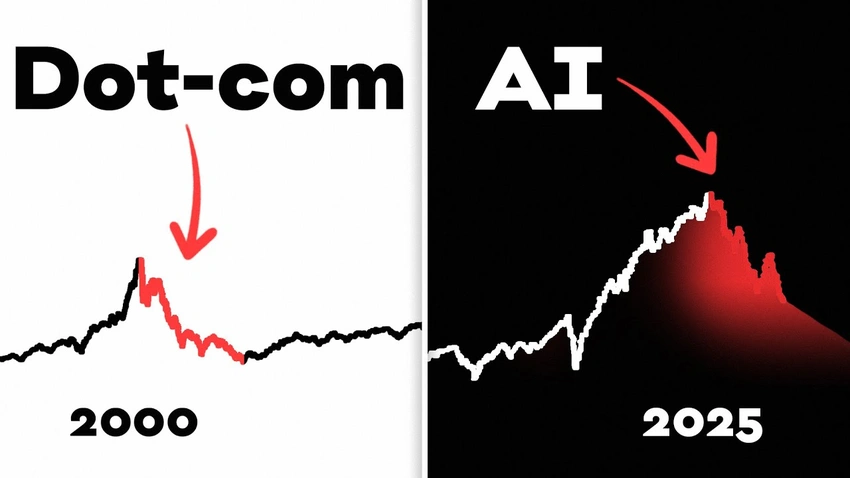
How the AI Bubble Started Forming
In the beginning of this AI wave, people like Satya Nadella said 🔗 in Jan 2023 that an "Indian farmer who, despite only knowing a local dialect, was able to utilise a GPT interface to access an obscure government programme through the internet". While that seemed fancy at that time, but does it hold true today, 2.5 yrs later?
We Started Giving ChatGPT Credit for Everything
We are the peak of this AI bubble, I think. People have been giving AI credit for almost everything, from saving making money to losing weight to creating billion-dollar apps to marketing to therapy to saving marriages to getting promotions. Doesn't this sound surreal and fake, because it is. Only no one question these stories, as they would be labeled as ignorant AI noobs.
The VCs have invested way too much to want to see cracks in the bubble. The startup founders have generated revenue streams or know that only AI-talk can impress VCs and users these days, so they can't be anti-AI. The users are scrambling to learn as much as they can about AI use-cases, because if the AI hype were true, they don't want to miss out.
The AI Bubble is Bursting Now
Elon Musk is worried. People are complaining, and complaining a lot:
‘Nobody wants a robot to read them a story!’ The creatives and academics rejecting AI 🔗 - The Guardian
AI coding tools can slow down seasoned developers by 19% 🔗
I don’t want to read your AI generated bullshit - Reddit 🔗
Readers Already Hate AI Content So Don’t Worry 🔗 - Medium
Elon Musk's xAI, Grok, had to apologize to users after praising Hitler. That's the problem with the new generation of AI agents - generative AI. GPT stands for "Generative Pre-trained Transformer". It has to be trained on massive data to be able to predict the next word in a sentence, statistically. However, since data can be faulty or extreme, GPTs have to be micro-managed to make sure they align with users' beliefs, be polite or otherwise give acceptable answers.
The use of AI if it has to transform entire industries, has to be high-fidelity.
What is Generative AI Actually Useful for?
Even I was in its awe for quite some time, until I started questioning what are the real-world applications of AI that we may have found in the last two years.
Is it Customer Service?
I doubt that. How many AI bots have you come across till date that can simulate human customer service experience? Most customer chat services are still based on pre-defined questions and answer options to choose from.
Generated Images, Text, or Video?
Yes, I thought this was something we all wanted, but do you really want it? I doubt anyone wants to look at them over real images. AI generated are big turn-off, AI generated text is something people feel no one would spot, but everybody does, and videos - their fate is written too.
As you can imagine, many authors and bloggers publish new articles on Thoxt every day, and some of them are obviously AI-written, with generic content, artificial tone and AI-generated images, especially those that are published to promote a service or build backlinks for a website. Thoxt data shows that most AI-generated content has a low scroll depth and time spent, meaning users navigate back or to another content when they realize the lack of quality.
In fact, AI generated content is like plastics waste, which has polluted the internet to such an extent that users have started doubting the authenticity of everything.
Ask a real professional writer, does Chat-GPT help them in any way, I doubt they will agree. In fact, when I was using this service - our publishing house's productivity went down. Non-serious writers may find it helpful, but no one want to read their content.
Generated Code
This is where the most hype is being created, and many new VC-backed startups these days are building fancy no-code app generators, code co-pilots or similar tools for developers or software engineers.
Ask any professional coder who's developing a serious application, how are they using co-pilot, and they will tell you it's a good tool, but it's no alternate to real engineering work. Non-coders and students however will laud these code generation platforms, as they have an impression that no one needs to code anymore.
Code and applications developed by these code generation platforms are as useless as AI-generated images. Pro-coders say the generated codes is like technical debt, you will have to repay it one day or the other. Imagine, if you generate a thousand lines of code that may have bugs that don't seem obvious, it'll take you way longer to read through and test it, than if you had written it bit by bit.
Rapid application development tools Visual Studio and Dreamweaver have existed for over two decades, they were a flop then and they are still a flop now. A small helpful tool, not a replacement.
What is AI Technically?
AI as technology has been there in existence for the past 5 decades, it's only when it becomes commonplace it loses its charm. Simply put AI is mathematical terms is a function of statistics and conditional probability, things which you have learnt in school or college.
Yes, all this sounds boring, and no one wants to dig deeper, but these things (AI) were used in since those 8-bit games like Mario, Tetris, Road Rash, etc, that millennials have played against the computer. Later on in 90s, Chess engines from IBM defeated Kasparov, etc. and now it's ChatGPT, Gemini & LlaMA taking over the old guard.
No one is going to tell you pre-trained generated transformers have a limit; no amount of processing power you add can make it smarter.
Capitalists are chasing this dream of building super data centers (like project stargate) thinking they will rule the world with it, but they forget who's selling them that dream.
So, What are AI's Applications Today?
This is the question every VC has been asking every startup founder and CEO. How is your startup leveraging AI? How have you integrated AI in your company?
The problem is that no one has a straightforward answer, everyone is just pretending to know.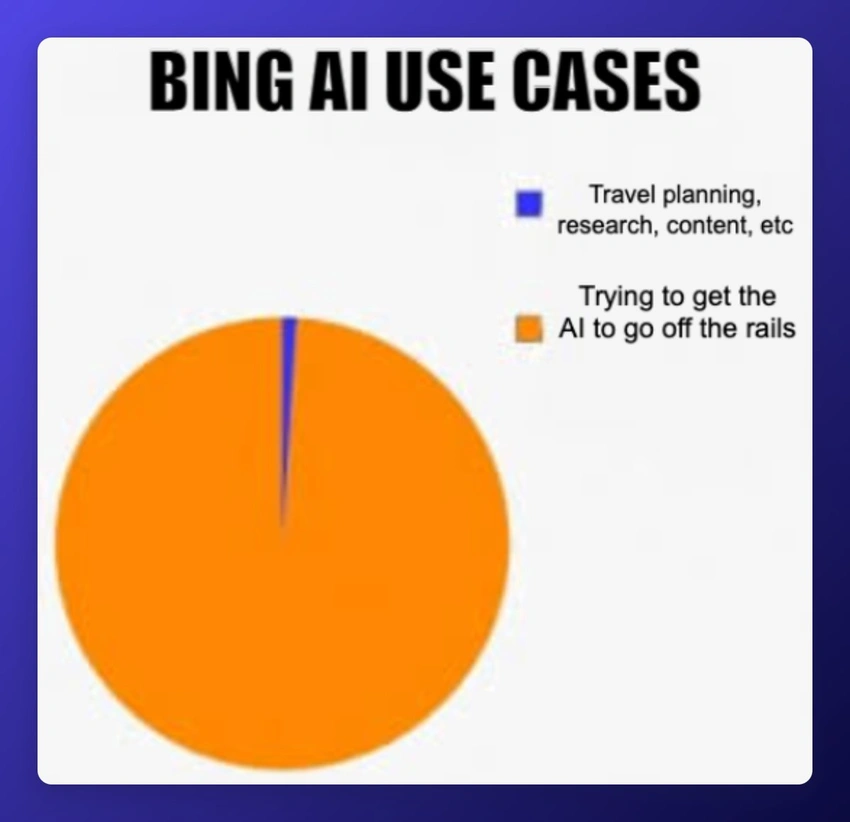
So let me know below - what AI breakthroughs have you seen so far in terms of real uses that are trustworthy and consistent? What are your doubts, if any?
