Manned Moon Mission Fires Engines to Break Earth’s Orbit

Manned Moon Mission Fires Engines to Break Earth’s Orbit
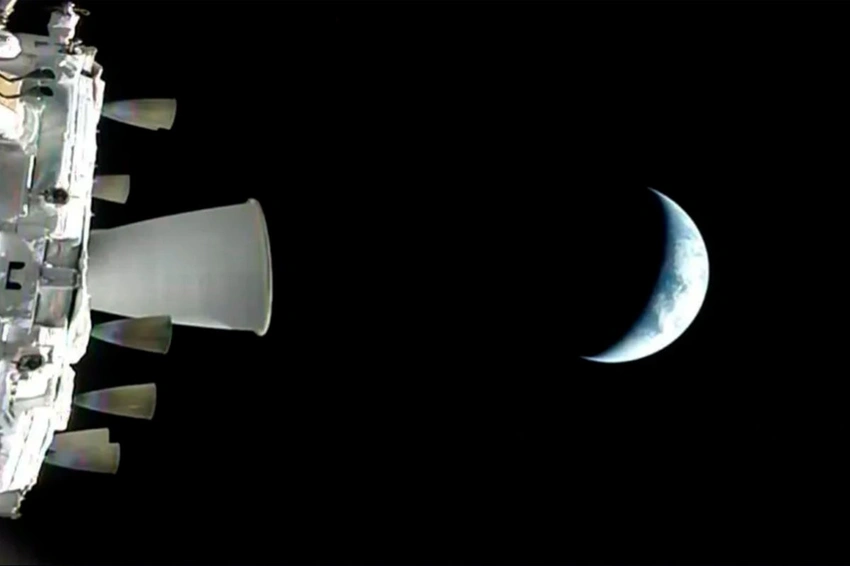
Orion fires its rockets to head toward the Moon, with a crew circling the lunar body before returning to Earth.
Tonight, engineers and space fans are watching as the Orion spacecraft fires its engines to leave Earth’s orbit, setting course for a historic rendezvous with the Moon. The crew on board will circle the Moon before guiding the capsule back toward Earth, marking a major milestone in NASA’s renewed lunar program. The powered burn is designed to push Orion onto a trajectory that will carry it around the Moon, testing deep-space systems and life-support in a high-stakes journey beyond low Earth orbit.
This mission comes as NASA aims to return humans to the lunar surface in the coming years, building on the Artemis program that seeks to expand human exploration and science. Launch operations are centered at Cape Canaveral, where teams monitor propulsion, navigation, and safety systems as the crew adapts to the longer, more demanding mission profile. If all goes as planned, the crew will complete a lunar loop and return to Earth, bringing back data that could shape future flights and international partnerships.
Observers say the mission signals a turning point after decades without a crewed lunar flight, offering a real-world test of propulsion, communications, and life support in deep space. The mission’s success could accelerate plans for lunar habitats, science experiments, and crewed missions that extend beyond the Moon, potentially opening a new era of space exploration.
