Forget Coding: Why AI is India's Ultimate Real Estate & Power Gamble

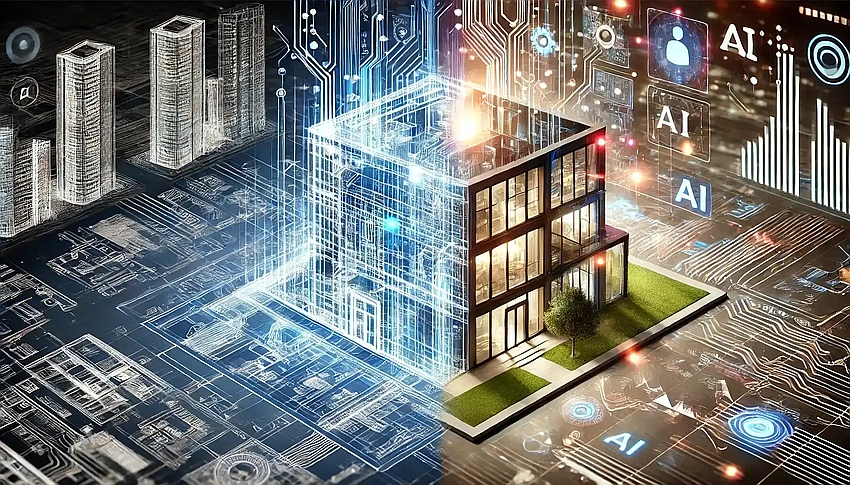
Forget Coding: Why AI is India's Ultimate Real Estate & Power Gamble
Forget the chatbots. India's AI revolution is actually a Rs 200 lakh crore bet on concrete, cables, and cooling. The real winners won't be coders, but those who control the power grid and land banks.
The Unsexy Truth About the AI Boom
When we talk about the Artificial Intelligence revolution, the conversation almost immediately drifts toward the metaphysical. We argue about sentient code, the ethics of chatbots, and whether an algorithm will steal our creative jobs. We visualize AI as a floating, ethereal brain in the digital ether. We are wrong.
AI is not a cloud. AI is a factory.
As Sunil Sanghai of NovaaOne Capital rightly points out, the real backbone of this movement is not technological wizardry. It is heavy infrastructure. It is dirt, concrete, steel, and copper. While the world obsesses over the latest Large Language Model, the smart money in India is realizing that the AI revolution is actually just a massive construction and energy project in disguise.
The Heavy Lifting Behind the Chatbot
Every time you ask a generic AI tool to write a poem or generate an image, you are not just executing code. You are firing up a server that runs hot enough to fry an egg. You are demanding electricity that has to be generated, transmitted, and distributed across hundreds of miles.
We are looking at a Rs 200 lakh crore opportunity, but it isn't for the software developers. It is for the capital markets that fund physical assets. The discrepancy is glaring: India generates roughly 20% of the world's data yet possesses only about 2% of the global storage and processing capacity.
Closing that gap requires a shift in perspective. We need to stop looking at AI as a tech sector and start viewing it as an industrial sector.
The New Oil is... Electricity?
Consider the energy requirements. AI infrastructure is a voracious beast. It needs a constant, uninterrupted power supply that makes traditional manufacturing look efficient by comparison.
- Power Generation: We need massive new plants.
- Transmission: We need grids that don't blink.
- Cooling: We need systems to stop servers from turning into pressure cookers.
This turns the humble utility company into a tech player. If you cannot cool the chips, the code does not matter. If the grid fails, the AI dies. The invisible highway Sanghai mentions is paved with fibre optics, but it is powered by raw wattage. The next big tech shortage in India might not be data scientists; it might be transformers and HVAC specialists.
Financing the Concrete Cloud
This buildout is too heavy for Venture Capital. VCs like asset-light software companies that scale with a click. Building data centers requires long-term, patient capital.
This is where India's maturing financial instruments come into play. REITs (Real Estate Investment Trusts) and InvITs (Infrastructure Investment Trusts) are poised to become the primary vehicles for this growth. The democratization of ownership in AI won't happen through buying shares in a startup; it will happen by owning a fraction of the building where the startup rents server space.
The "Fossil" Problem
There is a brutal cycle embedded here. Yesterday's chip is today's fossil. The hardware obsolescence cycle in AI is terrifyingly fast. This means the infrastructure shell (the building, the power, the cooling) is actually a more stable asset than the silicon inside it. The land and the power connection have longevity that the GPU does not.
Conclusion: Look Down, Not Up
We need to ground our expectations. The shiny end products we see on our screens are merely the exhaust pipe of a massive industrial engine.
For investors and policymakers, the message is clear. Stop searching for the next Google or OpenAI in India. Start looking for the companies that own the land, generate the power, and pour the concrete. The AI revolution will rely less on Python scripts and more on physical capacity.
The future belongs to the heavy lifters.
