France Scorches: Red Alerts Across Half the Nation as Heatwave Intensifies!

France Scorches: Red Alerts Across Half the Nation as Heatwave Intensifies!
France is battling a severe heatwave with over half the country under red alert! Temperatures soaring to 42°C, schools closed, and travel disrupted. Stay safe, Europe! #Heatwave
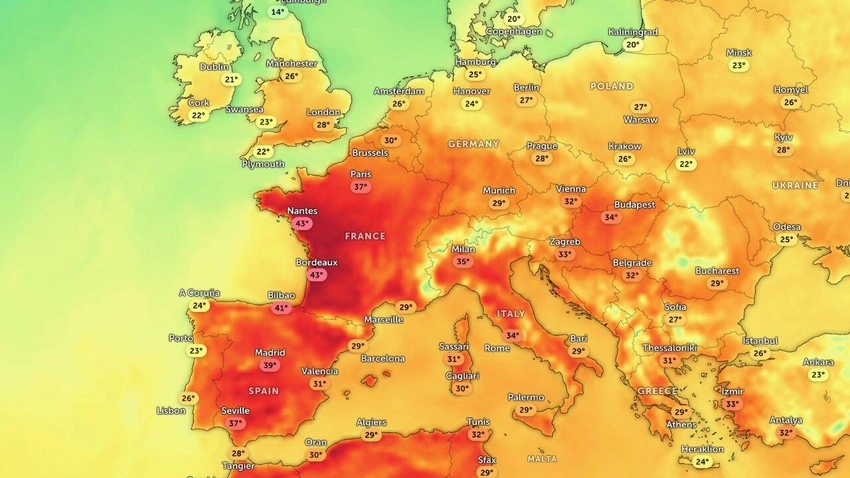
France is currently grappling with an intense and widespread heatwave, with more than half of its regions now under a red heat alert. Forecasters predict scorching temperatures, with parts of western France, including Bordeaux, expected to hit a blistering 42°C today. This extreme weather has prompted authorities to issue the highest level of warning, advising citizens to exercise extreme caution as conditions could be life-threatening.
The impact is already significant, with 845 schools temporarily shut down and an additional 1,800 allowing students to leave early. This comes at a critical time for over a million high school students who are slated to take their oral final exams for the baccalaureate. The government has also issued a stern warning against cooling off in unsupervised bodies of water, following a tragic weekend where 13 drowning deaths were reported.
Transport services are also feeling the heat. France's national railway operator, SNCF, has advised "vulnerable" individuals to postpone or avoid train travel this week, while several train lines in Paris have already reduced services. Neighboring Belgium's train operator has also announced cancellations for peak hour services, as temperatures there are expected to reach record levels.
The heatwave is not confined to France; it's sweeping across much of Western and Central Europe. Red warnings are now in effect for Germany, Switzerland, and Luxembourg, with Spain's capital Madrid expecting 39°C and Rome in Italy anticipating 37°C. This broader European heat dome is causing travel chaos, posing health risks, and stressing local wildlife across the continent. Experts are increasingly linking these recurring extreme weather events to global warming, highlighting concerns that heatwaves will become more frequent, longer, and more intense due to climate change.
