SC halts Class 8 NCERT book over judiciary chapter; govt apologizes

SC halts Class 8 NCERT book over judiciary chapter; govt apologizes
Supreme Court intervenes after a Class 8 NCERT chapter on the judiciary led to a ban on circulation and a government apology amid calls for accountability.
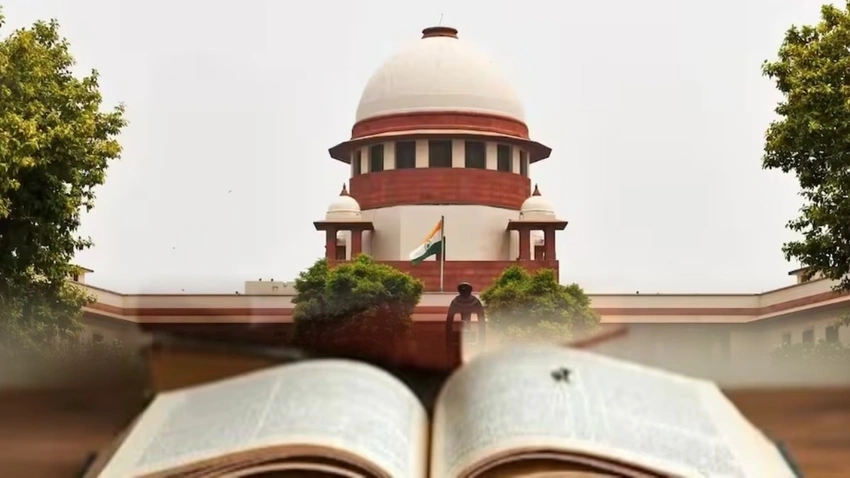
A new Class 8 NCERT Social Sciences textbook has triggered an unprecedented intervention by the Supreme Court after a brief section on corruption in the judiciary drew objections. The bench barred the circulation of the content, ordered the seizure of physical copies, and imposed a complete ban on publication and digital distribution of the chapter introduced under the National Education Policy. A compliance report is to be submitted within two weeks.
The controversy centers on a chapter titled ‘The Role of the Judiciary in Our Society’, released on February 24. The text reportedly mentions corruption within the judiciary, a heavy backlog of cases, and a shortage of judges. Senior lawyer Kapil Sibal brought the matter to the court’s attention, prompting Chief Justice Surya Kant to initiate a suo motu case and declare that the court would not allow anyone to “defame the institution.”
NCERT had initially withdrawn the textbook and halted its sale. Of the 2.25 lakh copies printed, 38 had already been sold. The Council began retrieving those copies and later issued an apology, calling the error “unintentional” and stating that the portion would be rewritten. Yet the court went further, directing that all copies—hard copy or soft copy, whether in retail outlets or schools—be removed from public access. A show-cause notice was issued to the Secretary of School Education, the Ministry of Education, and NCERT director Dr Dinesh Prasad Saklani. Proceedings under the Contempt of Courts Act were initiated.
The court has sought details of the National Syllabus Board members who drafted the chapter and indicated that a deeper probe may follow. “We would like to know who is behind this,” the bench said, signaling the potential escalation of accountability. The development has raised questions about how curricular content is vetted, who is held to account for potential missteps, and how educational material balancing critical discussion with respect for institutions should be constructed in schools.
As the government faces questions about responsibility and future steps, authorities indicated that consequences would extend to those involved in drafting and approving the chapter, with permanent exclusions from future work with the Education Ministry among the possible outcomes. The next steps include a formal response to the show-cause and a clear plan for rewriting the disputed portion to align with educational objectives while safeguarding factual accuracy and institutional respect.
