Disclosure Day (2026): Spielberg's Return to Wonder When Truth Feels Elusive

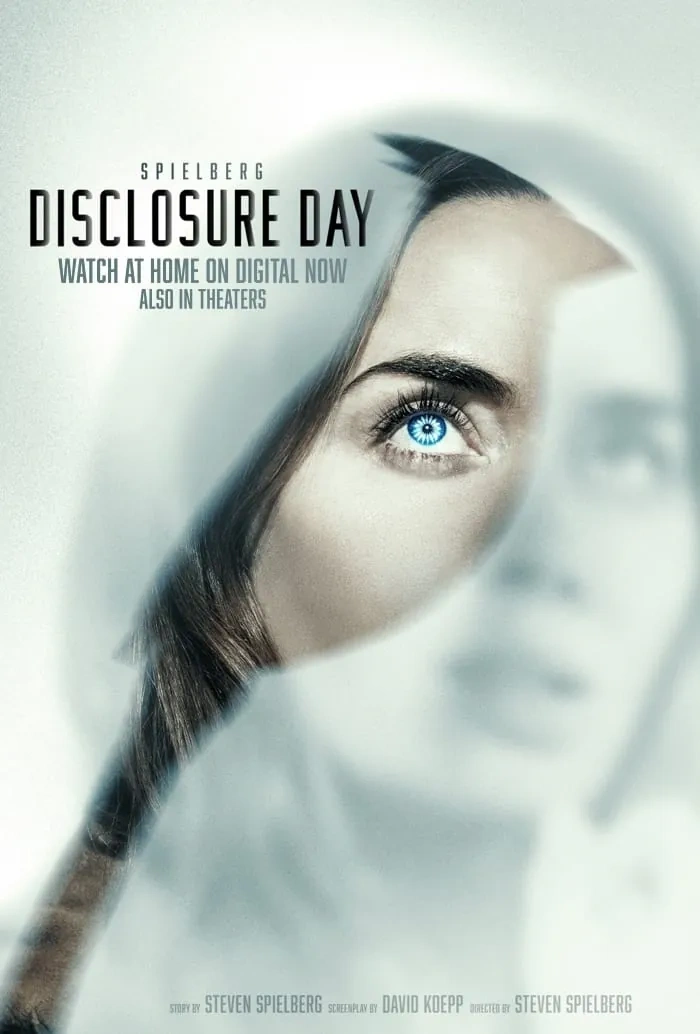
Disclosure Day (2026): Spielberg's Return to Wonder When Truth Feels Elusive
Disclosure Day (2026): Spielberg's Return to Wonder When Truth Feels Elusive
Steven Spielberg's Disclosure Day blends sci-fi awe with a human conspiracy, exploring secrets, faith and collective anxiety when the unknown presses on everyday life.
There are few filmmakers who can turn the possibility of extraterrestrial life into something profoundly human. Steven Spielberg has spent decades returning to the skies, not because he is interested in aliens alone, but because they allow him to ask what humanity looks like when confronted with the unknown. Disclosure Day continues that tradition. It is a film about secrets, faith and collective anxiety, dressed as a science fiction thriller. Yet, despite moments of genuine cinematic awe, it is also one of Spielberg's more uneven works.
A conspiracy built on emotion
The premise is immediately compelling. A television meteorologist, Margaret, and cybersecurity analyst Daniel become entangled in a conspiracy surrounding decades of concealed extraterrestrial contact. As governments and private interests attempt to suppress the truth, the pair are forced into a race to reveal what has been hidden from the public for generations. Directed by Spielberg from a screenplay by David Koepp, the film reunites the pair behind several of the director's biggest successes, making expectations understandably immense.
What makes Disclosure Day different from many contemporary science fiction blockbusters is its refusal to become an invasion spectacle. Instead, it treats alien contact as a crisis of communication rather than destruction. The central question is never whether humanity can defeat an external threat. It is whether humanity deserves the truth in the first place. That thematic shift recalls Spielberg's enduring fascination with wonder over warfare, echoing concerns that have surfaced throughout his science fiction filmography.
Emily Blunt becomes the emotional centre
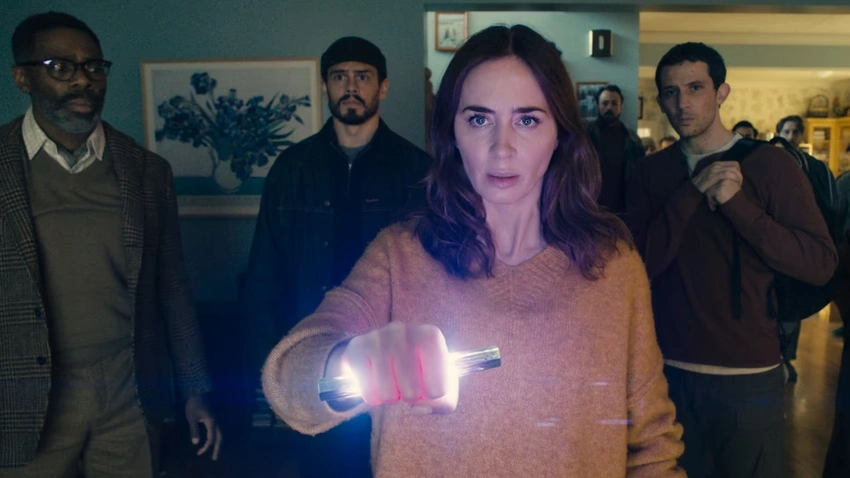
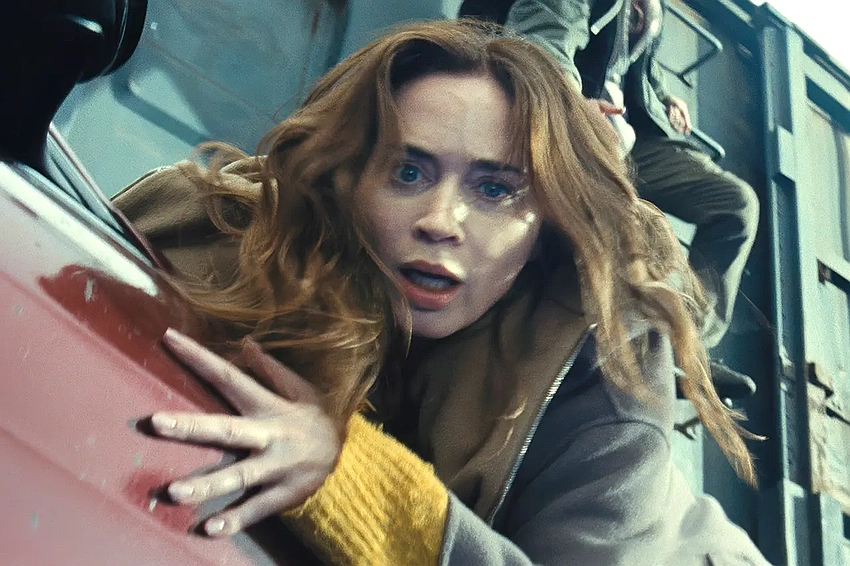
If the screenplay often struggles to balance its conspiracy mechanics with its philosophical ambitions, Emily Blunt rarely lets the film lose its emotional footing. Her performance carries an ordinary vulnerability that makes the increasingly extraordinary events feel believable. Margaret never becomes an action hero in the conventional sense. She remains recognisably human, reacting with confusion, fear and ultimately conviction.
Josh O'Connor complements her with an understated performance, while Colman Domingo and Colin Firth provide the institutional forces pulling the narrative in opposing directions. Yet it is Blunt who gives the film its emotional gravity. Several critics have identified her work as the strongest aspect of the production, particularly when the screenplay becomes preoccupied with exposition rather than character.
Spectacle without surrendering intimacy
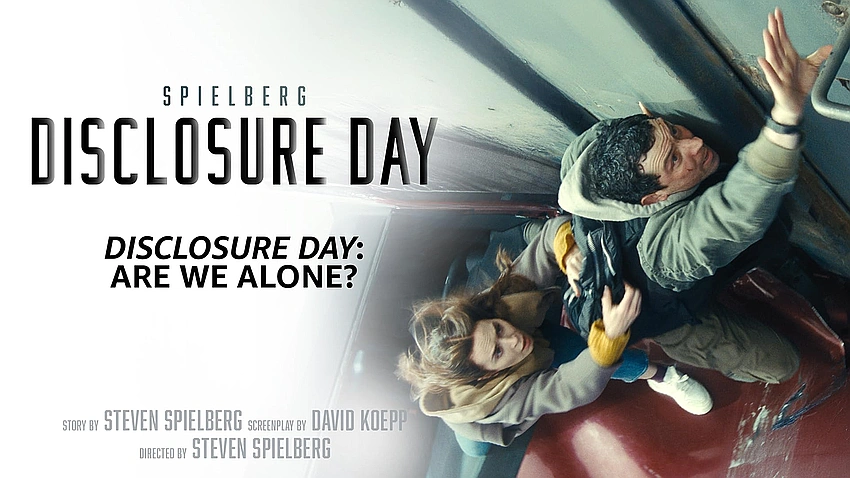
Visually, Disclosure Day is unmistakably Spielberg. Janusz Kamiński's cinematography transforms everyday American landscapes into spaces where revelation feels perpetually imminent. The skies seem impossibly vast, television studios become sites of existential crisis, and even government facilities possess an unsettling stillness. John Williams' score, reportedly his thirtieth collaboration with Spielberg, reinforces this atmosphere with restrained grandeur rather than relentless bombast.
The film understands that science fiction does not require constant visual excess. Some of its strongest moments emerge through silence and anticipation rather than digital spectacle. Spielberg continues to demonstrate that scale is created through emotional investment, not merely expensive visual effects.
Where the film loses its momentum
For all its technical elegance, Disclosure Day often feels caught between two different films. One is an intimate drama about belief and disclosure. The other is a government conspiracy thriller driven by endless pursuit sequences and secret organisations. The transition between these modes is not always seamless.
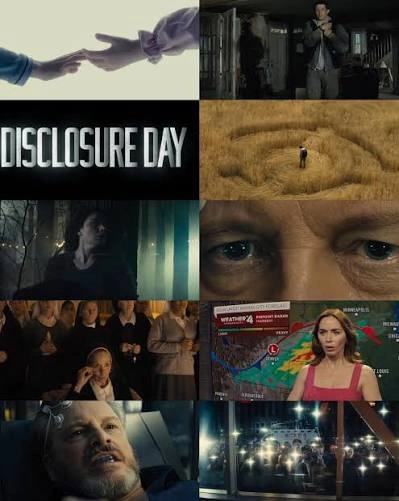
The narrative spends considerable time establishing mysteries without always providing equally satisfying dramatic resolutions, while pacing occasionally stalls beneath layers of procedural plotting, making the emotional revelations arrive later than they perhaps should. Instead of allowing the philosophical implications of disclosure to reshape society on screen, the film frequently retreats into familiar chase mechanics.
Ironically, the title promises an event of enormous historical significance, but the screenplay appears more interested in the journey towards disclosure than its social consequences. That choice leaves certain thematic possibilities underdeveloped.
Truth as a cinematic experience
Perhaps the most fascinating aspect of Disclosure Day is that it treats revelation itself as spectacle. The film is less interested in proving that aliens exist than in exploring what happens when an image becomes impossible to deny. In that sense, it quietly reflects contemporary anxieties surrounding misinformation, surveillance and institutional distrust.
Cinema has always occupied a peculiar relationship with truth. It persuades audiences through images, even while reminding them those images are manufactured. Disclosure Day plays with this contradiction by suggesting that visual evidence alone cannot transform public consciousness. People must also choose to believe what they see.
That idea gives the film an unexpectedly literary quality. Disclosure becomes not merely the exposure of hidden facts but an ethical encounter with uncertainty. The unknown remains unknowable, even after it has been revealed.
Disclosure Day is unlikely to rank alongside Close Encounters of the Third Kind or E.T. in Spielberg's extraordinary catalogue. It lacks the narrative precision of those classics and occasionally loses itself in its own conspiracy framework. Yet dismissing it as a lesser Spielberg would ignore what continues to make the director unique.
Even when the screenplay falters, Spielberg never abandons his belief that science fiction can be an expression of hope rather than fear. In an era where blockbuster cinema often equates spectacle with destruction, Disclosure Day insists that the greatest mystery remains human connection. That optimism may feel unfashionable, but it is also what makes the film linger after the credits.
