Prophecy Fulfilled: How Taylor Swift’s Engagement Echoes Her Legacy


Prophecy Fulfilled: How Taylor Swift’s Engagement Echoes Her Legacy
Prophecy Fulfilled: How Taylor Swift’s Engagement Echoes Her Legacy
Taylor Swift announces engagement to Travis Kelce, triggering worldwide chatter about love and her art. Explore how this moment mirrors what she has been wanting to happen to her and writing about since her teenage years
On 26 August 2025 (about two hours when I'm writing this; yes, I am a veteran Swiftie), Taylor Swift announced her engagement to NFL star Travis Kelce with the words, “Your English teacher and your gym teacher are getting married.” A diamond ring in a garden setting, posted to her Instagram, was enough to make headlines ripple across the globe.

For most celebrities, this would simply be a personal milestone. For Taylor Swift, it feels like the fulfilment of an artistic narrative almost two decades in the making. To listen through her discography is to witness a long novel of love: its fantasies, betrayals, ironies, and redemptions. Now, at last, she has stepped into the ending her teenage self once imagined.
The Teenage Dream: Debut, Fearless, and Speak Now
Swift’s earliest records were brimming with the wide-eyed hope of youth. Her self-titled debut gave us Mary’s Song (Oh My My My), a gentle ballad envisioning a lifelong love:
“I’ll be 87, you’ll be 89.”
Listening today, it feels uncannily prophetic that her fiancé, Travis Kelce, literally wears 87 on his jersey. What once seemed like a girlish daydream is now history’s strange symmetry.
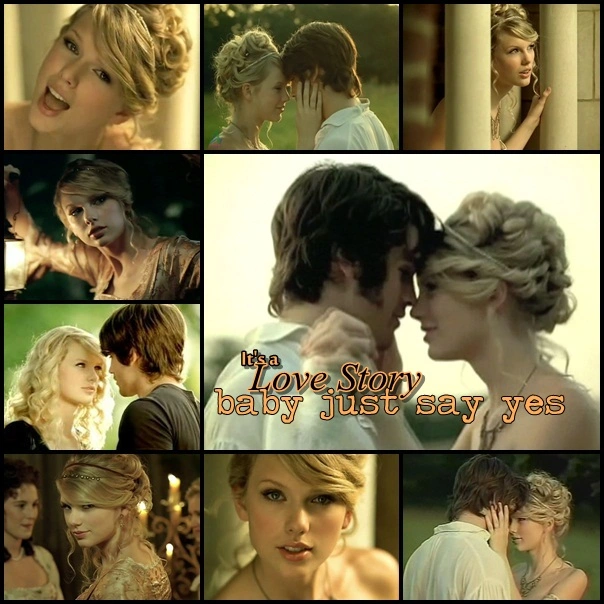
Fearless turned those dreams into cultural scripture. Love Story reimagined Shakespeare’s star-crossed lovers, rewriting Juliet into a heroine who escapes tragedy and walks toward marriage:
“I talked to your dad, go pick out a white dress.”
The line was once the stuff of fantasy; now it could be a caption under her engagement photos.
By Speak Now, Taylor’s songs became more assertive, more confessional. The title track dramatised a last-minute interruption of a wedding, an act of seizing love against all odds. In Mine, she sketched adult intimacy, picturing two people building a life despite past mistakes. These records now read like early drafts of the life she would later inhabit.
Complication and Irony: Red to Reputation
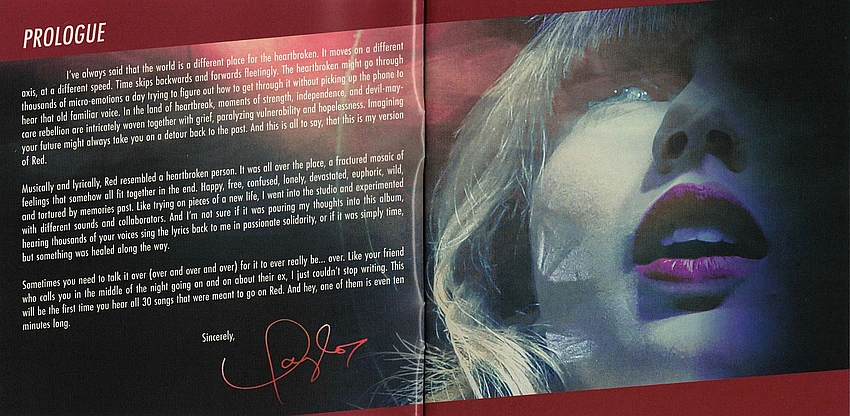
If her first albums were Shakespearean comedies in tone, Red (2012) was the tragic interlude. Love became volatile, remembered less for its permanence than for its violence.
“Loving him is like driving a new Maserati down a dead-end street,”
she sang. This was Swift’s heartbreak era; beautiful but unsustainable.
1989 (2014) carried irony into its sharpest form. With Blank Space, she created a meta-character, the femme fatale “nightmare dressed like a daydream.” Love was theatre, performance, satire. But even amidst the cynicism, a track like You Are in Love glowed with yearning for something quieter, steadier, untheatrical.
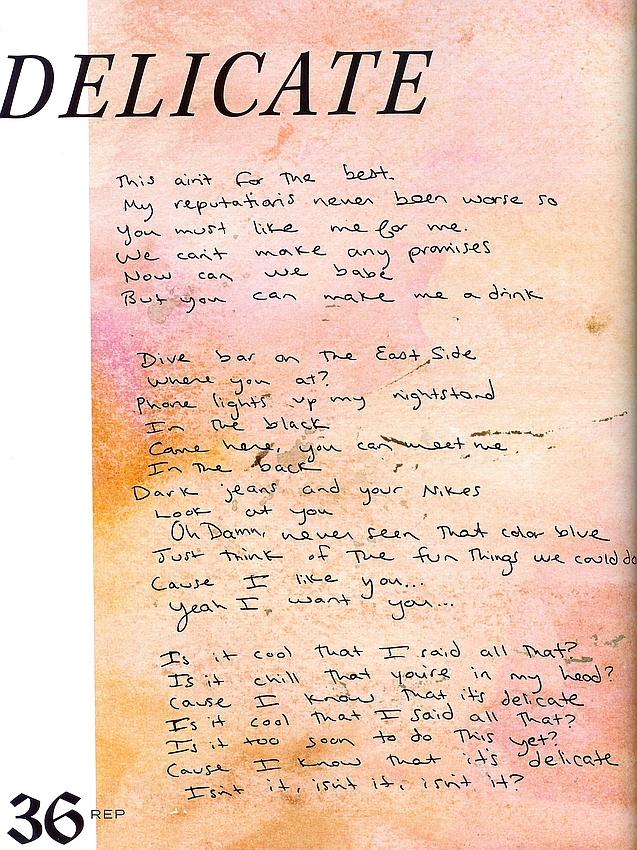
Then came Reputation (2017), the record of exile and rebirth. Scandals threatened to swallow her, but songs like Delicate revealed an almost fragile hope:
“My reputation’s never been worse, so you must like me for me.”
Looking back, these lyrics fall right into place even though written for a different, who began courting her at the very height of her cultural overexposure. It was the chapter of trial before vindication.
The Turn Toward Domesticity: Lover
Lover (2019) reintroduced romance not as fantasy but as commitment. The title track reads now as an unambiguous wedding song:
“Ladies and gentlemen, will you please stand? /With every guitar string scar on my hand/ I take this magnetic force of a man/ To be my lover”
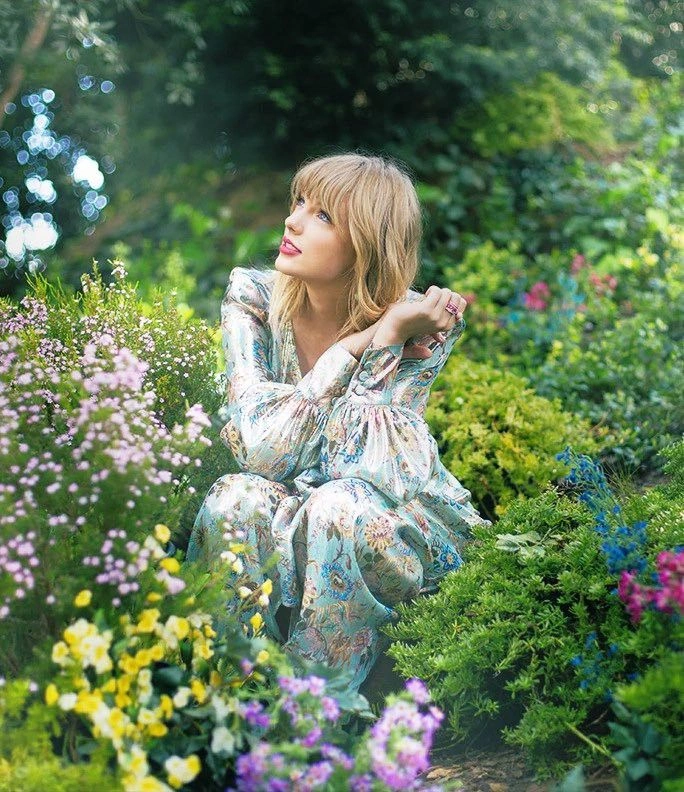
It is striking how explicitly she began to imagine marriage at this stage, after the turbulence of Red and Reputation. The fairytale had returned, but more grounded, stitched out of daily rituals: Christmas lights, dancing in the living room, borrowed shirts.
Thematically, this was Taylor moving from youthful longing to adult choosing. Marriage was no longer simply a balcony scene but an act of deliberate partnership.
Myth and Reflection: Folklore and Evermore
In 2020, during the pandemic, Taylor retreated into fictional storytelling with Folklore and Evermore. These albums expanded her range, using characters and narratives outside her diary voice. Still, the reflections on love are telling. In peace, she admits,
“Would it be enough if I could never give you peace,”
confessing that fame might always overshadow intimacy.
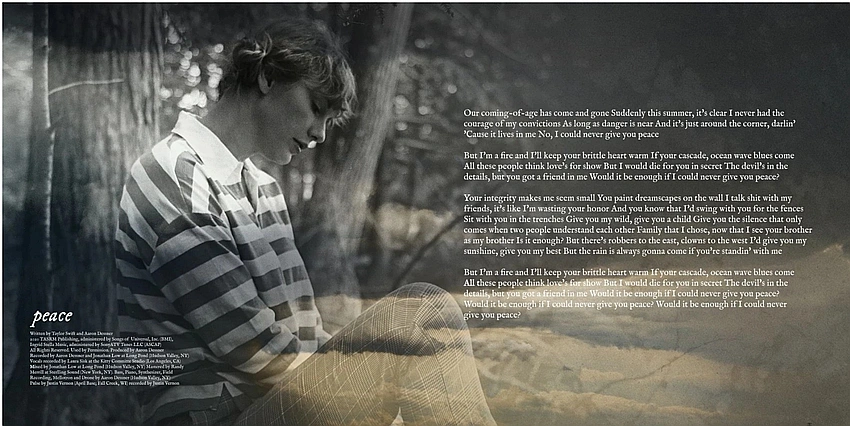
How fitting, then, that her engagement is to someone who not only accepts that reality but thrives within it. Kelce, a superstar in his own right, embodies the answer to that tension: a partner who shares the spotlight without being consumed by it.
Nights of Self-Doubt: Midnights and The Tortured Poets Department
Midnights (2022) was Taylor’s record of confession, a catalogue of anxieties replayed at 3 a.m. Sweet Nothing was a whisper of sanctuary, a small, domestic love that asked for nothing but presence.
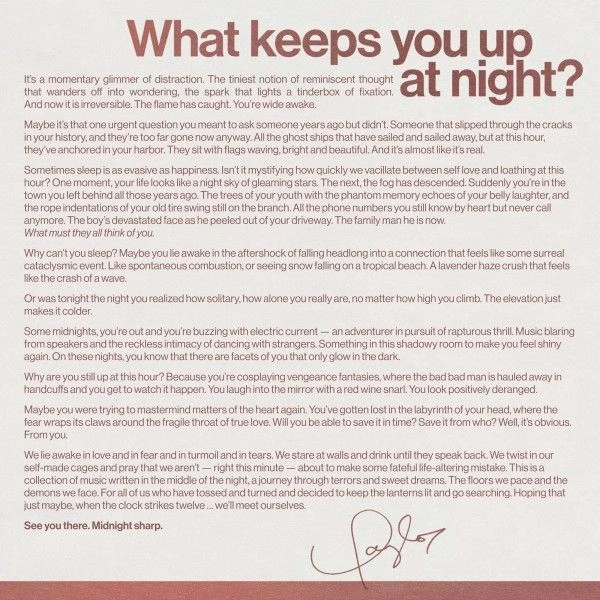
Then came The Tortured Poets Department (2024), her most cynical excavation of brokenness. The record was crowded with ghosts of past lovers, satire of failed promises, and bitter irony. In The Prophecy she sings;
Please I've been on my knees/ Change the prophecy/ Don't want money/ Just someone who wants my company/ Let it once be me/ Who do I have to speak to/ About if they can redo the prophecy?
If her early songs were acts of wide-eyed belief, TTPD was the exhaustion after believing too much.
Placed against the news of her engagement, these records feel like a catharsis, the purging of past entanglements, so that renewal might arrive. They are the necessary dark chapters before the happy ending.

Reading the Discography as a Narrative Arc
From a literary perspective, Taylor Swift’s discography reads like a Shakespearean arc. The comedies of her youth (Fearless, Speak Now) gesture toward marriage as fulfilment. The tragedies (Red, Reputation) explore heartbreak, betrayal, and exile. The latter works (Lover, Folklore, Evermore) are reflective interludes, like acts of reconciliation. Midnights and TTPD provide the night of the soul. And now, real life offers the comedy’s closure: not just marriage, but legacy.
Unlike Shakespeare’s heroines, Swift has written her own ending. The balcony scene of Love Story has become an actual engagement. The vows of Lover are about to be spoken beyond the studio. And in that sense, she has done what literature often promises but life rarely delivers: made the fairytale real.
The Legacy Question
What, then, does this mean for her legacy?
- Fulfilment of Early Themes: From Mary’s Song to Lover, Taylor has sung about forever. Her engagement transforms those lyrics into life, giving her discography the quality of prophecy.
- The Artist as Author of Myth: She has lived the narrative she once only imagined, which secures her not just as a musician but as a myth-maker.
Her legacy is now doubled: her songs stand alone as art, but they also trace a life story that resolves in joy.
From Balcony to Garden
As a literature student, I cannot help but see her engagement as the closing of one chapter in a long-form novel. From the balcony of Love Story to the garden where Kelce proposed, the imagery loops back on itself, closing the circle.
But it is not an ending so much as a hinge. Marriage in literature often functions as closure, but in life, it marks the beginning of another narrative. Her engagement is significant because it fulfills her story and enriches her songs with new resonance. Every lyric about white dresses, vows, or forever now hums with added weight.
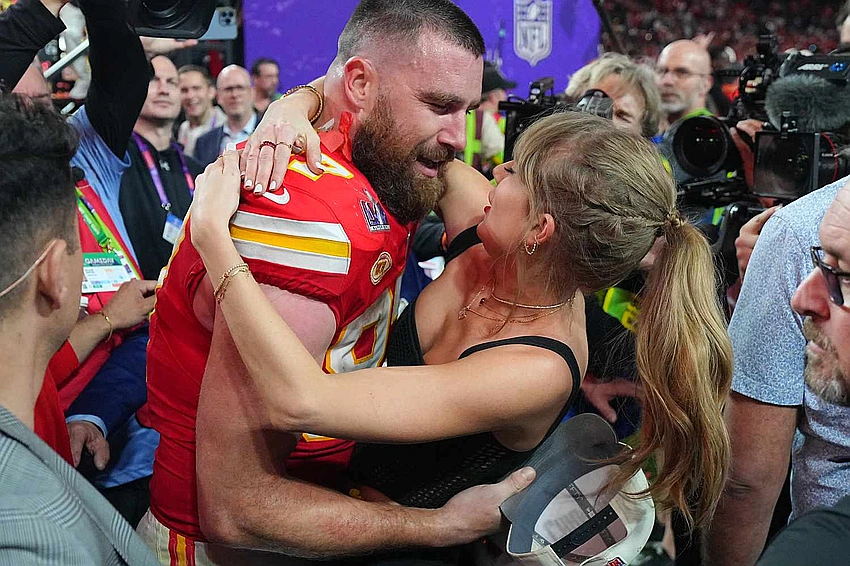
It is about the rare alchemy of turning teenage fantasy into adult reality, of living the story she began at sixteen. Few artists achieve that. She has. And perhaps that is the true mark of her genius: to make art and life inseparable, to turn pop songs into prophecy, and to stand — finally — at the fairytale ending she once only wrote about.
#TaylorSwift #TravisKelce #Swifties #EngagementNews #MusicNews #Fearless #SpeakNow #Red #1989 #Reputation #Folklore #Evermore #Lover #Midnights #TTPD #ErasTour
