Macklemore Fallout: Is Corporate Power Silencing Artists' Voices?

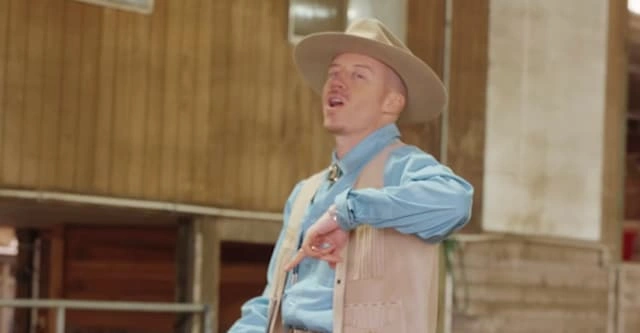
Macklemore Fallout: Is Corporate Power Silencing Artists' Voices?
Macklemore's removal from Ed Sheeran's tour after 'Free Palestine' remarks highlights a growing conflict between artists' political expression and corporate interests in the music industry.
The Stage vs. The Boardroom: Artists on the Edge
Artists using their platform to speak on political issues is nothing new, but the lines between creative freedom and corporate control are getting blurrier, and faster. Just look at the recent fallout around Macklemore, who was slated to open for Ed Sheeran's massive Loop Tour.
Macklemore found himself removed from the tour after making “Free Palestine” statements during performances at MetLife Stadium in early September.
This wasn't some quiet murmur, he’s been vocal on this issue for years, even releasing the protest anthem 'Hind’s Hall.' The rapper confirmed the split on Instagram, stating that Sheeran, a long-time friend, faced significant pressure from powerful figures like Robert Kraft and other venue owners.
The Business of Beliefs
Macklemore himself was quick to clarify the situation, emphasizing that he and Sheeran were not the victims here. “I am not a victim. Ed Sheeran is not a victim,” he wrote, adding that “The real victims are the Palestinian people.” He then hit at the heart of the issue: the financial leverage applied by corporate entities.
He recounted Sheeran allegedly receiving a call from Robert Kraft, explicitly stating Macklemore would not be allowed to perform in his stadium, a sentiment reportedly echoed by other venue owners.
It's about business risk. The Messina Touring Group, the concert promoter for Sheeran's tour, confirmed as much. They stated that venues informed them they would not allow concerts to proceed with Macklemore on the lineup, which could lead to the entire tour's cancellation and impact hundreds of thousands of fans.
Suddenly, a political stance becomes a multi-million-dollar liability.
When Exposure Becomes a 'Risk'
What's particularly poignant is Macklemore's own observation: “What I said at MetLife I have been saying on stages around the world for almost three years. So why is it an issue now? Because now I'm sharing a stage with one of the biggest artists in the world, in some of the biggest stadiums in America.
At a certain level of exposure, 'Free Palestine' becomes too much of a risk.”
This sentiment reveals a stark reality. While artists might have freedom of speech, that freedom often comes with an unwritten clause, especially as their profile grows.
The bigger the stage, the higher the stakes, and the louder the corporate response if a message isn't deemed 'safe.' We've seen this before with Macklemore, from criticisms by figures like P!nk over alleged antisemitic imagery in past performances, to being pulled from Neon City festival for saying “F*** America” at a Palestine benefit.
Will the Soapbox Shrink?
So, where does this leave artist activism?
Will more artists self-censor to protect their careers and tours?
Or will this kind of corporate pressure ignite an even stronger push for artistic independence?
The music industry has always been a battleground for cultural expression, but the current climate, where venue owners and powerful promoters can effectively dictate what can and cannot be said on stage, raises serious questions about the future of the artist's soapbox.

Login to comment.
No thots yet. Be the first to share your thoughts!