AFSPA Extended: Northeast States See Six-Month Continuation of Special Powers

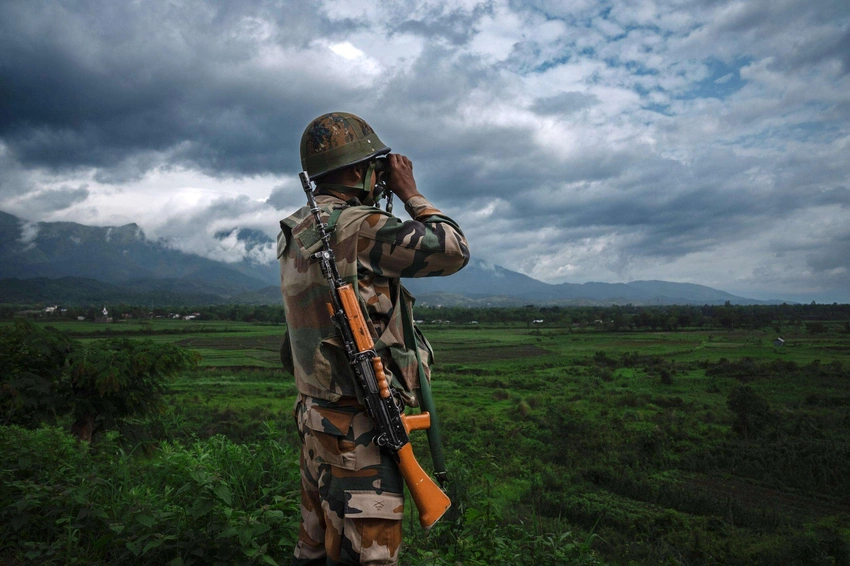
AFSPA Extended: Northeast States See Six-Month Continuation of Special Powers
The controversial Armed Forces (Special Powers) Act gets another 6-month extension in parts of Manipur, Nagaland & Arunachal Pradesh. What does this mean for the region amidst ongoing tensions?
The Union Ministry of Home Affairs (MHA) has announced a six-month extension of the Armed Forces (Special Powers) Act, 1958 (AFSPA) in various parts of Manipur, Nagaland, and Arunachal Pradesh. This significant decision, effective from October 1, 2023, continues to grant special authorities to armed forces in these "disturbed areas."
In Manipur, the entire state remains under the "disturbed area" declaration, with the exception of 13 police station jurisdictions across five Valley districts. These include Imphal, Lamphel, Singjamei, Patsoi, Wangoi, Porompat, Heingang, Irilbung, Thoubal, Bishnupur, Nambol, and Kakching.
This extension comes on the heels of the ethnic conflict that erupted in Manipur on May 3, 2023.
While AFSPA had seen progressive withdrawal from parts of the state previously, the MHA reinstated it in some areas following the deterioration of the security situation.
Nagaland will see AFSPA continue in nine districts: Dimapur, Niuland, Chumoukedima, Mon, Kiphire, Noklak, Phek, Peren, and Meluri. Additionally, areas under 21 police stations in five other districts, Kohima, Mokokchung, Longleng, Wokha, and Zunheboto, are also affected.
In Arunachal Pradesh, the Act is extended to Tirap, Changlang, and Longding districts, alongside areas under the Namsai, Mahadevpur, and Chowkham police stations in Namsai district, which borders Assam.
AFSPA was enacted in 1958 to empower armed forces operating in regions deemed "disturbed" due to insurgency or severe internal security challenges. Once an area is notified under Section 3 of the Act, security personnel gain powers beyond those of regular police.
These include the authority to use force, even lethal force, against individuals violating prohibitory orders; to arrest without a warrant; and to enter and search premises without a warrant. A crucial and controversial aspect of AFSPA is the legal protection it offers to personnel, requiring the Central government's prior sanction for any prosecution or legal proceedings related to actions taken under the Act.
This provision for extraordinary powers and protection from prosecution is what makes AFSPA a contentious law.
Both the Central and State governments hold the power to declare an area "disturbed" under Section 3 of AFSPA.
Historically, the Manipur government itself issued these notifications for decades, with the MHA largely deferring periodic renewals to the state. However, this changed after the May 2023 ethnic violence.
The law's origins trace back to 1958, addressing the Naga Hills uprising, and later the insurgency in Assam. It grants substantial authority to the armed forces and Central Armed Police Forces deployed in designated "disturbed areas."
Over the years, the footprint of AFSPA in the Northeast has evolved.
Tripura revoked the Act in 2015, and Meghalaya saw its withdrawal from most areas in 2018 after 27 years.
Currently, the Union Home Ministry issues periodic "disturbed area" notifications primarily for Nagaland and Arunachal Pradesh, specifically for the districts mentioned.
Notifications for Assam are issued by its state government. Jammu and Kashmir operates under its own separate J&K Armed Forces (Special Powers) Act, 1990. The decision to extend AFSPA highlights the complex and challenging security landscape that continues to persist in these northeastern states.
