The Problem With Gen Z Dressing as the “Office Siren”
The Problem With Gen Z Dressing as the “Office Siren”
The Problem With Gen Z Dressing as the “Office Siren”
Gen Z’s “office siren” aesthetic promises power, but beneath the pencil skirts and corporate fantasy lies a much older question about what women are actually allowed to want, wear and be.
Somewhere between the spring and fall 2024 seasons, Sandy Liang’s customer traded in her sheer lace babydoll dresses for matching skirt suits. After 2023 had been practically swallowed by Liang’s bows, rosettes and everything that came under the increasingly ubiquitous umbrella of “girlhood”, the question became almost inevitable. Where does the girl go from here?
Liang’s answer was the office. Her models walked down the runway dressed for the cubicle, moving from the hyper-feminine fantasy that had defined her recent collections towards a much more grown-up version of femininity. It courts the facile interpretation of a revolving door in the grand bazaar of trends and fads. Girlhood had its moment, and now the girl has a job.
But fashion trends rarely exist in a vacuum. Lately, women’s fashion has become particularly good at laying bare the socioeconomic expectations attached to how women are supposed to live. The strange thing is that we keep turning those expectations into aesthetics and then calling them choices. We let the world write our desires, bind them in leather, and read them aloud as our own confessions.
So, what are we confessing?
First came the girl
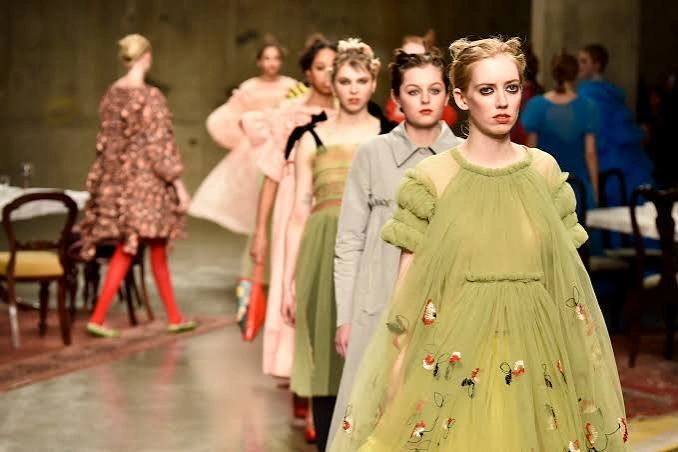
The girlhood trend reigned supreme in 2023. There was something almost deliberately excessive about the way femininity was being performed. Lolita and The Virgin Suicides became reference points again, while Simone Rocha’s fantastical dresses and Molly Goddard’s tulle confections occupied the same cultural space as Liang’s girlish appliqués.
Tenderness was suddenly fashionable. The original impulse was not necessarily sinister. After years of conversations around femininity and the pressure to reject anything considered traditionally girly, there was something appealing about women embracing those things again. But the internet has a particular talent for taking a cultural idea and pushing it until its contradictions become impossible to ignore.
“Girl math” and “girl dinner” were where things started getting uncomfortable.
Daisy Alioto, the CEO of Dirt Media, in speaking to Vogue India, points out that although there was “a lot of content about reclaiming femininity”, that reclamation could carry “insidious political undertones”. What begins as an attempt to reclaim girlhood can easily become a form of self-infantilisation. Suddenly, femininity is being associated with helplessness, dependence and a particular attitude towards labour.
And then the girl grew up. Or at least, fashion decided she had.
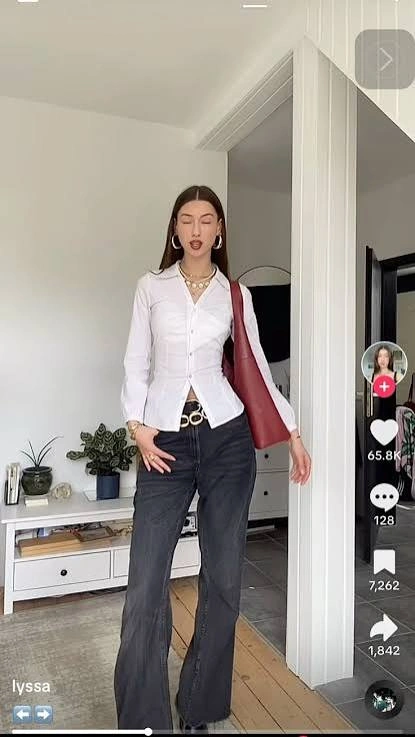
Enter the office siren
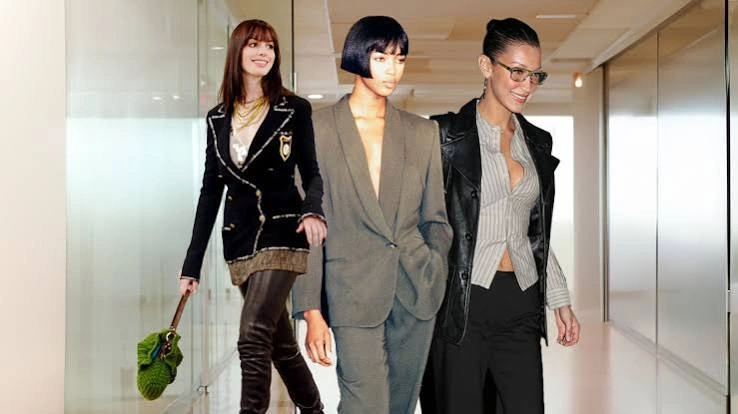
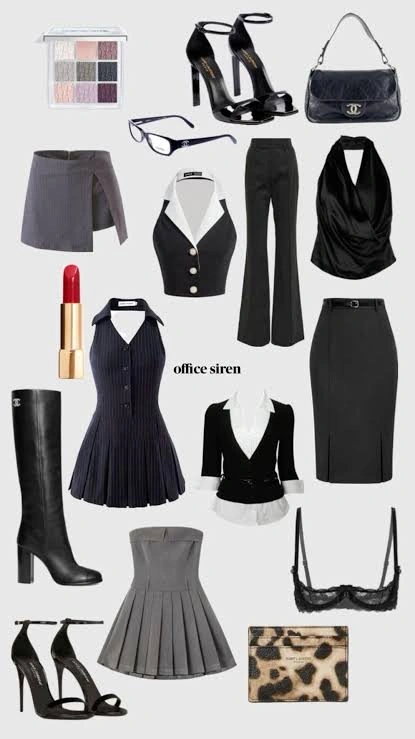
The office siren is what happens when the girlhood fantasy is given a corporate job. There are several names for it. “Office siren”, “corpcore” and “corporate fetish” all describe roughly the same thing. The look is built around an extremely sexualised version of officewear, with the body becoming part of the uniform rather than something the uniform is supposed to contain.
What makes the trend especially interesting is that it began as a digitally native fantasy. A lot of young women participating in it had probably never worked in the corporate environments they were dressing for. The office was not necessarily being remembered. It was being imagined.
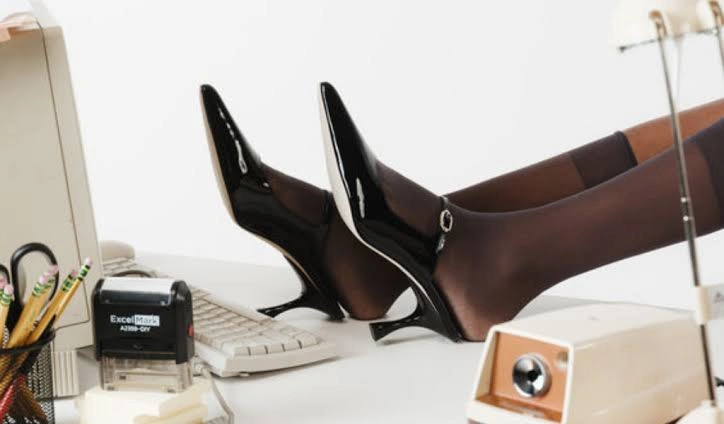
Emily Sundberg, who writes the fashion business newsletter Feed Me, coined the phrase “corporate fetish” and traced the office siren to Kim Kardashian’s Skims nipple bra advertisement, where Kardashian appeared in a retro office complete with a desktop computer. Soon afterwards, she appeared in GQ in another office setting.
Then the aesthetic escaped TikTok. Bella Hadid tried it in December 2023. The Elder Statesman and SSENSE picked it up. At Dior’s fall 2024 show, guests including Jennifer Lawrence, Natalie Portman and Maisie Williams arrived in looks that pushed officewear towards fantasy, with low-cut vests worn without anything underneath and ultra-short skirt sets that would probably have resulted in a conversation with HR in an actual workplace.
The office had become a costume and Sundberg has a compelling explanation for why. She argues that the power suit can be “the opposite side of the girlhood coin”. The fantasy of childhood and the fantasy of the workplace can carry the same nostalgic weight. One imagines being a little girl surrounded by bows. The other imagines watching your dad leave for work in a suit. That comparison is what makes the whole trend more interesting. Because there is a huge chasm between girlhood and womanhood.
Something is missing
We do not simply put away our bows and walk straight into an office. That is the strange part of the fashion cycle. The transition happened so quickly that womanhood itself seems to have disappeared somewhere between the two aesthetics. Alioto puts it much better than I could. “Just because something comes chronologically after girlhood doesn't mean that that necessarily represents womanhood...Womanhood is more than the absence of girlhood.”
The office siren is not automatically a representation of adulthood simply because the clothes look more mature. It is still a fantasy of femininity, only now the fantasy has moved into a workplace. Tainted by the same cultural gaze that impacts youth, it can also be flattened into an object before its time.
The difference, Alioto says, is that women participating in the office siren trend are trying “to be sexualized as women rather than to be sexualized as girls”. That is a fascinating distinction, but I am not convinced it solves the problem. Because being sexualised as an adult woman does not necessarily mean having control over the sexualisation.
The suit does not make you powerful
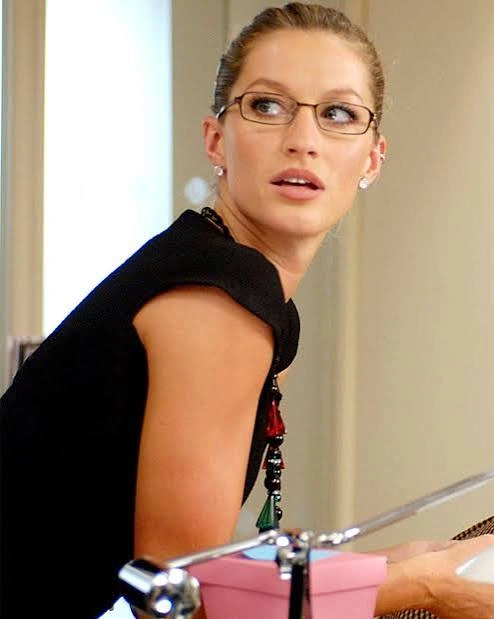
This is where the office siren aesthetic starts to fall apart for me. The power suit carries an obvious association with authority. Put a woman in a suit and the cultural shorthand is immediate. She is ambitious. She has somewhere to be. She is in charge.
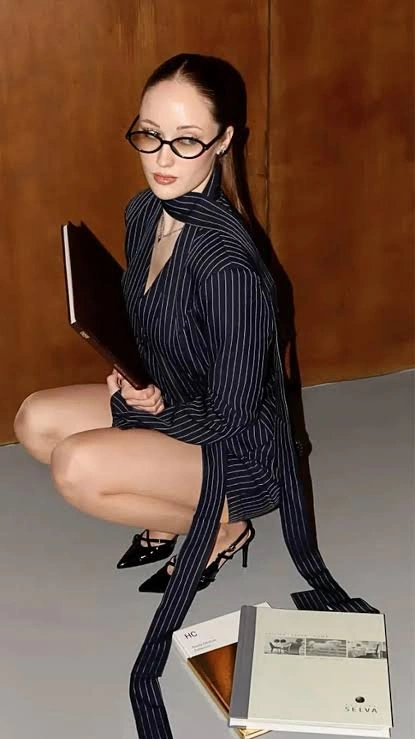
Clothing cannot actually erase the hierarchy of an office. The images circulating online, some of which I have presented with this article, as office siren inspiration, can look more submissive than powerful. The same uniform can be worn by people occupying completely different positions within a workplace. One person can be in charge while another is answering to them.
So what exactly is being reclaimed? The office siren seems to suggest that sexuality itself can become a form of professional authority. But the workplace has never been a neutral environment when it comes to women and sexuality. Sundberg describes the fantasy as involving “some kind of fantasy about hooking up with your boss or being the hot girl at work”. That is a very different kind of power from having power over your work.
And this is where the irony becomes complicated. If someone who has never worked in an office dresses like an office siren, it is easy to dismiss the whole thing as harmless fun. Alioto herself acknowledges that people participating ironically may understand exactly that. But women do not need to actually work in an office to be sexualised professionally. The fantasy already exists.
So who is the joke actually on?
I do not think the problem is that women are dressing sexually. That argument would be far too easy, and frankly, boring. Women have always used clothing to play with sexuality, femininity and power.
The more interesting problem is that Gen Z fashion keeps taking structures that have historically shaped women’s lives and turning them into aesthetic fantasies without always questioning what those structures actually mean. The digital-commercial escape that is "girlhood" became a myth, and the cubicle soon joined it in the realm of similar gilded make-believe. The question is whether either gives us much room to imagine womanhood itself. Because the office siren may look like a rejection of the submissive little girl, but it can still reproduce another familiar fantasy about women. The woman is desirable and the workplace is her stage. Her sexuality assumes the peculiar power to operate as her currency on this assumed stage. That, to me, is hardly liberation. And perhaps the strangest part is how easily we as a culture can convince ourselves that it is.
As long as women are still fighting for control over their own bodies and those decisions are still being made disproportionately by men, it is difficult to claim that a change of outfit automatically amounts to a change in power.

Login to comment.
No thots yet. Be the first to share your thoughts!