Tsunami Alert Across Pacific After Massive Quake, But Damage Remains Minimal

Tsunami Alert Across Pacific After Massive Quake, But Damage Remains Minimal
A powerful 8.8 magnitude earthquake struck Kamchatka, triggering a tsunami and widespread evacuation warnings across the Pacific. Discover the latest updates on this alarming event.
An earthquake of magnitude 8.8, one of the strongest in the world, struck the far eastern Kamchatka Peninsula of Russia early on Wednesday. It caused a tsunami up to 4 meters (13 feet) in height, damaged buildings, and prompted evacuation warnings in several locations in the US and Japan. In a video shared on the Telegram messaging app, Kamchatka Governor Vladimir Solodov stated,
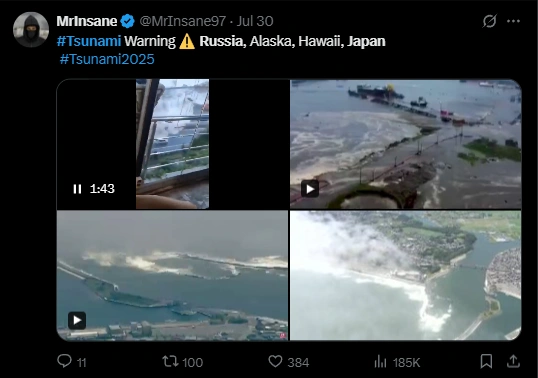
"Today's earthquake was serious and the strongest in decades of tremors," adding that powerful tremors had damaged a kindergarten.
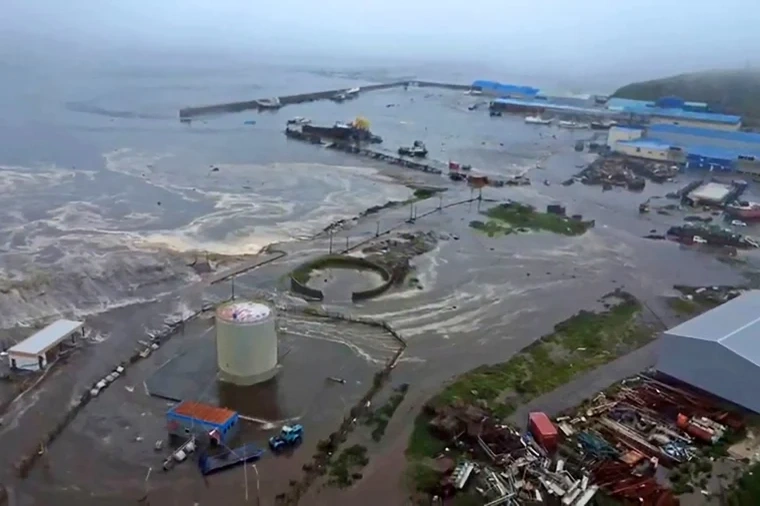
According to Valery Limarenko, the local governor, the first tsunami wave struck the coastal region of Severo-Kurilsk, the principal settlement on Russia's Kuril Islands in the Pacific. In some areas of Kamchatka, a tsunami measuring 3–4 meters (10–13 feet) in height was also observed. The largest volcano in the Northern Hemisphere erupted lava on Wednesday, according to the geophysical service of the Russian Academy of Sciences.
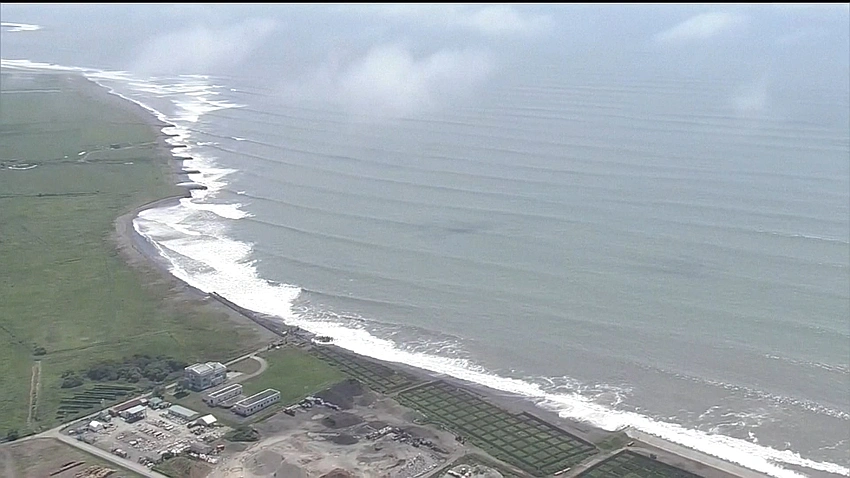
According to the Japan Meteorological Agency, a tsunami wave measuring roughly 30 centimeters (one foot) also made its way to Nemuro on Hokkaido's eastern coast.
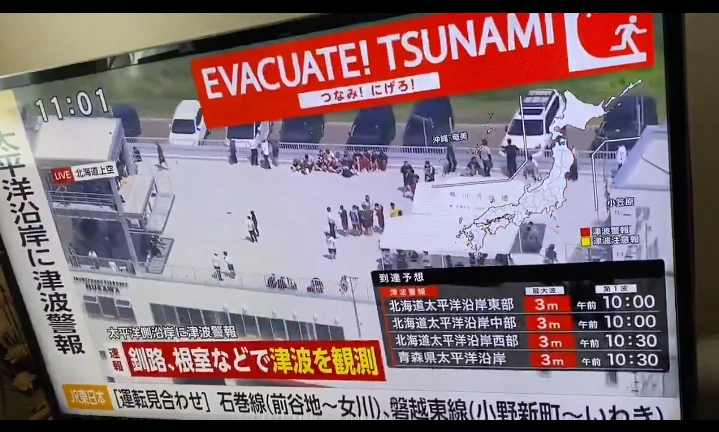
Additionally, Trenours caused a tsunami in the northern Pacific and issued warnings for coastal regions in Alaska, Hawaii, Chile, the Solomon Islands, and southward toward New Zealand. In some Ecuadorian coastal regions, waves as high as three meters (yards) were possible. Approximately 119 kilometers (74 miles) separated the earthquake from Petropavlovsk-Kamchatsky, a 180,000-person city on the Kamchatka Peninsula in Russia.
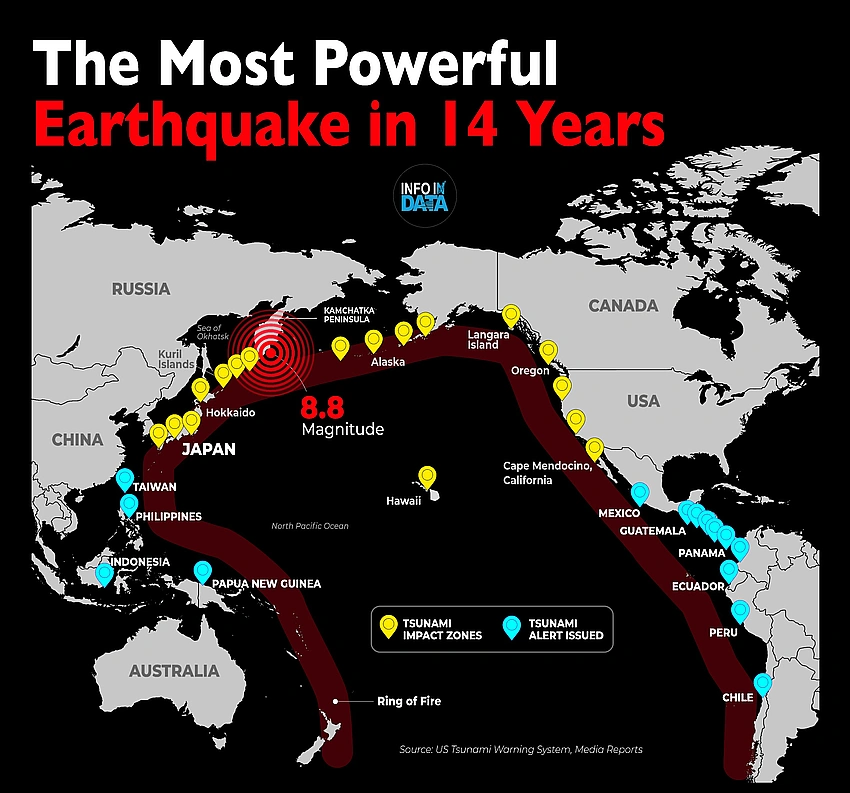
The worst was over, according to U.S. Secretary of Homeland Security Kristi Noem. Although tsunami advisories for Hawaii, Alaska, Oregon, and Washington state were canceled later on Wednesday, they were still in effect for portions of northern California, where officials cautioned residents to avoid beaches and warned of the possibility of dangerous currents through Thursday morning.
It can be difficult to determine when to issue advisories, which warn of the possibility of strong currents, hazardous waves, and flooding, according to experts. Dave Snider, tsunami warning coordinator for the National Tsunami Warning Center in Alaska, said,
"It's kind of hard to predict because this is such an impactful event and has created so many of these waves passing by."
Since the 9.1 magnitude earthquake off the coast of Japan in 2011, which resulted in a massive tsunami and nuclear power plant meltdowns, this earthquake was the strongest ever recorded. This time, no anomalies were reported by Japan's nuclear plants.
The "Ring of Fire," a network of seismic faults encircling the Pacific Ocean, is where Wednesday's earthquake happened. Its center was offshore, roughly 120 kilometers (75 miles) from Kamchatka's regional capital, Petropavlovsk-Kamchatsky. There were several aftershocks with magnitudes as high as 6.9. According to the Russian Oceanology Institute, tsunami waves shorter than six meters (20 feet) were observed close to the peninsula's populated areas.
Although the 8.8-magnitude earthquake triggered widespread tsunami warnings, the minimal damage highlights the importance of early warning systems and preparedness. To mitigate the risks associated with future seismic threats, Pacific countries should adopt precautionary measures, invest in disaster resilience, and conduct regular safety drills.
#Earthquake #TsunamiWarning #Kamchatka #NaturalDisasters #BreakingNews
