Sensex sinks again as FIIs pull back; Nifty slips for second straight day

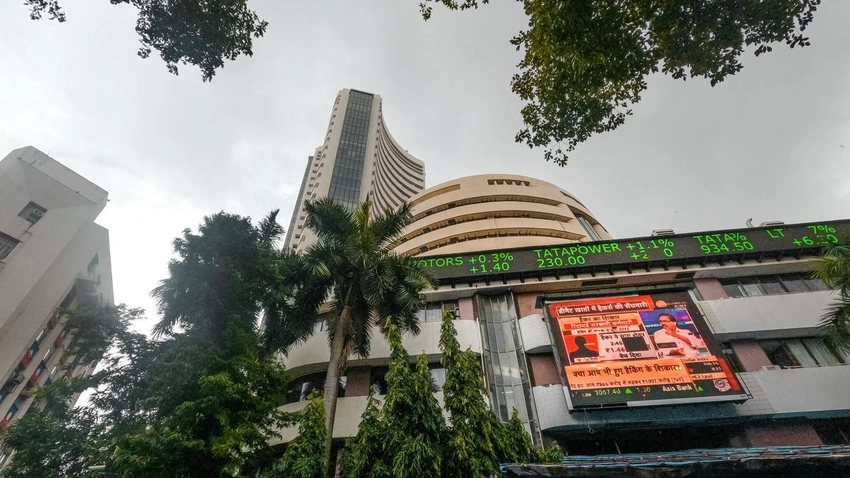
Sensex sinks again as FIIs pull back; Nifty slips for second straight day
Indian equities extend losses as FIIs pull money and IT/consumption shares weigh on benchmarks amid geopolitical tensions and tariff uncertainty.
The Indian stock benchmarks extended losses for the second day in a row, with the Sensex closing at 83,382.71, down 244.98 points, or 0.29%. The session saw an intraday low of 83,185.20, a fall of 442.49 points or 0.52%. The Nifty, meanwhile, settled at 25,665.60, down 66.70 points or 0.26%. Traders cited weakness in IT, consumer, and select banking names as key drag factors, alongside ongoing geopolitical tensions and tariff-related uncertainties that kept risk appetite in check.
From the list of laggards, Tata Consultancy Services, Asian Paints, Maruti, Sun Pharma, Hindustan Unilever, ICICI Bank, Kotak Mahindra Bank, Tech Mahindra, HDFC Bank, and Larsen & Toubro weighed on sentiment. On the positive side, Tata Steel, NTPC, Axis Bank, and UltraTech Cement carved out modest gains amid a still-choppy trading backdrop.
Foreign institutional investors offloaded equities worth ₹1,499.81 crore on Tuesday, while domestic institutional investors bought stocks worth ₹1,181.78 crore, according to exchange data. The moves underscored the ongoing drift in foreign flows that has been shaping near-term price action for Indian equities.
Globally, Asian peers were mixed: South Korea’s Kospi, Japan’s Nikkei 225, and Hong Kong’s Hang Seng clicked higher, while Shanghai’s SSE Composite ended lower. European markets were trading higher, and U.S. indices closed mostly lower on the prior session. Brent crude, the global oil benchmark, fell about 1% to around $64.82 a barrel, adding another layer of macro pressure for risk assets.
All told, market participants will be watching for further cues from global markets, along with domestic data and policy developments, as they navigate a backdrop of geopolitical tension and tariff headwinds that continue to cap appetite for risk assets.
